

05/11/2026

Share:
05/11/2026
Share:

MOSCOW, Nov 5 : Russia has agreed to supply Iran with 90 advanced helicopter-mounted missile launchers designed for precision-guided weapons used extensively by Russian forces in the war against Ukraine, according to an investigation by the Financial Times (FT) published Thursday.
The previously undisclosed order provides fresh evidence of growing military cooperation between Moscow and Tehran, raising further concerns about Iran's ability to strengthen its military capabilities amid tensions with the United States and its regional allies.
The FT reported that a Russian defence industry production schedule covering 2024 and 2025 listed an export order for 90 APU-L launchers for a customer identified as "K-10", a code used by Russia's state arms exporter Rosoboronexport to identify Iran in defence-related documents.
The documents were provided to the newspaper by Dallas Analytics, a Ukrainian private intelligence organisation.
However, the records do not establish whether the launchers were ultimately manufactured or delivered to Iran.
Russian precision weapons used in Ukraine
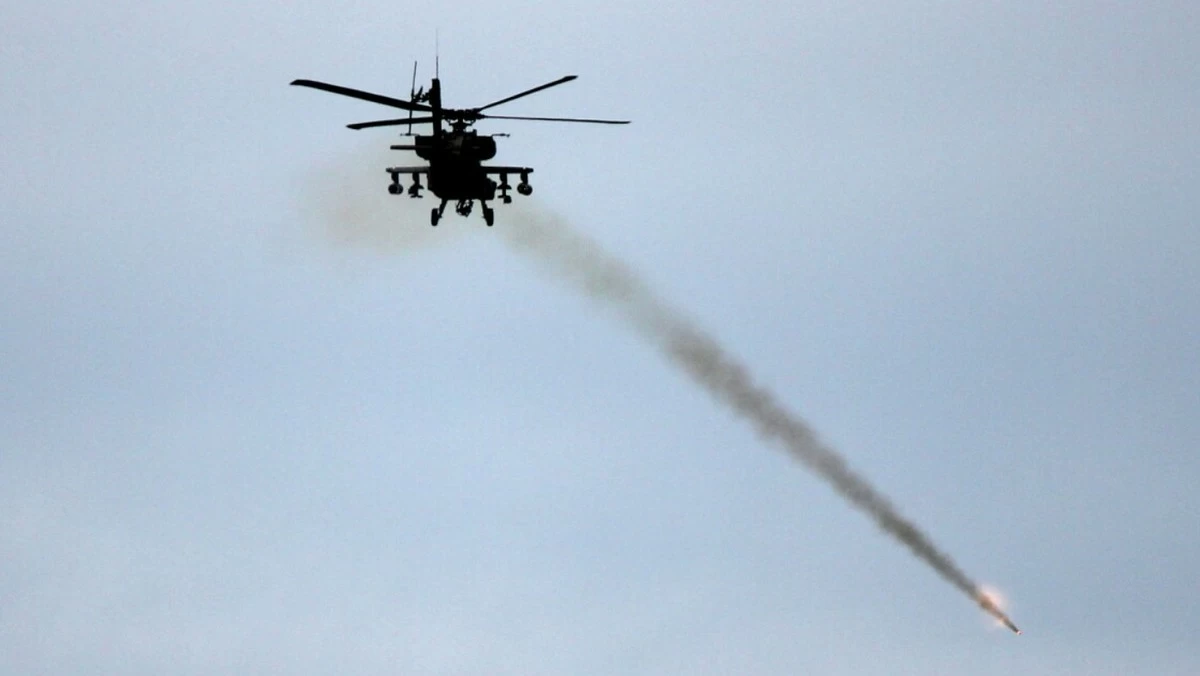
The APU-L launchers are designed to carry Russia's Light Multipurpose Guided Missile (LMUR), also known as Izdeliye 305, a precision-guided weapon capable of striking moving targets.
The missile entered Russian military service in 2022 and has since been widely used in the Ukraine war.
Unlike conventional unguided weapons, the LMUR allows an operator to guide the missile during flight and adjust its trajectory towards the intended target.
According to the US Army's Worldwide Equipment Guide, APU-L launchers are designed for Russia's Mi-28 attack helicopters and can carry two missiles each.
Iran has already acquired Russian Mi-28 helicopters. Iranian officials announced in November 2023 that arrangements for their delivery had been finalised. Images published online in January 2026 subsequently showed an Mi-28 helicopter at an aviation facility in Tehran, according to the FT.
A letter from Russian missile manufacturer Vympel dated May 2024 also warned another defence bureau that delays in supplying launcher components could jeopardise several contracts.
Russia also helping Iran develop supersonic cruise missiles
The latest revelation follows an earlier FT investigation published in September 2026, which exposed a secret Russian programme to help Iran develop advanced supersonic cruise missile technology.
The programme, codenamed C430L, began in 2023 and involved Russian missile specialists assisting Tehran in developing ramjet propulsion technology capable of sustaining missile flight at several times the speed of sound.
The technology could eventually provide Iran with advanced anti-ship and land-attack cruise missiles, potentially threatening US aircraft carriers and other naval vessels operating in the Persian Gulf and wider Middle East.
According to leaked Russian correspondence, travel records and military patents reviewed by the newspaper, Russian engineers repeatedly travelled to Iran and examined Iranian flight-test data, advising on fuel systems, combustion stability, air intake and engine design.
Iran has reportedly built and flight-tested the propulsion system. However, the FT found no evidence that a Russian-assisted supersonic cruise missile had entered operational service.
Former CIA military analyst Jim Lamson told the newspaper that the technology could give Iran a qualitatively new strategic weapon capable of threatening US Navy vessels.
Fabian Hinz, a senior analyst at Conflict Armament Research, described the assistance as a highly significant transfer of strategically sensitive military technology.
Military cooperation expands despite Ukraine war
The launcher agreement and the C430L programme illustrate the expanding dimensions of Russian military assistance to Iran, ranging from weapons equipment to specialised engineering expertise.
The FT has also previously reported that Moscow agreed to supply Iran with Verba shoulder-fired air defence systems.
Military cooperation between the two countries has developed in both directions. Iran previously supplied Russia with Shahed attack drones, which Moscow subsequently used extensively in Ukraine, while also helping Russia establish domestic production facilities for the weapons.
Western intelligence officials told the FT that military cooperation between Moscow and Tehran had strengthened further during the conflict involving Iran, the United States and Israel.
The developments also raise questions about US President Donald Trump's assessment that Russia was doing "very little, if anything" to assist Iran.
Nicole Grajewski, a scholar at the Carnegie Endowment for International Peace, told the newspaper that the latest developments demonstrated Moscow's willingness to continue supplying Tehran despite its own military requirements and Western objections.
Russia maintains limits on military involvement
Despite the growing cooperation, analysts caution against interpreting Russian assistance as an indication that Moscow is prepared to become a direct participant in the conflict.
Hanna Notte, Eurasia programme director at the James Martin Center for Nonproliferation Studies, said Russia continued to balance its support for Iran against its broader diplomatic and strategic relationships with the United States and other Middle Eastern countries.
She described Moscow's assistance as operationally useful to Tehran but not a decisive factor capable of changing the outcome of the war.
The latest revelations underline how Russia and Iran are deepening their defence relationship, with potential long-term consequences for military security across the Gulf and the wider Middle East.