



11/12/2025

Share:
11/12/2025
Share:

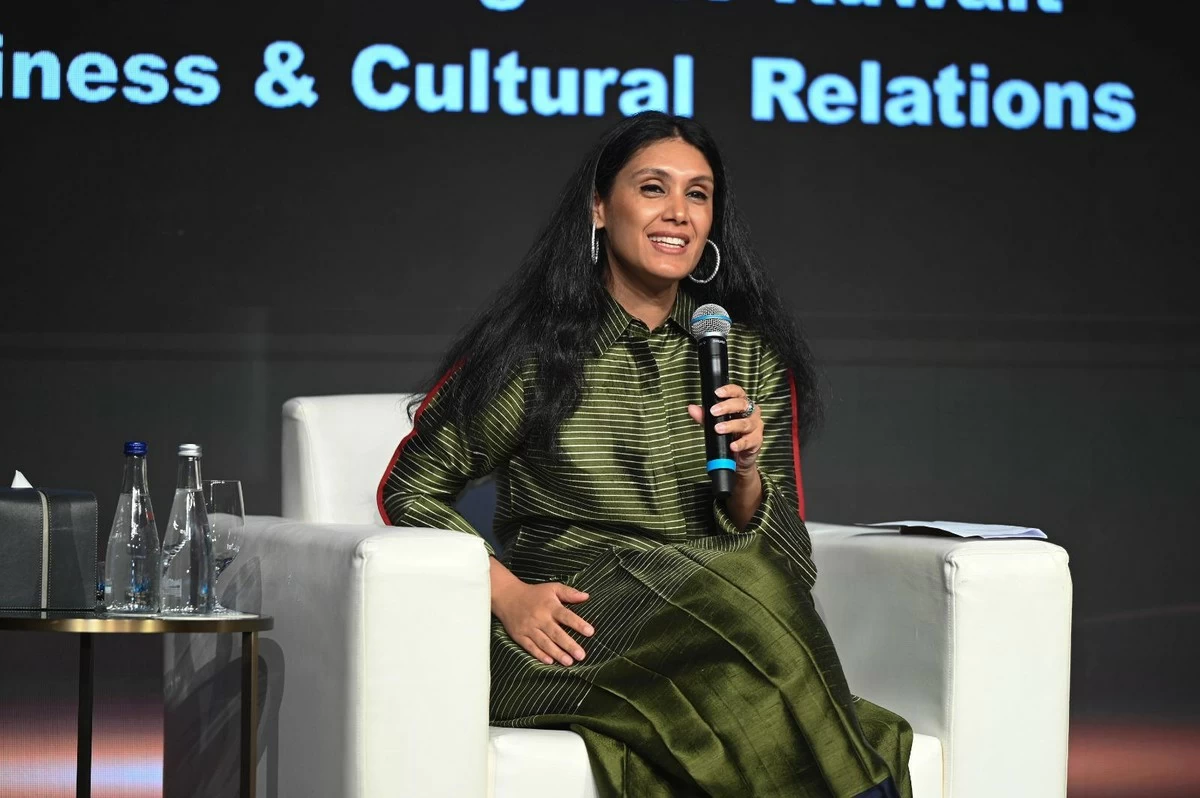
When Roshni Nadar Malhotra walked into the Waldorf Astoria in Kuwait City for the Indian Business and Professional Council’s (IBPC) 24th Year Celebrations, the energy in the room shifted. The attendees, who were seasoned professionals, young entrepreneurs, and community leaders, had gathered to meet a woman who not only heads one of India’s most influential global technology companies - HCL Technologies, but also embodies the values of purposeful leadership, sustainability, and social transformation.
The IBPC, which recently celebrated its 24th anniversary, is a non-profit voluntary association whose membership includes leading members of the Indian business community, senior corporate executives and professionals from the private sector and also senior managers of Indian public sector undertakings in Kuwait. In addition to promoting business ties between India and Kuwait, IBPC also strengthens cultural relations between the two countries. The highlight of the evening was the IBPC awards that honoured Indian and Kuwaiti personalities who have contributed to strengthening business and cultural ties between the two countries. Over the years, the IBPC awards have set standards and encouraged excellence in both the workplace and community service.
For Roshni, returning to Kuwait after 15 years felt like stepping into an entirely new landscape. “It’s changed a lot since then, lots of development… a little more traffic, a lot of cars. It’s great,” she said with a smile, noting the country’s rapid advancement and modernisation. This juxtaposition of returning to a place transformed while she herself has transformed the organisation she leads sets the tone for her journey as Chairperson of HCL Technologies and as one of India’s most influential women in business and philanthropy.
HCL’s story is inseparable from that of its founder, Shiv Nadar, Roshni’s father. At the IBPC event, Nadar Malhotra recounts the extraordinary origins of the company- a narrative marked by vision, timing, and unshakeable belief. “HCL was founded by my father, Mr Shiv Nadar, in 1976. It was a very interesting time in India. The economy was closed, IBM and Coca-Cola were leaving India, and my father and his fellow co-founders decided to build India’s first indigenous PCs,” she explained. The company started with a humble ₹1.83 lakhs and today stands as a multinational giant with over $14 billion in revenue and a market cap of more than $50 billion. As Roshni notes, “It’s been a phenomenal journey.”
In 2020, when Roshni Nadar Malhotra took over as Chairperson, she became the first woman to lead a major Indian IT company. But she approaches her role with humility and clarity: “I haven’t stepped into his shoes. I think I stand on his shoulders.” For her, leadership is less about inheriting authority and more about expanding vision. Technology evolves rapidly, and so must leadership. “We have to adapt. We have to change. HCL is a very different company today,” she said, pointing to the company’s growth from $8 billion to $14 billion in revenue over just a few years. But she acknowledges the symbolic power of her position. “There isn’t another tech company in India that has a woman chair. So that’s good, that’s what’s different,” she said, earning applause from the audience.
In regions like India and the Middle East, where women in boardrooms remain limited, her rise serves as both an inspiration and a challenge to the traditional corporate ecosystem. Roshni’s leadership extends far beyond the corporate sphere. She is also a central force behind the Shiv Nadar Foundation and The Habitats Trust, dedicated to conservation and sustainability.
Roshni Nadar Malhotra’s journey is a reflection of India’s own evolution-bold, resilient, and aspirational. From the pioneering days of indigenous computing to her leadership in global AI transformation, her stewardship of HCL aligns with the needs of a rapidly shifting world. In Kuwait, she not only celebrated IBPC’s milestone but also reaffirmed the shared destiny of regions striving for technological and social advancement. And as she said with characteristic calm confidence: “It’s important to stay the course.” In an exclusive interview with Arab Times, Roshni Nader Malhotra shared her thoughts on the role of powerful women in social development, the shifts necessary to nurture female talent and the need to empower men to embrace gender equality, and for the Indo-Gulf region to collaborate more on social development, particularly in women’s skill-building, entrepreneurship, and leadership training.
AT - As someone who leads both a major global enterprise and significant philanthropic initiatives, how do you believe women in positions of influence can reshape the ecosystem of social development, particularly in education, skill-building, and community leadership to create lasting, systemic change?
Roshni N Malhotra - In my own experience, women tend to approach development work with a sharper focus on long-term impact rather than short-lived interventions. At HCLFoundation and through our education initiatives, I have seen how women-led teams bring a deep understanding of community needs, especially in areas such as schooling, health, and livelihoods.
When women in leadership insist on accountability, measurable outcomes, and quality, the entire system benefits. What creates lasting change is not scale alone. It is sustained engagement and a clear understanding of how social challenges influence one another. Women in positions of influence have the ability to connect these dots and ensure that progress is both inclusive and durable.
AT- You’ve led in spaces, technology, governance, and philanthropy, where women globally are still underrepresented. What shifts do you think are necessary in both Indian and Middle Eastern corporate cultures to create leadership pipelines that genuinely nurture female talent beyond token representation?
Roshni N Malhotra- In the corporate world, I have learnt that policies matter, but culture matters more. At HCLTech, for example, we have seen that women grow when they are given important roles and backed them with trust. The combination of opportunity and belief is powerful. In both India and the Middle East, organisations need to consciously remove the invisible barriers that slow down women’s careers. Simple things make a difference. Transparent evaluations. Supportive managers. Return-to-work programmes that genuinely help women rebuild their careers. And role models who show that leadership is not defined by gender.
Leadership pipelines succeed when companies stop viewing gender diversity as a compliance requirement and start treating it as a serious investment in capability.
AT - Considering HCL’s work and your philanthropic focus on education, how can technology be used not just to educate girls, but to help them transcend generational and geographic barriers—especially in regions where traditional gender roles remain deeply entrenched?
Roshni N Malhotra - Technology becomes truly transformative when it improves access, quality, and confidence. Digital tools can bring learning to communities that have historically been excluded, but technology alone cannot shift mindsets. It must be paired with strong local engagement, supportive families, and reliable infrastructure. Across our work in India, technology has fundamentally altered what girls can aspire to. I have met students who first encountered coding through a mobile lab or discovered robotics in a government school classroom. These experiences do more than educate. They change the child’s sense of what is possible.
However, technology alone does not shift the existing norms. You need community agreement. You need parents who see the value of digital literacy. You need teachers who are confident enough to facilitate it. Once those pieces align, technology becomes a bridge between where girls are and where they want to go, regardless of their geography or circumstances.
AT - Since empowerment can’t be achieved by women alone, what do you believe is the most effective way to bring men, especially boy into the conversation around gender equality, both in India and in socially conservative regions like the Middle East?
Roshni N Malhotra - Engaging men is central to advancing gender equality. The most effective way is to start early. Boys need to see equality as normal, not as an exception. Schools, families, and community programs play an important role in shaping this mindset. During field visits, I have noticed that when boys grow up seeing girls access opportunities, equality becomes normalised for them. You cannot force this conversation; it must be built through consistent exposure. Schools, especially government schools, are powerful spaces for this because they influence attitudes early.
Engaging fathers is equally important. They are often the decision-makers in conservative settings. When they see that educating girls improves family stability and income potential, their participation becomes far more active. Ultimately, gender equality becomes sustainable only when men understand that it strengthens entire communities, not just women.
AT - Given the strong India–Gulf relationship, what opportunities do you see for collaboration between the two regions on social development, particularly in women’s skill-building, entrepreneurship, and leadership training?
Roshni N Malhotra - India and the Gulf share a long-standing partnership, and both regions are now investing heavily in technology, skills, and education. I see clear opportunities for collaboration in digital skilling models, particularly those that have worked well in India. Our experience shows that when training is flexible, linked to industry needs, and accessible to women, participation increases significantly.
There is also potential for joint programmes in entrepreneurship and leadership development. Many women in both regions are ready to scale their skills but need structured support, networks, and mentorship. A collaborative approach between governments, corporates, and foundations can help create these pathways and build a more inclusive workforce on both sides.