



19/02/2026

Share:
19/02/2026
Share:

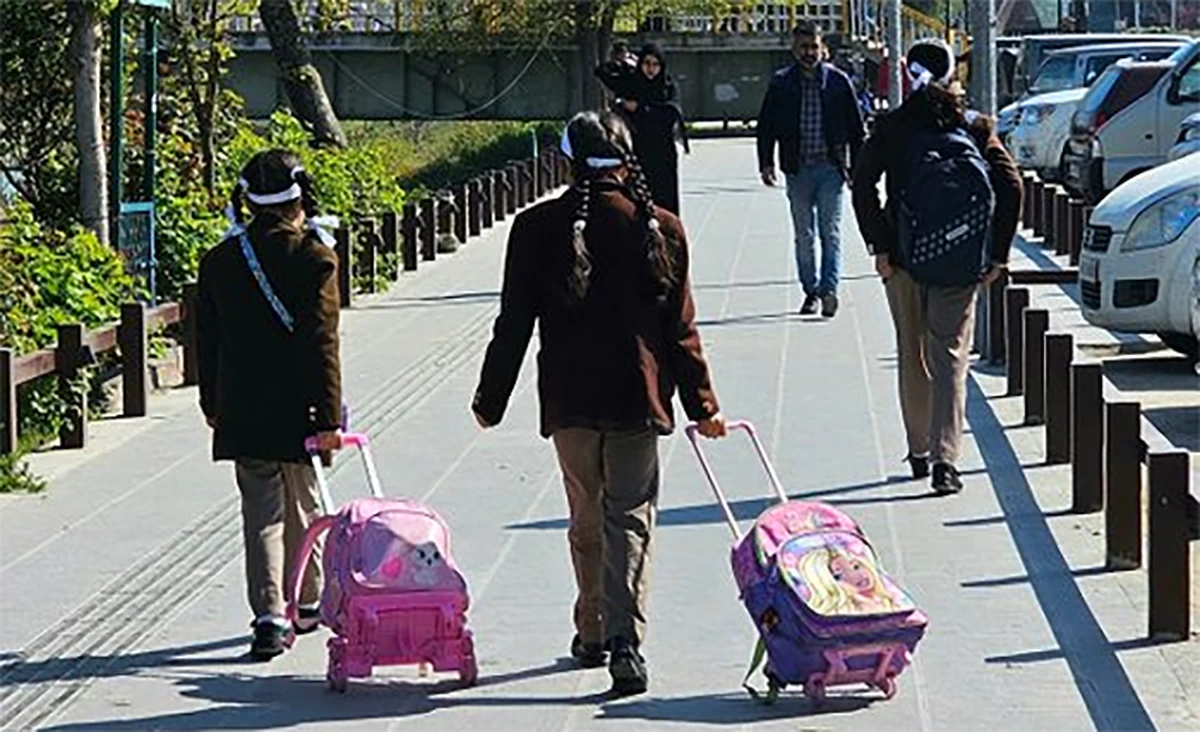
The government's decision to relocate private schools from residential neighbourhoods has triggered widespread concern, uncertainty, and frustration. For years, the possibility lingered over many well-established institutions like a Damocles’ sword, raised but never brought down. This time, however, the decision appears resolute, with a firm deadline and renewed regulatory conditions that make postponement unlikely.
Education in Kuwait has long been more than a public service; it has been a pillar of national development. From the early Katateeb (traditional schools) to the establishment of Al Mubarakiya School in 1911- the country’s first formal school, education has shaped Kuwait’s social and economic trajectory. Today, approximately 1,200 public and private schools serve more than 600,000 students. Of these, around 349,000 attend private schools. With a literacy rate of 97%, Kuwait stands as a regional example of educational advancement.
The recent municipal decision mandates the closure of private schools operating in residential areas by the end of the 2027–2028 academic year. New conditions require that relocation land be approved by the General Traffic Department and supported by a formal traffic impact study before handover. Officials argue that relocating schools will ease congestion, reduce noise, and improve safety in residential neighbourhoods- objectives aligned with broader urban planning reforms. This decision is likely to have far-reaching impacts, affecting not only schools and potentially their very existence but also the broader economy. Many families choose their homes based partly on proximity to schools. If schools are relocated away from residential neighbourhoods, families may reconsider their housing choices, potentially reducing demand in certain areas. In turn, this could influence property values across both established and outlying districts.
At face value, the recent ruling seems reasonable. Residential communities deserve thoughtful planning, reduced traffic strain, and improved safety. However, the question is not whether urban reform is necessary, but whether the chosen solution places disproportionate strain on institutions that have operated legally, responsibly, and with municipal approval for decades. Private schools that go back more than 4 decades are not temporary establishments occupying makeshift facilities. They are purpose-built campuses that were municipally approved and have functioned continuously for more than forty years. Over generations, they have educated thousands of Kuwaiti and expatriate students, many of whom now hold influential roles in Kuwait and abroad. These institutions have provided continuity through times of war, regional instability, and the COVID-19 pandemic, all without financial subsidy or state compensation.
For such schools, relocation is not a simple logistical shift; it is a complex and costly undertaking that affects infrastructure, staffing, student stability, and long-term planning. Securing land, obtaining approvals, designing facilities, and constructing campuses are multi-year processes that require substantial capital investment. “Two and a half years is hardly enough time to plan a new school campus, let alone to plan it and build it and that without even knowing where we are supposed to go,” says Humam Dashti (name changed), Director of the first private coeducational school in Kuwait to offer a British-style curriculum. The human dimension must also be considered. According to Fahad Al Garadi (name changed), a leading British-curriculum school in Kuwait in Salwa, approximately 55 per cent of private-school students are Kuwaitis, and this recent decision will also have a strong impact on them.
Not everyone agrees that the relocation will benefit communities. According to Fahad Al Garadi, the decision risks undermining long-standing community structures. “Kuwait’s residential neighbourhoods have long been home to private schools serving both Kuwaiti and expatriate families. These institutions are more than just classrooms; they are central hubs of community life, offering education, sporting activities, cultural programmes, and safe spaces for children to grow close to home. Yet, recent moves by the Municipality, in coordination with the Ministry of Education, to push these schools out of inner-city areas and into distant zones threaten to unravel decades of careful planning, community cohesion, and quality education.”
Speaking of how this decision will affect a school like NES, which has been rooted in its neighbourhood for decades, Humam Dashti says, “It will be very difficult for our parents, most of whom are based in Kuwait City. Having been on this site for the past 53 years and in the greater Kuwait City area for 57 years - this relocation represents a significant disruption for our community. If we are allocated land within Kuwait City to construct a new campus, the impact would be far less severe than if we were moved to a distant area such as Jahra. Our school is deeply rooted in the city. We now teach students whose grandparents once attended the school, and the majority of our families continue to reside in Kuwait City.”
From a different perspective, Saif Shamlan Al Musallam, a Kuwaiti businessman with professional interests in real estate, believes the government’s move is justified. “Schools cause disruption for the people living in their neighbourhoods. I know a lot of people who have been suffering for years. I would not rent a house near a school,” he says. “This is a good decision.” But Al Garadi disputes the reasoning behind the relocation. He says, “The official argument that schools are causing traffic congestion and noise pollution is deeply flawed. The reality is that well-managed schools, operating within regulated time zones, do not create more strain than residential towers and apartment complexes that have been approved and expanded often without proper oversight. Many houses that were originally licensed for single-family occupancy, particularly in areas such as Salwa and Jabriya, have been converted into multiple apartments through lax enforcement or favouritism. This has dramatically increased traffic, energy, and water consumption.” It is these types of developments not schools that are creating congestion, he argues. “Municipal authorities should focus on ensuring that homeowners revert to the original single-family licences or relocate multi-apartment living to designated commercial zones. Streets and road systems should also be properly planned and maintained, with the Ministry of Interior playing a stronger role in ensuring compliance with traffic rules, regulating parking, and supporting municipal planning. Suburbs like Shuweikh, Keifan, and Mansouriya demonstrate the benefits of well-designed roads and proper zoning.”
Al Musallam, meanwhile, points to demographic realities. He notes that the highest population density is in southern Kuwait, where both locals and expatriates live in large numbers. According to him, “The affected schools should relocate to Mahboula because land prices remain affordable there. I know a person who wanted to build a school in Bneid Al Gar. However, 4,000 square metres of land in Bneid Al Gar is priced at 14 million dinars. Finding it very high, he moved towards Mahboula, where land is still affordable.” He maintains that southern Kuwait is the logical destination for relocating schools. “The best bet is to lease the land, make another capital investment as needed, and return to operations. 4000 square metres of land in southern Kuwait will cost approximately 7.5 million, so it's wiser to lease the land. Areas like Sabah Al Salem is exhausted.” Location, however, may determine which schools are ultimately affected. According to a source who doesn’t want to be named, “Salmiya, for example, is not a residential area, nor are parts of Jleeb Al Shuweikh and some other areas in Kuwait. Schools in these localities will not relocate.” Al Musallam agrees, stating that schools in commercial areas will not have to relocate.
Ravi Ayanoli, Principal of FAIPS, one of Kuwait’s largest Indian schools, located in Ahmadi offers a more balanced assessment. He says, “Relocating schools to purpose-built campuses ensures safer environments with appropriate infrastructure, better compliance with modern educational standards, and room for future expansion. Additionally, the move opens up opportunities for some institutions to evolve into boarding schools or comprehensive development centers, focusing not only on academics but also on holistic student growth through sports, arts, and life-skills education.” At the same time, he acknowledges the practical challenges involved. “On the other hand, the decision presents several challenges for students, parents, and school managements. Relocation may result in longer daily commutes for students and staff, increasing travel time, costs, and fatigue. The financial burden of acquiring land and building new infrastructure could strain school managements and lead to higher school fees(especially for Indian schools, where fees have traditionally remained far lower than those of British or American schools) Moreover, schools often act as social and cultural anchors within neighborhoods, and their removal may weaken community bonds and reduce parental engagement. Concentrating many schools in designated zones could also shift, rather than solve, traffic congestion problems by creating new bottlenecks in those areas.”
In theory this move, this would improve residents’ quality of life, less noise from buses, horns, and announcements; reduced roadside crowding; and greater privacy and safety for families living nearby. Authorities argue that purpose-built campuses will provide adequate parking, safer bus circulation, and room for expansion, advantages that villa-based or space-constrained schools often lack. Yet the decision is not without significant drawbacks.
One major concern is reduced convenience for families. Many parents deliberately choose homes close to schools. Relocation could mean longer daily commutes, higher fuel costs, and more time lost in traffic, particularly for working parents placing additional strain on daily family life. There may also be economic consequences. Some residential areas especially villa zones known for school clusters and popular among expatriate families could lose part of their appeal. This may reduce rental demand and slow property price growth in affected neighbourhoods. Moreover, there is the risk that traffic congestion will simply shift rather than disappear. Concentrating multiple schools in designated zones could create new bottlenecks elsewhere. Sabah Al Salem already offers a glimpse of this possibility. “You should see how bad the traffic is at Sabah Al Salem in the mornings and afternoons,” says Snehika Gupta (name changed), owner of a chain of Indian schools who resides in the area. In such cases, traffic problems are not solved but relocated.
Another pressing concern is cost. Relocation to approved zones often entails acquiring expensive land and constructing entirely new campuses. This implies higher operating costs, which could ultimately make education more expensive for families. Schools will face significant construction expenses, infrastructure investment, and possible rent increases- costs that may inevitably be passed on through higher tuition fees. Fahad Al Garadi addresses this concern directly. “Private school owners, all Kuwaiti citizens, have operated under stringent financial controls, often maintaining fees at the same level for a decade while upholding international-quality education. Meanwhile, similar institutions across the GCC have adjusted fees to reflect economic realities. The unfair scrutiny and restrictive policies targeting Kuwaiti-owned private schools raise serious questions: why are these schools consistently penalised, suffocated, and treated as if they were the source of societal problems rather than as vital educational partners?”
Humam Dashti also highlights the financial implications of relocation. “Constructing a new campus is not cheap,” he says. “It’ll likely be in the millions, and so raising the capital, of course, will be an issue in terms of expenditure and will also affect operating costs. Student enrolment will be affected depending on where land is allocated. If the land is in a far-flung area, our profile might change.” Alok Srivastav (name changed), Principal of an Indian school in Khaitan, says, “If they are shifting the schools, are they going to provide ready-made infrastructures for schools to shift? The key question is who will build the school's infrastructure? There is also worry about the new area getting crowded in the future. A lot of questions need answers.” Shaheen, a parent whose child studies in the same Indian school, shares, “ Truly speaking, this decision is going to affect a lot of families, not only financially. It poses a big dilemma. My husband and I are both working, so it's convenient to stay near the school. Financially, if a family has three children, it will need to cover transportation for all three. Moreover, it will be a big strain on the student to travel a long distance. Wherever they plan to move the school, it will, in time, transform into a residential area. What will they do after that?
Compensation is another unresolved issue. According to the owners and management of these Kuwaiti-owned private schools, no clear support mechanisms have yet been communicated. “We have heard nothing yet about subsidies or support from the authorities,” says Humam Dashti. “For now, we are waiting for updates and trying to get more details about the decision and how flexible it is.”
Fahad Al Garadi raises a broader fairness argument. “If private landowners are displaced for public infrastructure projects, they are usually compensated fairly. So what compensation or plan exists for these schools, which have invested heavily in buildings and infrastructure while contributing immeasurably to Kuwait’s social and economic fabric? Rather than penalising established schools, authorities should focus on correct urban planning, reviewing current homeowners’ compliance with single-family occupancy rules, and expanding new residential zones responsibly.”
Ultimately, the question is not simply whether schools should relocate, but how Kuwait chooses to balance urban reform with educational stability. Reducing congestion and improving residents' quality of life are legitimate goals. Yet schools are not temporary commercial ventures; they are long-standing institutions woven into the nation's social and economic fabric. Any policy that reshapes their future must weigh traffic flow against community continuity, infrastructure planning against generational legacy, and administrative efficiency against the lived realities of families. If reform is to succeed, it must be thoughtful, phased, and fair, ensuring that in solving one problem, the country does not inadvertently create several others.
By Chaitali B. Roy
Special to the Arab Times