


10/06/2026

Share:
10/06/2026
Share:

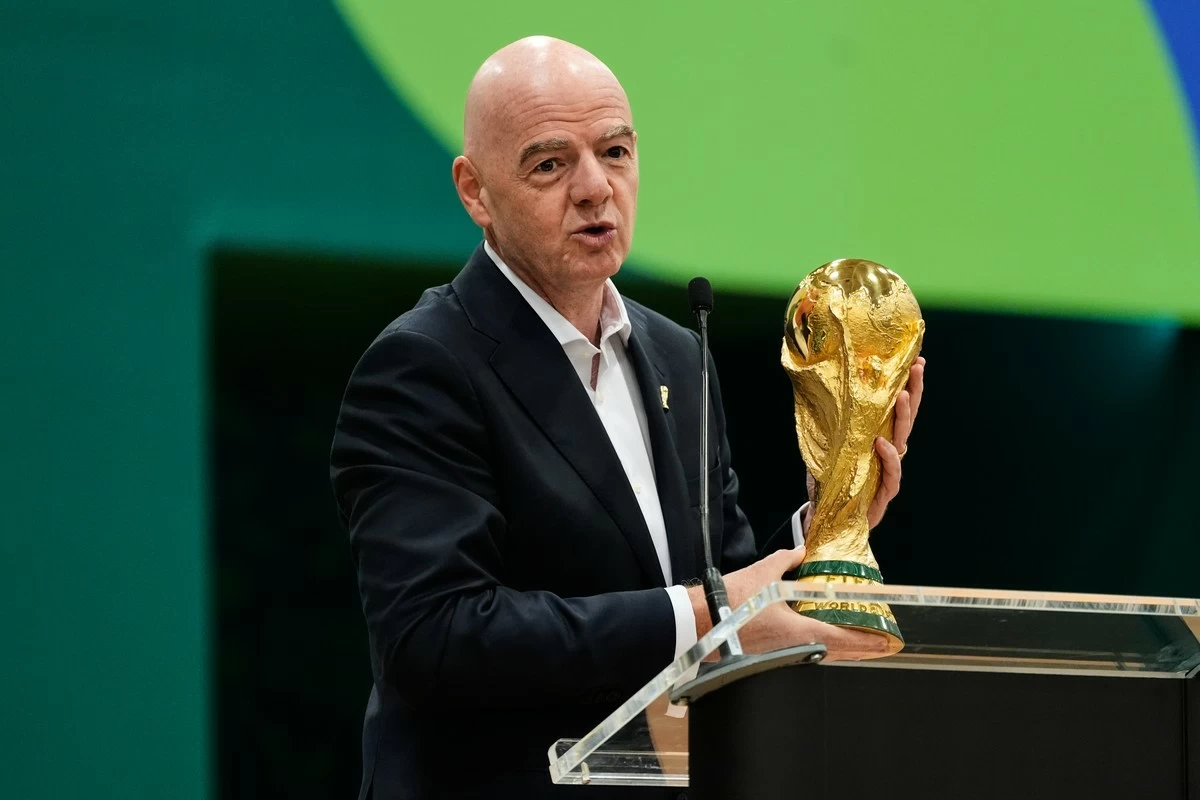
NEW YORK, June 10 (KUNA): Soccer fans around the world will turn their attention on Thursday to the start of the 2026 FIFA World Cup, which will be jointly hosted by the United States, Canada, and Mexico.
The tournament marks the largest edition in World Cup history and will run until July 19, featuring 48 national teams for the first time.
The opening match will take place at Mexico City’s iconic Azteca Stadium, where Mexico will face South Africa.
Under the new format, the 48 teams are divided into 12 groups of four. The top two teams from each group, along with the eight best third-placed teams, will advance to the Round of 32.
Matches will be staged across 16 cities in the three host nations – 11 in the United States, three in Mexico, and two in Canada. The United States will host the majority of the fixtures, including the final stages of the tournament.
Mexico City will host World Cup matches for the third time, having previously staged games in 1970 and 1986. Canada, meanwhile, will host the tournament for the first time, marking a historic milestone.
The expanded edition will feature 104 matches, up from 64 in previous tournaments that included 32 teams.
FIFA has allocated record prize money of around USD 871 million for this edition, the largest in the tournament’s history.
The World Cup winner will receive USD 50 million, while the runner-up and third-place finisher will earn USD 33 million and USD 29 million, respectively.
Brazil remains the most successful nation in World Cup history with five titles, followed by Germany and Italy with four each, Argentina with three, and France and Uruguay with two apiece.
Defending champion Argentina won the 2022 World Cup in Qatar after defeating France on penalties in the final.
A record eight Arab nations will compete at the 2026 FIFA World Cup in the United States, Canada and Mexico, marking the largest Arab representation in the tournament's history following FIFA's expansion to 48 teams.
Morocco heads into the competition carrying the hopes of both the Arab world and Africa after its historic run to the semi-finals at the 2022 World Cup in Qatar, where it became the first Arab and African nation to reach the last four. The Atlas Lions will make their seventh World Cup appearance and have been drawn in Group C alongside Brazil, Scotland and Haiti. Egypt returns for its fourth World Cup campaign after previous appearances in 1934, 1990 and 2018. The Pharaohs, who were the first Arab and African nation to compete at the World Cup, will face Belgium, Iran, and New Zealand in Group G.
Algeria will feature in the tournament for the fifth time, having previously qualified in 1982, 1986, 2010 and 2014. Their best performance came in Brazil 2014 when they reached the Round of 16. Algeria has been placed in Group J with defending champions Argentina, Austria, and Jordan.
Jordan, meanwhile, will make its long-awaited World Cup debut after years of steady progress on the international stage. The Nashama will share Group J with Argentina, Algeria, and Austria, with the Algeria-Jordan clash set to be the first all-Arab encounter of the tournament.
Tunisia will make its seventh World Cup appearance, continuing its consistent presence among football's elite. The Carthage Eagles will be aiming to reach the knockout rounds for the first time as they take on the Netherlands, Sweden, and Japan in Group F.
Saudi Arabia also returns for a seventh World Cup campaign. The Green Falcons, whose best result remains a Round of 16 appearance in 1994, face a difficult task in Group H against Spain, Uruguay, and Cape Verde.
Iraq is back on football's biggest stage for the first time since its lone previous appearance in Mexico in 1986. The Lions of Mesopotamia have been drawn into a challenging group featuring France, Senegal, and Norway.
Qatar will participate in its second consecutive World Cup after debuting as hosts in 2022. The Qataris are seeking their first World Cup victory and a maiden qualification to the knockout stage. They will compete in Group B alongside Canada, Bosnia and Herzegovina, and Switzerland.
With eight representatives spread across the tournament, Arab football will enjoy unprecedented visibility on the global stage as the region looks to build on Morocco's historic achievement in Qatar four years ago.