


02/09/2026

Share:
02/09/2026
Share:
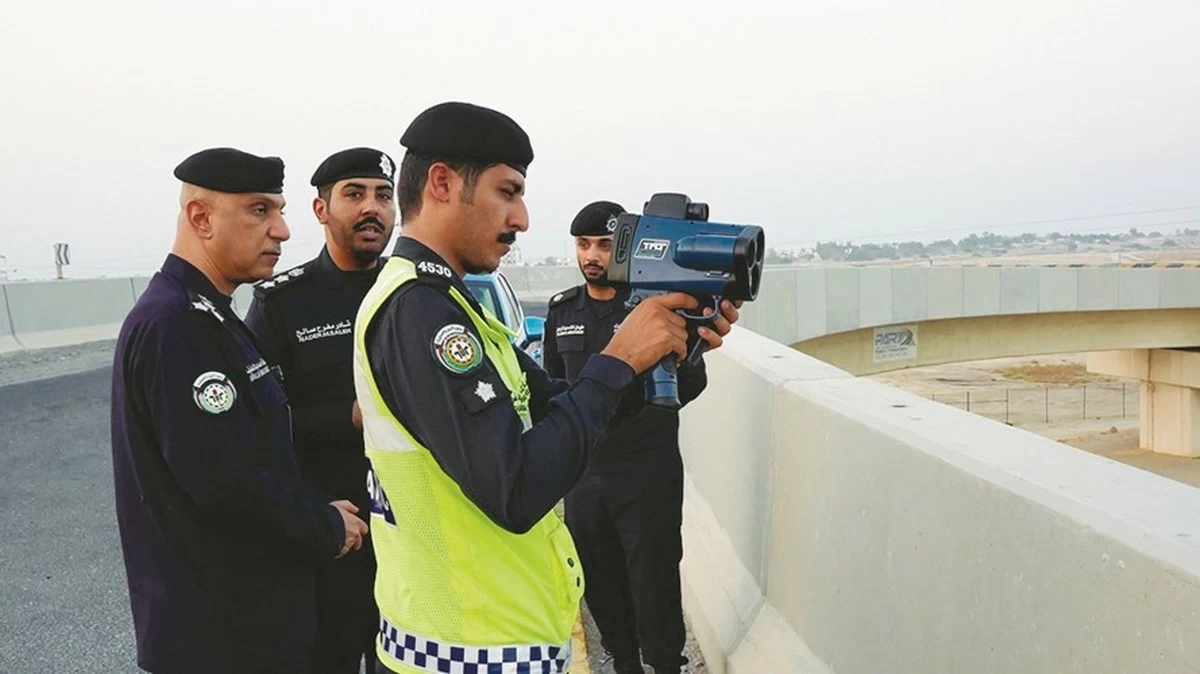

He said these articles cover serious violations like reckless driving, car racing, speeding, failure to wear a seatbelt, using a mobile phone while driving, non-compliance with towing regulations, deliberately obstructing traffic, overtaking, making excessive noise and running the red light. He indicated that these are the most common violations that warrant vehicle impoundment and endanger the lives of road users. He clarified that the system simplifies matters for everyone, as instead of allocating large impoundment lots, the vehicle will be impounded at the home of the violator. He pointed out that for certain violations, such as extremely loud exhaust mechanisms, home impoundment is not permitted, so the vehicle must be referred to the impoundment lot to remove the source of noise from the vehicle. He added that other violations like reckless driving and some serious offenses are not covered by home impoundment. He stated that some violators have poor driving record, so their vehicles should not be impounded at their homes, because they will likely break the impoundment rule and use the vehicle.
He disclosed that there is a designated area at the impoundment lot for those who wish to have their vehicles impounded at home. He clarified that those concerned who currently have impounded vehicles can complete the impoundment period at home. He said the impoundment period varies depending on the violation, with a maximum of 60 days. He emphasized that a vehicle impounded at home may only be moved in case of necessity, such as fire or emergencies documented by an official report. He said if a person deliberately violates the terms of home impoundment, a fine of KD50 will be imposed. “If the violation is repeated, the request for a settlement will be rejected and the case will be referred to the traffic court,” he added.
He pointed out that Article 34 is clear and the penalty is imprisonment for up to two months or a fine ranging from KD150 to KD200. He stated that in the event of intentionally damaging or tampering with the impoundment device, a case of damaging state property will be filed, and the violator will pay the cost of the device, and the vehicle will be transferred from home impoundment to the impoundment lot of the ministry. He went on to say that compliance with seatbelt and mobile phone use regulations reached 90 percent, proving the high level of public awareness on these rules. He also affirmed that there has been a noticeable decrease in some serious violations, which cause injuries or fatalities. “Previously, there were around 50,000 violations for parking in areas designated for those with disabilities, which now decreased to 300 violations annually. The penalty for parking in such areas includes vehicle confiscation and imprisonment for one to three years,” he elaborated.
On the other hand, Assistant Director General for Traffic Regulation Colonel Ayoub Al- Ayoub said the process of installing the device on a vehicle and impounding it through the device takes only five minutes, including recording the data of the violator and his vehicle, and specifying the location of the impounded vehicle at his home. He stressed that the chosen location must be a private residence, not necessarily owned by the violator. “Vehicles may not be impounded in public places, association parking lots or school parking areas. The device must be installed and securely locked inside the vehicle, either on the steering wheel or in another manner.
The impoundment period begins at midnight after the device is installed. Device installation fee is KD10 and the daily impoundment fee is KD2. If the vehicle is taken to the impoundment lot, the fee is KD1 per day. If the device is moved or it vibrates, the Operations Unit will receive a notification immediately. If the violator does not wish to have his vehicle impounded at home, a tow truck fee of KD10 and daily impoundment lot fee of KD1 will be charged. The device placed in the impounded vehicle is monitored through the Operations Unit and GPS tracking screens,” Al-Ayoub explained. He asserted that the General Traffic Department is not profit-driven, emphasizing that its goal is to regulate the behavior of motorists, because violations endanger the lives of road users and obstruct traffic flow. He affirmed that the Traffic Law is applied on everyone and there is no favoritism, in accordance with the directive of First Deputy Prime Minister and Minister of Interior Sheikh Fahd Al-Yousef.