


03/11/2026

Share:
03/11/2026
Share:
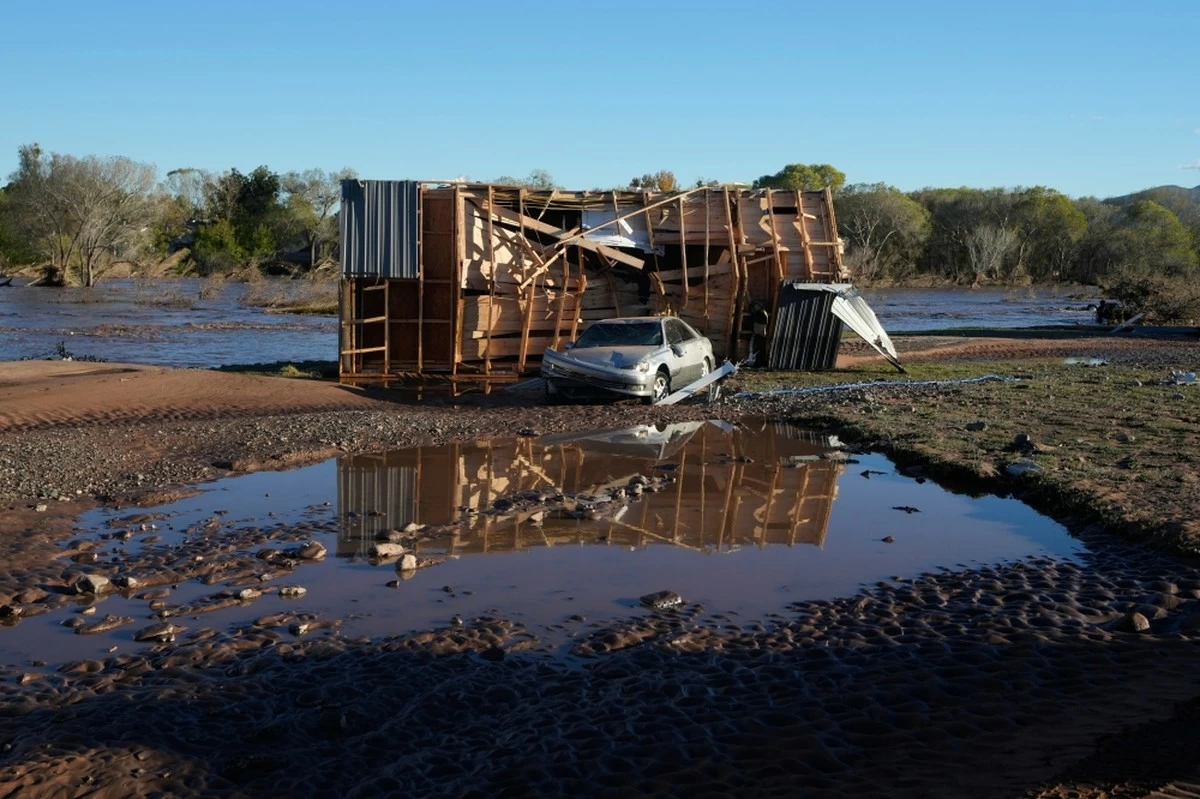

WASHINGTON, Nov 3, (AP): The skies were clearing, but the risk of flooding remained over parts of the US Southwest after powerful downpours sent massive amounts of water surging over the usually dry landscape, forcing hundreds to evacuate and keeping swift-water rescue teams busy. Officials said cleanup and repair efforts could take weeks. One person died in the floodwaters and police suspect a second death was weather-related.
The National Weather Service said Monday that isolated cloudbursts were still possible across the Four Corners region - where New Mexico, Arizona, Colorado and Utah meet - as the phenomenon stoked by warming Pacific waters known as El Niño disrupts weather patterns. Damage was widespread in Pagosa Springs, Colorado, a town of about 2,000.
Officials feared the San Juan River that flows through it would top a level that nearly wiped out the town in 1911. The river reached 16.81 feet (5.1 meters) Sunday - a foot lower than the historic level - flooding downtown streets before receding Monday, the weather service said. An entire home was lifted from its foundation and floated down the river before crashing into a pedestrian bridge.
A section of a road bridge west of town crumbled under raging waters, said Archuleta County Sheriff’s Office spokesperson Vicki Shaffer. Dozens of people were rescued across the region, including some by helicopter. Shaffer said first responders were searching for people who may be stranded. "That will continue, just like last week, until we’re sure that everybody who was trapped by the floodwaters has been rescued,” she said.
The Colorado Department of Transportation reopened several closed bridges and roadways late Monday. Shaffer said evacuation orders remain in place, though she wasn't sure how many people were affected. Pagosa Springs had just lifted an evacuation order from a previous storm, only to reimpose it Saturday. More than 20 trillion gallons of rain have fallen on the Four Corners states and Nevada in the past two weeks, according to calculations by former National Oceanic and Atmospheric Administration chief scientist Ryan Maue.
With Election Day coming, officials in Colorado and Utah arranged alternative voting plans for evacuated or stranded residents. Utah said Monday that residents of hard-hit San Juan County will be allowed to vote electronically because some of them may not be able to reach polling places. Evacuations were ordered along the San Juan River in New Mexico, which officials warned was still rising and could crest Tuesday through Wednesday.
The village of Chama, New Mexico, was also evacuated and cut off by road closures. Residents had to leave their homes along the Animas River in southwestern Colorado, where Durango police Chief Brice Current said authorities were checking Monday on those who rode out the flooding at home. "There's still a lot of people stranded,” Current said.