



19/04/2026

Share:
19/04/2026
Share:

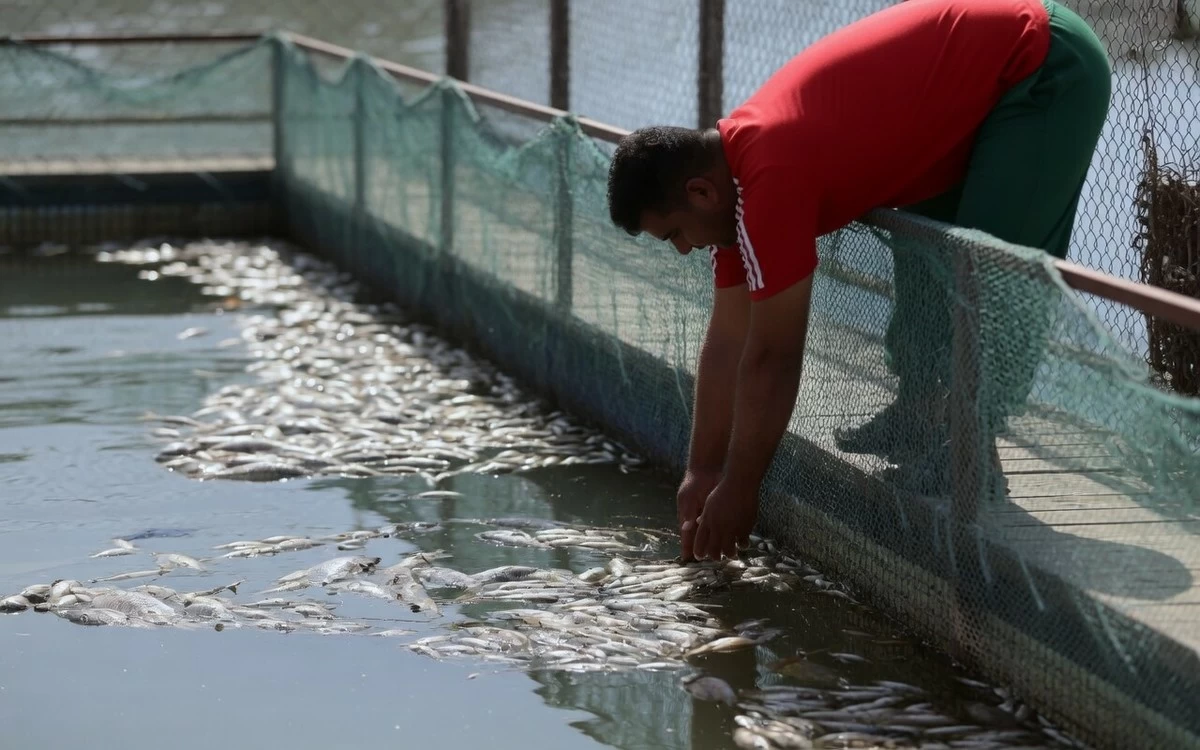
KUT, April 19: A major environmental disaster in southeastern Iraq has wiped out hundreds of tons of farmed fish after polluted water contaminated parts of the Tigris River, leaving local fish farmers facing severe financial losses.
In the Al-Zubaidiya district of Wasit province, fish farmer Haider Kazem said he buried around 300 tons of fish that died within just two hours after exposure to contaminated water.
“My entire project died within two hours… 300 tons of fish I have been raising for a year and a half. This has brought me back to square one,” Kazem said, standing beside empty ponds.
The 43-year-old father of eight estimated his losses at more than $1.1 million, saying he has no alternative source of income and is struggling with debts linked to the collapsed project.
“I felt like life was over for me… No one warned us that polluted water was coming so we could protect our fish,” he added.
According to local authorities, the crisis followed heavy rains that filled the Hamrin Dam in Diyala province, prompting water releases into the Diyala River, which later merged with the Tigris River and carried polluted and sediment-heavy flows downstream. The situation was worsened by untreated sewage discharge into the river system.
Satellite imagery from the Sentinel-2 mission between March 28 and April 12 reportedly showed a dark plume spreading southward at the confluence of the Diyala and Tigris rivers, indicating severe water contamination.
Environmental researcher Wim Zwijnenberg said the dark patterns reflected a stronger-than-usual current carrying pollutants downstream, increasing the impact on fisheries and water treatment systems.
Officials in Wasit province said the pollution led to the death of more than 1,000 tons of fish in total. Iraq’s Agriculture Directorate confirmed widespread losses, while authorities also reported over 20 cases of poisoning and skin infections linked to contaminated water consumption.
The crisis comes amid worsening environmental pressures in Iraq, where declining rainfall, rising temperatures, and reduced upstream water flow from Türkiye and Iran have sharply lowered water levels in both the Tigris and Euphrates rivers.
Authorities say new wastewater treatment projects are being prepared to improve water quality, but residents continue to face disruptions in water supply across southeastern regions.