



28/09/2026

Share:
28/09/2026
Share:
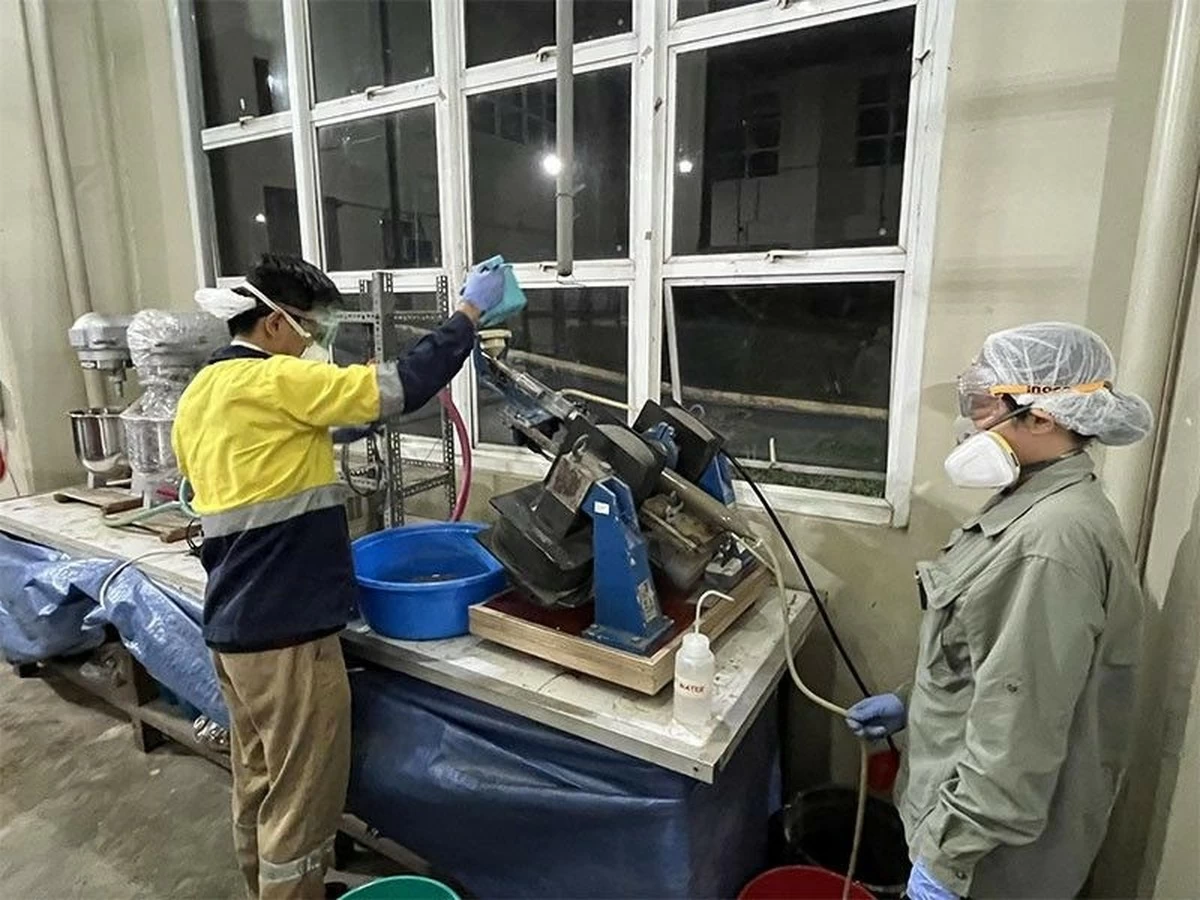

MANILA, Sept 28: Filipino scientists have identified uranium-bearing minerals in surface samples from Camarines Norte and successfully tested a laboratory process that increased the uranium concentration of the material, raising the possibility of further exploration of a potential domestic uranium resource.
Researchers from the University of the Philippines Diliman, the Department of Science and Technology-Philippine Nuclear Research Institute (DOST-PNRI) and Japan’s Akita University studied mineralized material collected from the Bessemer area of Larap in Jose Panganiban, Camarines Norte. Their analysis confirmed uraninite as the main uranium-bearing mineral in the surface material examined.
The researchers collected about 180 kilograms of material from a mineralized zone approximately half a meter wide. Laboratory analysis showed that the original material contained 244 parts per million (ppm) of uranium, along with copper, molybdenum and iron.
The team used an integrated two-stage mineral-processing method. First, flotation was used to separate copper- and molybdenum-bearing sulfide minerals. The remaining material was then subjected to magnetic separation, which removed magnetite, an iron-rich magnetic mineral, leaving a uranium-enriched non-magnetic fraction.
The process increased the uranium grade from 244 ppm to 305 ppm, while recovering about 73–74% of the uranium. The researchers described the work as uranium preconcentration, meaning the material has been upgraded for possible further processing.
However, the findings do not establish that Camarines Norte contains a commercially viable uranium deposit. The resulting material is also not yellowcake or nuclear fuel. Further processing, including leaching and purification, would be required to produce uranium concentrate.
Scientists said detailed geological, radiometric and geophysical surveys, followed by systematic drilling and analysis of drill cores, are needed to determine the depth, thickness and extent of the uranium-bearing zones and whether the resource has potential economic significance. Any future development would also require assessment of mining and processing economics, environmental and radiological impacts, regulatory requirements and community considerations.
The research comes as the Philippines works to introduce nuclear power into its future energy mix. The Philippine Energy Plan includes a target of at least 1,200 megawatts of nuclear capacity by 2032, followed by additional capacity in later years. However, Philippine energy officials said in July that actual grid integration could occur around 2035–2038, reflecting the regulatory and technical work still required.
The study, titled “Integrated magnetic separation-flotation process for uranium preconcentration from Cu–Mo sulfidic and magnetite-bearing sample,” was published in the 2026 Special Issue on Nuclear Science and Technology of SciEnggJ. The research was funded through the Department of Science and Technology Grants-in-Aid Program under the NuCycle Program-NuMER Project.
The latest research builds on decades of uranium exploration in the Larap-Paracale district. Historical IAEA material records uranium mineralization in the area dating back to the 1950s, but previous exploration did not establish a major uranium deposit.