


12/10/2026

Share:
12/10/2026
Share:

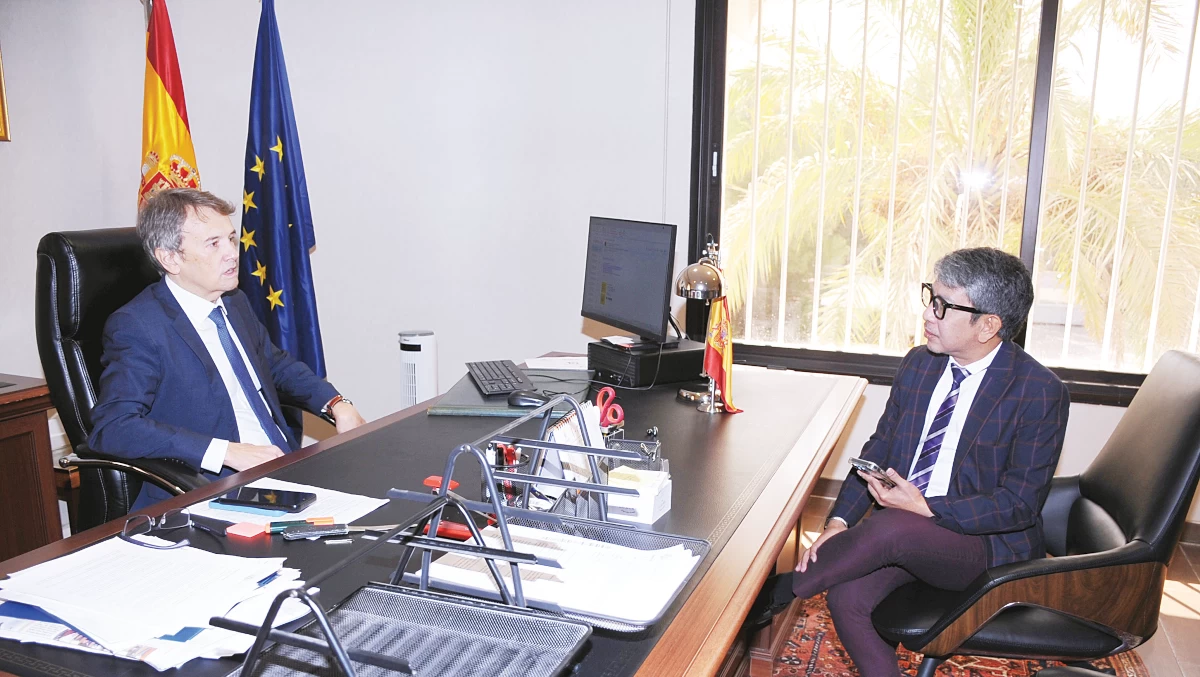
Spain’s Ambassador to Kuwait H.E. Manuel Hernández Gamallo answers questions during an exclusive interview with Arab Times ahead of Spain’s National Day on Oct 12, discussing bilateral relations, economic cooperation, cultural exchanges and opportunities to strengthen ties between the two countries
KUWAIT CITY, Oct 11: For Spain’s Ambassador to Kuwait, H.E. Manuel Hernández Gamallo, diplomacy begins not in chancelleries but in everyday encounters between families, entrepreneurs, artists and engineers whose work and warmth give bilateral ties their enduring strength. In an exclusive interview with Arab Times ahead of Spain’s National Day on Oct 12, he reflected on the relationship between Spain and Kuwait, the people who keep it moving, the businesses and infrastructure projects that leave a lasting footprint, and the cultural exchanges that bring the two societies closer.
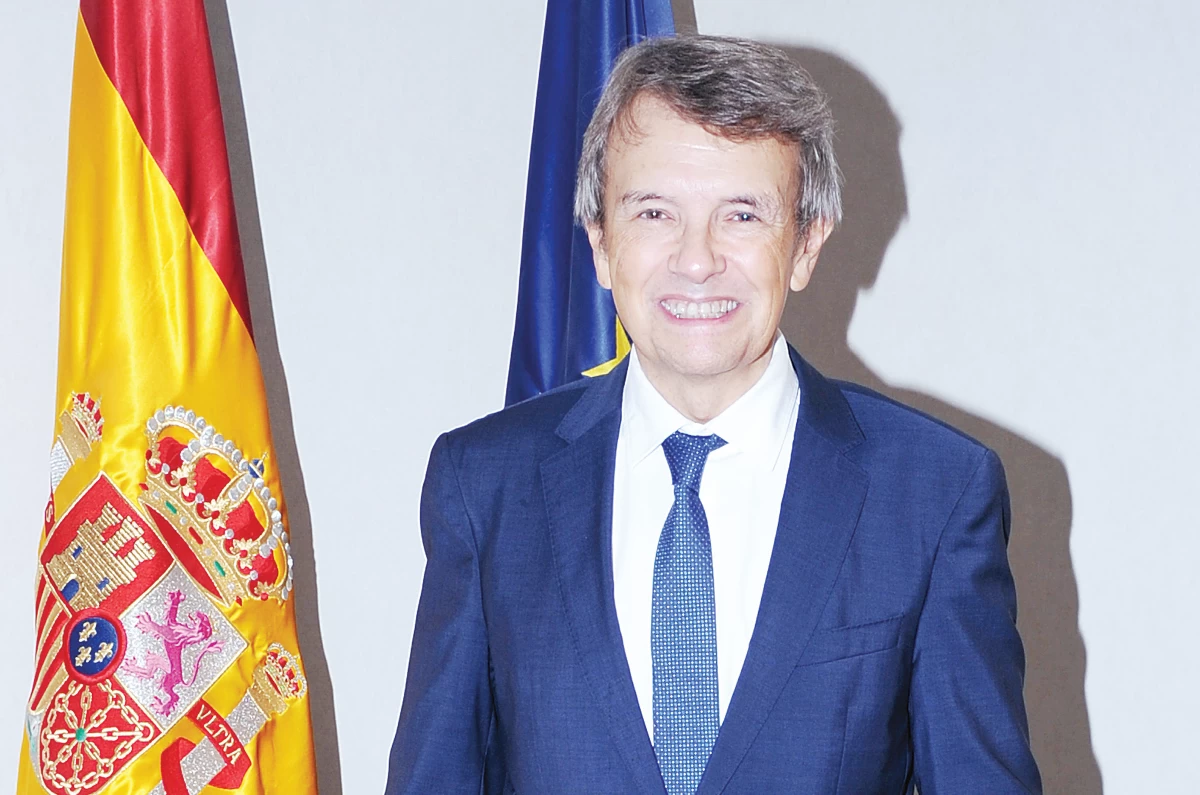
H.E. Manuel Hernández Gamallo, Spain’s Ambassador to Kuwait
First impressions:
A city that welcomes When Ambassador Gamallo first arrived, it was not a formal ceremony that left the strongest impression, but Kuwait itself. Driving through the capital at night, he recalls being struck by illuminated villas, traditional houses and mosques set against the evening sky. Yet beyond architecture, what stayed with him was the intangible: the openness with which Kuwaitis welcome others into their homes and lives - a hospitality he describes as distinctive even after serving in several countries. That personal dimension, he says, makes the Spain- Kuwait relationship feel natural and human-centered. “Human relations are very important,” he noted, describing Kuwait as an exceptionally sociable society.
A city that welcomes When Ambassador Gamallo first arrived, it was not a formal ceremony that left the strongest impression, but Kuwait itself. Driving through the capital at night, he recalls being struck by illuminated villas, traditional houses and mosques set against the evening sky. Yet beyond architecture, what stayed with him was the intangible: the openness with which Kuwaitis welcome others into their homes and lives - a hospitality he describes as distinctive even after serving in several countries. That personal dimension, he says, makes the Spain- Kuwait relationship feel natural and human-centered. “Human relations are very important,” he noted, describing Kuwait as an exceptionally sociable society.
A bridge made of people
|Asked to picture the bridge between Spain and Kuwait in a single image, the ambassador did not choose a landmark, dish or melody. He chose people. He pointed to the steady flow of Kuwaitis traveling to Spain for holidays, business and property, alongside Spaniards coming to Kuwait to work and build commercial relationships. “These are really the most effective bridges between both countries,” he said. For him, the relationship lives in Kuwaiti families who return to Spain year after year, in entrepreneurs who import Spanish products, in professionals collaborating across borders, and in Spanish companies whose work has become part of Kuwait’s physical landscape.
|Asked to picture the bridge between Spain and Kuwait in a single image, the ambassador did not choose a landmark, dish or melody. He chose people. He pointed to the steady flow of Kuwaitis traveling to Spain for holidays, business and property, alongside Spaniards coming to Kuwait to work and build commercial relationships. “These are really the most effective bridges between both countries,” he said. For him, the relationship lives in Kuwaiti families who return to Spain year after year, in entrepreneurs who import Spanish products, in professionals collaborating across borders, and in Spanish companies whose work has become part of Kuwait’s physical landscape.
When business leaves a footprint
Trade figures tell part of the story: Spanish exports to Kuwait grew by around 14 percent in 2024, approaching €300 million. But Ambassador Gamallo believes the more meaningful narrative lies behind the numbers, in Spanish firms that have delivered infrastructure and major projects in Kuwait. Some completed contracts and departed; others maintain a long-term presence. Their work, he argues, remains visible in roads, facilities and systems that serve as a lasting testimony to Spain’s contribution. This, for him, is what makes economic diplomacy meaningful: not merely the value of a contract, but the legacy it leaves behind. He highlighted Spanish entrepreneurs and businesses operating in Kuwait, as well as Kuwaiti businesspeople with ties to Spain, noting that the relationship is increasingly multidimensional - spanning infrastructure, energy, transport, trade, services and investment.
Trade figures tell part of the story: Spanish exports to Kuwait grew by around 14 percent in 2024, approaching €300 million. But Ambassador Gamallo believes the more meaningful narrative lies behind the numbers, in Spanish firms that have delivered infrastructure and major projects in Kuwait. Some completed contracts and departed; others maintain a long-term presence. Their work, he argues, remains visible in roads, facilities and systems that serve as a lasting testimony to Spain’s contribution. This, for him, is what makes economic diplomacy meaningful: not merely the value of a contract, but the legacy it leaves behind. He highlighted Spanish entrepreneurs and businesses operating in Kuwait, as well as Kuwaiti businesspeople with ties to Spain, noting that the relationship is increasingly multidimensional - spanning infrastructure, energy, transport, trade, services and investment.
A wider door for young professionals
The long-discussed EU-GCC free trade agreement could, in his view, elevate that relationship further. Beyond tariffs and barriers, the ambassador sees practical opportunities for young professionals, entrepreneurs and businesses on both sides: improved conditions for professional mobility, recognition of qualifications and greater economic fluidity. For a young Kuwaiti engineer, that could mean easier access to European opportunities; for a Spanish architect or engineer, greater access to Gulf markets. He added that the potential impact extends beyond traditional industries to technology and emerging businesses, with a more integrated economic environment smoothing supply chains and simplifying operations for both sides.
The long-discussed EU-GCC free trade agreement could, in his view, elevate that relationship further. Beyond tariffs and barriers, the ambassador sees practical opportunities for young professionals, entrepreneurs and businesses on both sides: improved conditions for professional mobility, recognition of qualifications and greater economic fluidity. For a young Kuwaiti engineer, that could mean easier access to European opportunities; for a Spanish architect or engineer, greater access to Gulf markets. He added that the potential impact extends beyond traditional industries to technology and emerging businesses, with a more integrated economic environment smoothing supply chains and simplifying operations for both sides.
Spain at Kuwait’s airport
Among the projects currently capturing his attention are the work of Spanish companies related to civil aviation services. For instance, one Spanish company is providing project-management and operational-readiness services in Terminal 2 of the Airport. Another important company is involved in key projects such as the air traffic management, the air control tower simulator and the new tower at Kuwait International Airport. In both cases, the Spanish involvement in strategic flagship projects, demonstrates that the relationship goes beyond physical infrastructure to the technology and expertise required to operate modern facilities. Other important projects implemented by Spanish companies, in fields such as energy facilities and transport infrastructure, will remain in Kuwait as a testimony of the Spanish commitment with the progress of this country.
Among the projects currently capturing his attention are the work of Spanish companies related to civil aviation services. For instance, one Spanish company is providing project-management and operational-readiness services in Terminal 2 of the Airport. Another important company is involved in key projects such as the air traffic management, the air control tower simulator and the new tower at Kuwait International Airport. In both cases, the Spanish involvement in strategic flagship projects, demonstrates that the relationship goes beyond physical infrastructure to the technology and expertise required to operate modern facilities. Other important projects implemented by Spanish companies, in fields such as energy facilities and transport infrastructure, will remain in Kuwait as a testimony of the Spanish commitment with the progress of this country.
When music becomes diplomacy
If infrastructure represents one side of the relationship, culture provides another. The ambassador recalled a Spanish guitar and multi-instrumental performance in Yarmouk Cultural Centre, “homage concert to Paco de Lucia”, the world-famous flamenco composer and virtuoso, that stayed with him, not only for its artistry, but because the guitar embodies a musical tradition with deep roots appreciated across cultures. He also remembered a chamber orchestra concert at Sheikh Jaber Al-Ahmed Cultural Centre (JACC), organized in collaboration with Kuwait’s National Council for Culture, Arts and Letters.
If infrastructure represents one side of the relationship, culture provides another. The ambassador recalled a Spanish guitar and multi-instrumental performance in Yarmouk Cultural Centre, “homage concert to Paco de Lucia”, the world-famous flamenco composer and virtuoso, that stayed with him, not only for its artistry, but because the guitar embodies a musical tradition with deep roots appreciated across cultures. He also remembered a chamber orchestra concert at Sheikh Jaber Al-Ahmed Cultural Centre (JACC), organized in collaboration with Kuwait’s National Council for Culture, Arts and Letters.
Another meaningful moment was the exchange between the diplomatic academies of Spain and Kuwait, during which young Spanish diplomats visited Kuwait for an intensive introduction to the country, its foreign policy and key institutions. For Ambassador Gamallo, such encounters matter because today’s young diplomats will become tomorrow’s architects of bilateral relations. He sees the exchange as a first step toward deeper institutional cooperation and hopes it will continue to grow.
Beyond the postcard:
Discovering Spain’s regions Spain is often introduced through familiar images of football, beaches, architecture, food and holidays. But the ambassador wants Kuwaitis to see another Spain. He encourages visitors to move beyond the well-known summer destinations and explore the country’s extraordinary regional diversity. Spain, he explained, is a nation of distinct regions, traditions, cuisines and even languages; traveling from one part to another can feel like entering a different cultural and geographical environment. He pointed to Spain’s historic heritage, including its network of Paradores - castles, palaces and other historic buildings converted into hotels while preserving their architectural and cultural character. For visitors, these places offer an unusual combination: the chance to experience history while enjoying modern comfort. He also urged Kuwaitis to discover Spain’s transport infrastructure, historic cities, public spaces and green areas - elements of contemporary Spanish life that may not appear in the standard tourist brochure.
Discovering Spain’s regions Spain is often introduced through familiar images of football, beaches, architecture, food and holidays. But the ambassador wants Kuwaitis to see another Spain. He encourages visitors to move beyond the well-known summer destinations and explore the country’s extraordinary regional diversity. Spain, he explained, is a nation of distinct regions, traditions, cuisines and even languages; traveling from one part to another can feel like entering a different cultural and geographical environment. He pointed to Spain’s historic heritage, including its network of Paradores - castles, palaces and other historic buildings converted into hotels while preserving their architectural and cultural character. For visitors, these places offer an unusual combination: the chance to experience history while enjoying modern comfort. He also urged Kuwaitis to discover Spain’s transport infrastructure, historic cities, public spaces and green areas - elements of contemporary Spanish life that may not appear in the standard tourist brochure.
Visa advice:
Plan ahead For Kuwaitis planning a trip to Spain - whether for tourism, study or business - the ambassador’s advice is straightforward: apply early. Applicants should check requirements carefully and submit well ahead of intended travel dates, particularly during peak periods. The embassy’s services, he said, work efficiently, but travelers can make the process smoother by allowing sufficient time and preparing documentation properly
Plan ahead For Kuwaitis planning a trip to Spain - whether for tourism, study or business - the ambassador’s advice is straightforward: apply early. Applicants should check requirements carefully and submit well ahead of intended travel dates, particularly during peak periods. The embassy’s services, he said, work efficiently, but travelers can make the process smoother by allowing sufficient time and preparing documentation properly
National Day:
More than a date Spain’s National Day, celebrated on October 12, carries historical significance for Spaniards and is associated with the broader Hispanic world. For the ambassador, the occasion is an opportunity not only to celebrate Spain but to reflect on the country’s complex history and its connections with different parts of the world. In Spain, the day is marked by a traditional military parade in Madrid and numerous local events; in Kuwait, the embassy plans the traditional National Day reception to celebrate the event.
More than a date Spain’s National Day, celebrated on October 12, carries historical significance for Spaniards and is associated with the broader Hispanic world. For the ambassador, the occasion is an opportunity not only to celebrate Spain but to reflect on the country’s complex history and its connections with different parts of the world. In Spain, the day is marked by a traditional military parade in Madrid and numerous local events; in Kuwait, the embassy plans the traditional National Day reception to celebrate the event.
A country at the crossroads
Spain’s identity, he explained, cannot be reduced to a single label. It is simultaneously European, Mediterranean and Atlantic, at the crossroads with Africa and the Americas. That position has shaped the country’s history and contributed to an identity open to different cultures and influences. The same outlook, he suggested, is relevant to Spain’s role in the Gulf: a historical experience of interaction that fosters dialogue, openness and international cooperation.
Spain’s identity, he explained, cannot be reduced to a single label. It is simultaneously European, Mediterranean and Atlantic, at the crossroads with Africa and the Americas. That position has shaped the country’s history and contributed to an identity open to different cultures and influences. The same outlook, he suggested, is relevant to Spain’s role in the Gulf: a historical experience of interaction that fosters dialogue, openness and international cooperation.
A community far from home and close to it
The Spanish community in Kuwait is another vital strand of the bilateral relationship. The ambassador described Spaniards living and working in Kuwait as businessmen, professionals, traders, doctors and families who have established lives in the country. For them, National Day can be both a celebration of Spain and a reminder of home. But Kuwait itself, he noted, has a special quality: the warmth of its society and the hospitality extended to Spaniards make it possible for members of the Spanish community to feel, in many ways, at home. That sense of belonging, he believes, is itself a form of diplomacy.
The Spanish community in Kuwait is another vital strand of the bilateral relationship. The ambassador described Spaniards living and working in Kuwait as businessmen, professionals, traders, doctors and families who have established lives in the country. For them, National Day can be both a celebration of Spain and a reminder of home. But Kuwait itself, he noted, has a special quality: the warmth of its society and the hospitality extended to Spaniards make it possible for members of the Spanish community to feel, in many ways, at home. That sense of belonging, he believes, is itself a form of diplomacy.
In difficult times, dialogue matters
The relationship between Spain and Kuwait exists within a wider regional environment marked by conflict and uncertainty. The ambassador referred to the recent conversations and meeting between the Spanish and Kuwaiti foreign ministers on regional stability, ceasefires and the search for peaceful solutions. Spain, he said, supports diplomatic efforts and mediation aimed at resolving conflicts in accordance with international law and UN principles. For diplomats serving in the Gulf, such issues are not abstract; they are followed closely because developments in the region have direct consequences for people, economies and communities. The ambassador emphasized the importance of continuing diplomatic engagement and working toward stability.
The relationship between Spain and Kuwait exists within a wider regional environment marked by conflict and uncertainty. The ambassador referred to the recent conversations and meeting between the Spanish and Kuwaiti foreign ministers on regional stability, ceasefires and the search for peaceful solutions. Spain, he said, supports diplomatic efforts and mediation aimed at resolving conflicts in accordance with international law and UN principles. For diplomats serving in the Gulf, such issues are not abstract; they are followed closely because developments in the region have direct consequences for people, economies and communities. The ambassador emphasized the importance of continuing diplomatic engagement and working toward stability.
A legacy measured in daily work
Asked what he would like his legacy in Kuwait to be, the ambassador resisted naming one grand achievement. It is, he said, still too early. Instead, he returned to a theme that runs throughout his approach: daily work. For him, a diplomatic legacy is built gradually by identifying opportunities, strengthening relationships, encouraging economic cooperation and advancing promising initiatives. “If we see an opportunity, we push for the development of relations,” was the essence of his message. He pointed to efforts to deepen economic ties and advance cooperation as areas where Spain hopes to deliver meaningful results in the near future. The goal is not necessarily one spectacular accomplishment, but sustained progress.
Asked what he would like his legacy in Kuwait to be, the ambassador resisted naming one grand achievement. It is, he said, still too early. Instead, he returned to a theme that runs throughout his approach: daily work. For him, a diplomatic legacy is built gradually by identifying opportunities, strengthening relationships, encouraging economic cooperation and advancing promising initiatives. “If we see an opportunity, we push for the development of relations,” was the essence of his message. He pointed to efforts to deepen economic ties and advance cooperation as areas where Spain hopes to deliver meaningful results in the near future. The goal is not necessarily one spectacular accomplishment, but sustained progress.
Looking toward 2027
Asked to imagine Spain’s National Day in Kuwait one year from now, in October 2027, the ambassador was characteristically cautious. He preferred to let the work speak for itself. The embassy, he said, is working every day toward results, and he hopes that by then there will be achievements significant enough to look back on. Perhaps, he suggested with a smile, the two sides could meet again and talk about what those achievements turned out to be. It is an answer that captures his broader philosophy: diplomacy is less about making predictions than about creating the conditions for progress.
Asked to imagine Spain’s National Day in Kuwait one year from now, in October 2027, the ambassador was characteristically cautious. He preferred to let the work speak for itself. The embassy, he said, is working every day toward results, and he hopes that by then there will be achievements significant enough to look back on. Perhaps, he suggested with a smile, the two sides could meet again and talk about what those achievements turned out to be. It is an answer that captures his broader philosophy: diplomacy is less about making predictions than about creating the conditions for progress.
Take the road less traveled
For Kuwaitis who have never visited Spain, the ambassador has one final recommendation. See the famous places, certainly. Visit the coast. Explore the southern regions. Experience the cities that have made Spain one of the world’s most popular destinations. But then rent a car. Drive. Do not plan every minute. Travel inland. Explore smaller towns and discover the differences between Spain’s regions. Head north, he suggested, and visitors may find themselves looking at a landscape and architecture so different that it feels like another country - even another planet. That sense of discovery, he believes, is the real Spain. Even as a Spaniard who has spent much of his life knowing the country, he said, he continues to discover new places and learn more about it. And perhaps that is the best invitation he can offer Kuwaitis: do not simply visit Spain. Explore it. Because somewhere beyond the famous beaches, celebrated cities and familiar postcards is a Spain that reveals itself gradually, one road, one village, one conversation and one unexpected discovery at a time. And somewhere between those roads and the streets of Kuwait, the ambassador believes, the bridge between the two countries continues to grow.
For Kuwaitis who have never visited Spain, the ambassador has one final recommendation. See the famous places, certainly. Visit the coast. Explore the southern regions. Experience the cities that have made Spain one of the world’s most popular destinations. But then rent a car. Drive. Do not plan every minute. Travel inland. Explore smaller towns and discover the differences between Spain’s regions. Head north, he suggested, and visitors may find themselves looking at a landscape and architecture so different that it feels like another country - even another planet. That sense of discovery, he believes, is the real Spain. Even as a Spaniard who has spent much of his life knowing the country, he said, he continues to discover new places and learn more about it. And perhaps that is the best invitation he can offer Kuwaitis: do not simply visit Spain. Explore it. Because somewhere beyond the famous beaches, celebrated cities and familiar postcards is a Spain that reveals itself gradually, one road, one village, one conversation and one unexpected discovery at a time. And somewhere between those roads and the streets of Kuwait, the ambassador believes, the bridge between the two countries continues to grow.
By Marlon Aquino Malinao
Managing Editor, Arab Times