


10/09/2026

Share:
10/09/2026
Share:


RIYADH, Sep 10: Pakistan has warned Iran to use its influence to rein in its Houthi allies in Yemen after a major wave of Houthi attacks on Saudi Arabia, as Riyadh carried out retaliatory airstrikes in Yemen, according to Saudi, Pakistani and Iranian sources cited by Reuters.
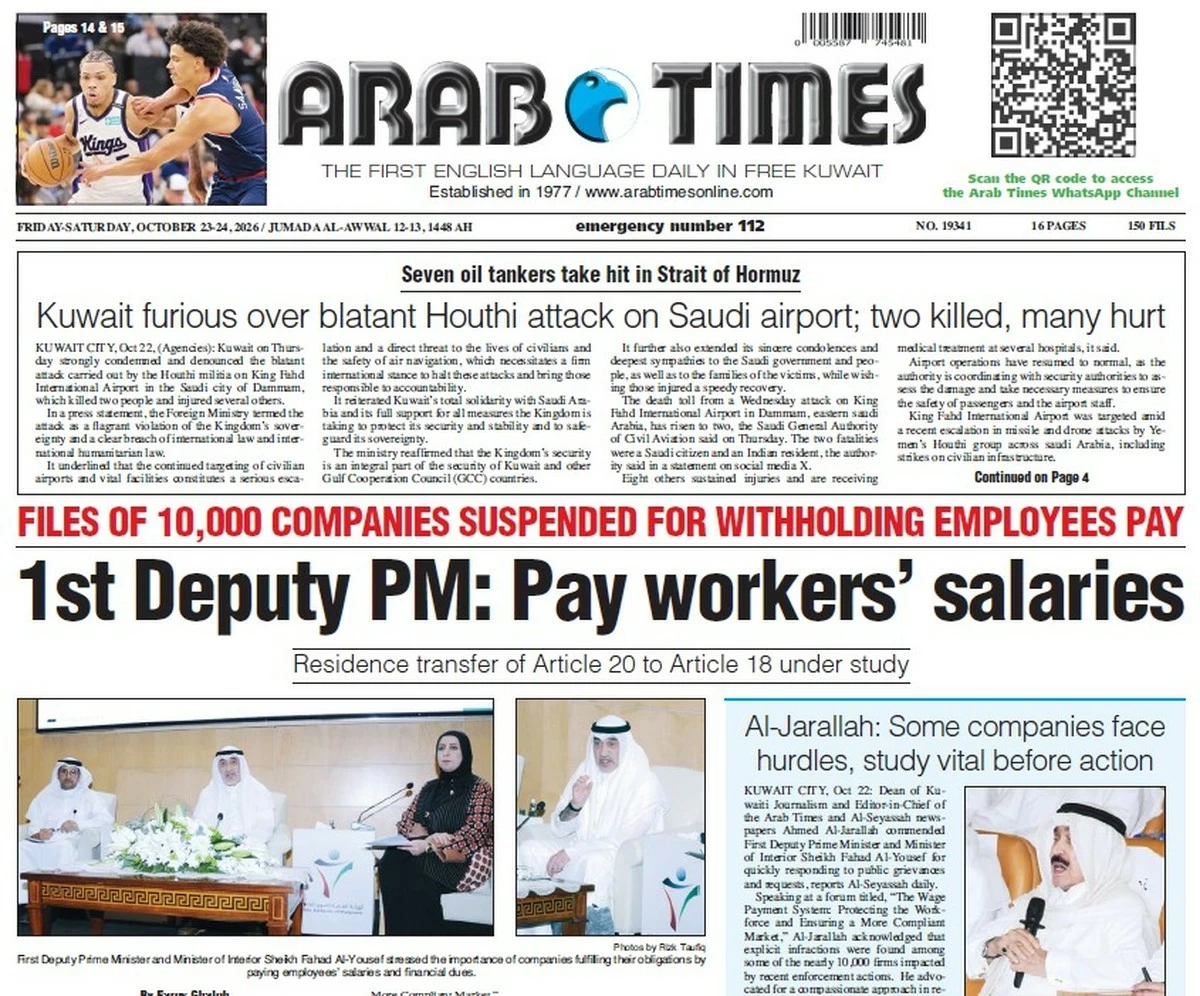
The Houthis launched attacks on an airbase in Khamis Mushait and oil infrastructure in nearby Saudi cities on Tuesday, injuring 73 people, in one of the largest attacks on the kingdom since the conflict began in February.
Houthi military spokesman Yahya Saree said Wednesday that Saudi warplanes had carried out 54 airstrikes across several Yemeni provinces during the previous 12 hours. He warned that the strikes would “not go unanswered and unpunished.”
A senior regional diplomat told Reuters that Islamabad had conveyed a message to Tehran urging it to use its influence to stop Houthi attacks against Saudi Arabia.
A senior Iranian official confirmed that Pakistan had delivered the message on Tuesday, but said Iran responded that “Iran does not control the Houthis.”
However, two Iranian sources cited by Reuters said Tehran had instructed the Houthis the previous week to attack Saudi Arabia and had promised additional funding and weapons. They also alleged that several Islamic Revolutionary Guard Corps commanders had traveled to Yemen to help coordinate the attacks. The claims could not be independently verified.
Pakistan's intervention comes amid growing fears that the conflict could expand beyond Yemen and Saudi Arabia and develop into a wider regional confrontation affecting global energy supplies.
Pakistani Defense Minister Khawaja Asif has warned that an attack on Saudi Arabia could activate the country's security arrangement with Riyadh and Ankara.
“An aggression on one country will be considered an aggression on all three countries,” Asif said in a television interview, adding that unprovoked aggression or spillover into Saudi Arabia would make the agreement operational.
Islamabad has stressed, however, that any military involvement would be limited to defending Saudi territory. A Pakistani source said no decision had been made to participate in retaliatory strikes and that Pakistani forces would not conduct combat operations on foreign soil.
The source said Pakistani troops could provide military, technical, ground or air support inside Saudi Arabia if required.
Saudi officials have also met senior Pakistani and Turkish military representatives in Riyadh to coordinate their response, according to a Pakistani source. The three countries agreed that their forces would not enter Yemen and that any response would be launched from Saudi territory.
Pakistan is seeking a diplomatic solution to prevent the situation from escalating to the point where Riyadh requests direct military assistance, the regional diplomat said.
The escalation comes as Iran and the United States are engaged in a wider confrontation involving attacks on shipping and restrictions around the Gulf, raising concerns that further attacks on Gulf states could draw additional countries into the conflict.
The regional diplomat warned that Iran's pressure campaign could ultimately strengthen security cooperation among Saudi Arabia, Pakistan, Turkey and other US-aligned countries rather than weaken their ties.