


06/08/2026

Share:
06/08/2026
Share:

ISLAMABAD, Aug. 6: Pakistan has significantly reduced blasphemy-related violence following a military-backed crackdown on Islamist groups, with registered blasphemy cases falling by roughly two-thirds this year, according to government officials, analysts and rights data cited by Reuters.
The report said the crackdown, overseen by Army Chief Field Marshal Asim Munir, has weakened the influence of hardline groups that have long been accused of inciting mob violence over blasphemy allegations.
The impact of the campaign was highlighted last month in Karachi, where police dispersed a mob that had gathered after blasphemy accusations were made against a Christian family. Police officer Sanghaar Ali Malik said officers managed to defuse the situation by urging the crowd not to take the law into its own hands and assuring them that authorities would investigate the allegations. The Christian family, consisting of four women and a child, was safely evacuated, and an initial police inquiry later found the accusations to be false.
Pakistan has witnessed around 90 blasphemy-linked lynchings since 1990, with many incidents beginning as large crowds gathered following accusations of blasphemy. According to conflict monitoring group Armed Conflict Location and Event Data (ACLED), the country averaged more than seven blasphemy-related riots or attacks annually between 2021 and 2024, but only one such incident has been recorded over the past 12 months.
Data from the Human Rights Commission of Pakistan showed that only 13 blasphemy cases have been officially registered so far this year, compared with significantly higher numbers during the same period in recent years.
According to Reuters, four government and security sources said the military-led campaign reflects Pakistan's efforts to improve relations with Western countries, attract foreign investment and present a more stable international image. One source close to the army chief said Munir believes extremist Islamist groups are incompatible with Pakistan's long-term development goals.
Minister of State for Interior Talal Chaudhry told Reuters that the civilian government and military are united in suppressing any group attempting to impose its agenda through violence.
"The government and the army are on one page," Chaudhry said. "There has never been this much clarity. That is to crush any group that tries to hold the people or this country hostage to its dictates."
The report said Pakistani officials also became increasingly concerned that hostility toward European countries, particularly France, could jeopardize trade benefits with the European Union, which receives nearly one-third of Pakistan's exports.
Pakistan has also sought closer ties with the United States under President Donald Trump, while expanding economic cooperation with China and Saudi Arabia. Analysts said worsening insurgencies in Balochistan and Khyber Pakhtunkhwa, together with the government's push to attract foreign investment, have added urgency to efforts to curb religious extremism.
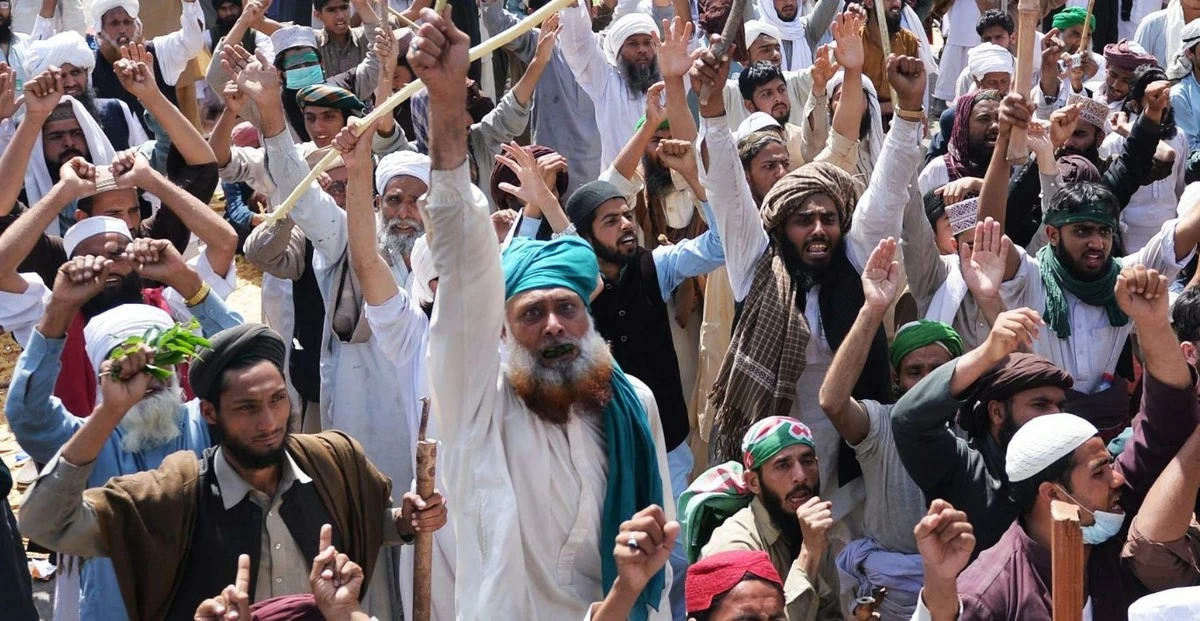
One of the most significant targets of the crackdown has been Tehreek-e-Labbaik Pakistan (TLP), the hardline Islamist party known for mobilizing mass protests over blasphemy issues. The group was banned late last year, with many of its leaders arrested, bank accounts frozen and mosques sealed. A government document cited by Reuters described the organization as a "serious threat to Pakistan" because of its impact on internal security and the country's international reputation.
Despite the apparent success of the crackdown, analysts warned that extremist networks built over many years may not disappear quickly. Former counterterrorism chief Ihsan Ghani cautioned that such groups could regain influence if political circumstances change.
For Pakistan's Christian, Shi'ite and Ahmadi minority communities, the decline in blasphemy-related violence has brought cautious optimism. However, many remain fearful after decades of mob attacks and lynchings linked to blasphemy allegations, with human rights groups continuing to criticize Pakistan's blasphemy laws, under which blasphemy remains punishable by death.