


07/03/2026

Share:
07/03/2026
Share:

ISLAMABAD, Mar 7: The Pakistan government on Friday announced a sharp Rs 55 per litre increase in petrol and high-speed diesel prices, marking one of the steepest hikes in the country’s history as global energy markets reacted to the conflict involving Iran.
The announcement came only hours after Prime Minister Sharif and Finance Minister Muhammad Aurangzeb assured the public that Pakistan had sufficient petroleum reserves and that the situation remained under control.
The revised prices were announced at a press conference by Petroleum Minister Ali Pervaiz Malik, alongside Deputy Prime Minister and Foreign Minister Ishaq Dar and Aurangzeb. The new rates took effect from Saturday.
Under the revised structure, the ex-depot price of petrol rose to Rs321.17 per litre from Rs266.17, an increase of roughly 17 per cent, while high-speed diesel climbed to Rs335.86 per litre from Rs280.86, a jump of about 20 per cent.
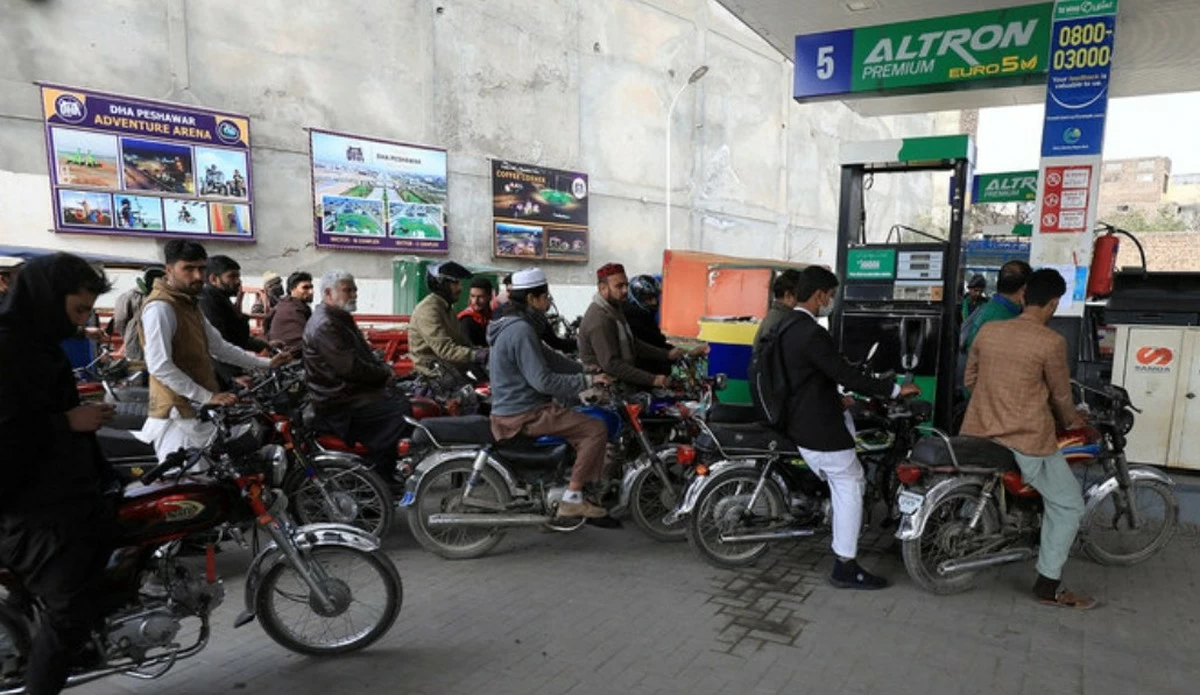
Ahead of the midnight price change, long queues formed at petrol stations in several cities as motorists rushed to refuel before the higher rates came into effect. In some areas, fuel stations temporarily closed pumps, reportedly to avoid selling stocks at the old prices.
Levy adjustments
To cushion the diesel price increase, the government adjusted the petroleum development levy (PDL) structure. The levy on petrol was raised by Rs20 to around Rs105 per litre, while the levy on high-speed diesel was reduced from Rs77 to Rs57 per litre.
Speaking at the press conference, Malik said the widening regional conflict had triggered uncertainty across global energy markets.
“The fire that started in a neighbouring country has spread across the region. There is no clear timeline for when the crisis will end,” he said.
Pakistan depends heavily on oil shipments passing through the Strait of Hormuz, a key maritime route now affected by the ongoing hostilities. However, Malik said two vessels operated by the Pakistan National Shipping Corporation were currently transporting oil through alternative routes via Yanbu and Fujairah to maintain supplies.
The minister also warned that strict action would be taken against hoarding or artificial shortages of petroleum products.
Oil prices surge globallyThe sharp increase in domestic fuel prices follows a surge in global crude markets. According to Reuters, US crude futures jumped more than 12 per cent to above $90 per barrel, while Brent crude rose about 8 per cent to around $92 per barrel, approaching the $100 mark that often rattles global markets.
Malik said Pakistan would review petroleum prices on a weekly basis in light of volatile international prices.
“As soon as the global situation stabilises, prices will be reduced accordingly,” he said.
Dar said global oil prices had risen between 50 and 70 per cent due to the crisis, adding that the government had attempted to minimise the impact on consumers.
“In many countries prices adjust automatically, but we tried to pass on the minimum possible burden to the public while maintaining balance,” he said.
Aurangzeb maintained that Pakistan currently holds comfortable petroleum reserves and that authorities are closely monitoring the economic impact of higher energy prices on imports, exports and inflation.
Fuel conservation plan delayedEarlier in the day, the government decided to delay a proposed national fuel conservation plan that included work-from-home arrangements and distance learning measures in case of supply disruptions.
The decision was taken at a high-level meeting chaired by Prime Minister Sharif, where officials concluded that existing fuel stocks were sufficient to meet national demand for the time being.
According to officials, the contingency plan had been prepared in consultation with provincial governments and discussed with the International Monetary Fund, but its implementation has been postponed for at least a week.
Crackdown on hoardingAuthorities have also stepped up enforcement against illegal stockpiling of fuel.
In Punjab, the provincial government ordered deputy commissioners to launch an immediate crackdown on hoarding after reports of panic buying and supply disruptions.
Chief Secretary Zahid Akhtar Zaman directed district administrations to take strict legal action against violators and ensure petrol pumps do not create artificial shortages.
The federal government has also warned that any petrol station found hoarding fuel could face immediate sealing, licence cancellation and legal proceedings.