


22/07/2026

Share:
22/07/2026
Share:
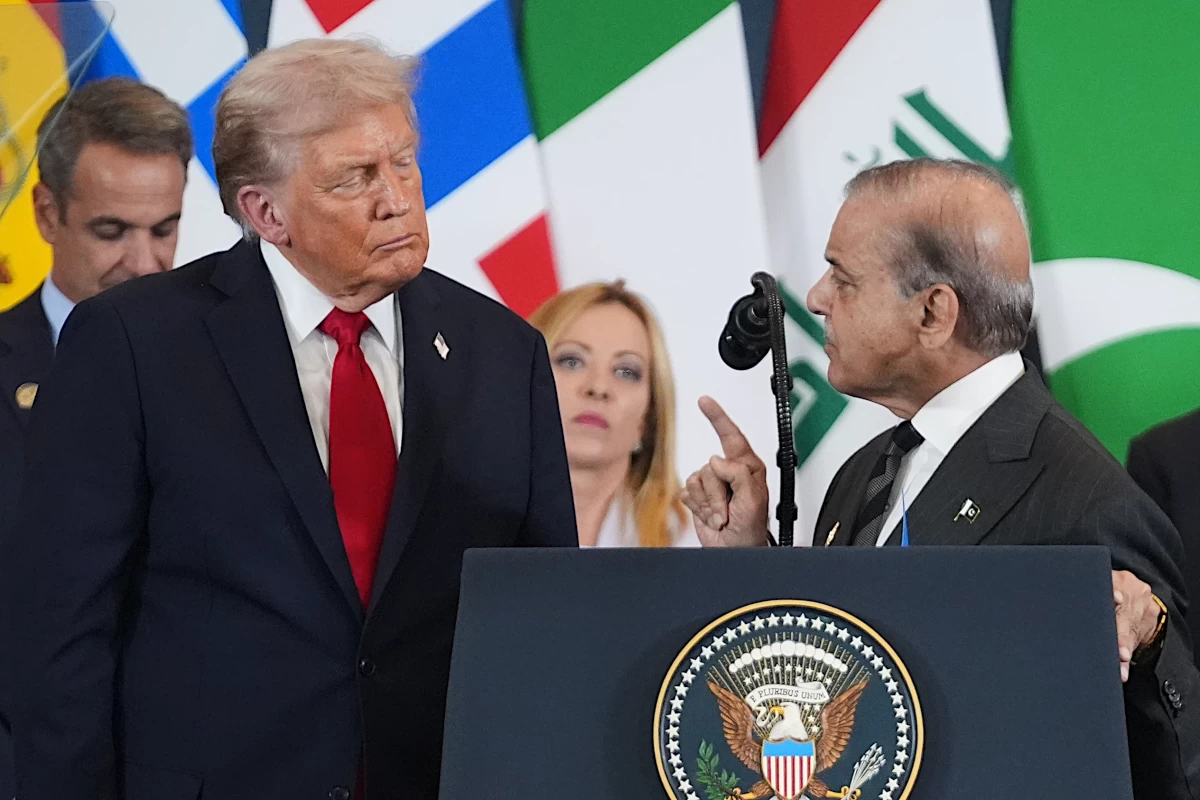

ISLAMABAD/WASHINGTON, Jul 22: Pakistan has requested a $10 billion financial support facility from the United States as Islamabad seeks to strengthen its foreign exchange reserves, stabilize its currency and reduce reliance on emergency international financing, according to a source familiar with the matter.
The request comes after Pakistan’s diplomatic role in facilitating talks related to the Iran conflict raised its international profile and encouraged hopes in Islamabad that improved ties with Washington could lead to greater economic support.
Pakistan has asked US Treasury Secretary Scott Bessent to establish a bilateral exchange stabilization facility worth $10 billion with a repayment period of up to five years, the source said.
If approved, the facility could provide Pakistan with a major financial buffer, helping ease pressure on the Pakistani rupee, improve market confidence and support foreign currency reserves as the country continues implementing reforms under a $7 billion International Monetary Fund (IMF) programme.
The US Treasury declined to comment on the reported request, while Pakistan’s Finance Ministry did not immediately respond.
Pakistan Pushes for Greater US Economic SupportPakistan’s Finance Minister Muhammad Aurangzeb met Bessent in Washington on Tuesday, where he highlighted the country’s economic vulnerabilities linked to regional geopolitical developments.
According to Pakistan’s Finance Ministry, Aurangzeb sought stronger US backing for Pakistan’s return to international capital markets, expansion of foreign exchange reserves and improvement of sovereign credit ratings.
The two sides also discussed expanding economic cooperation, encouraging American investment and advancing strategic projects.
Rare US Financial ToolAn exchange stabilization facility would represent a significant form of US financial support. Such mechanisms are rare Treasury Department interventions designed to provide temporary assistance during periods of financial stress.
The facilities can involve dollar support, currency swaps or guarantees aimed at stabilizing reserves and exchange rates. They are separate from the Federal Reserve’s long-standing currency swap arrangements with major central banks.
A similar US Treasury stabilization package was approved for Argentina in 2025, marking one of the first such operations for a foreign government in decades.
Pakistan’s Continuing Economic ChallengesPakistan narrowly avoided a sovereign default in 2023 after securing a $3 billion IMF standby arrangement. It later secured a $7 billion IMF Extended Fund Facility along with an additional $1.3 billion loan aimed at improving resilience against climate-related risks.
Despite international assistance, Pakistan’s economy remains heavily dependent on external support, including IMF funding, debt rollovers and financial assistance from countries such as China and Saudi Arabia.
The country faced renewed pressure in April when it repaid around $3.5 billion to the United Arab Emirates, reducing its foreign currency reserves. Saudi Arabia later provided $3 billion in additional support.
Pakistan’s central bank has projected that foreign reserves could rise to $20 billion by the end of 2026.
Diplomacy and Economic GainsAnalysts say approval of the US facility would carry both economic and political significance, signalling stronger relations between Islamabad and Washington following Pakistan’s diplomatic engagement during the Iran crisis.
The support could help Pakistan reduce dependence on IMF loan releases and repeated emergency financial packages from allies.
However, the country continues to face major economic hurdles, including low foreign investment, political uncertainty, security concerns, high borrowing costs and a limited export base.
Recent efforts to strengthen ties with the Trump administration have included cooperation in cryptocurrency, property development and mining.
Pakistan has also sought US investment in the Reko Diq copper and gold project, where the US Export-Import Bank has announced $1.25 billion in financing support.
If approved, the $10 billion stabilization facility would mark one of the most significant economic benefits Pakistan has sought from its renewed diplomatic engagement with Washington.