


28/09/2026

Share:
28/09/2026
Share:

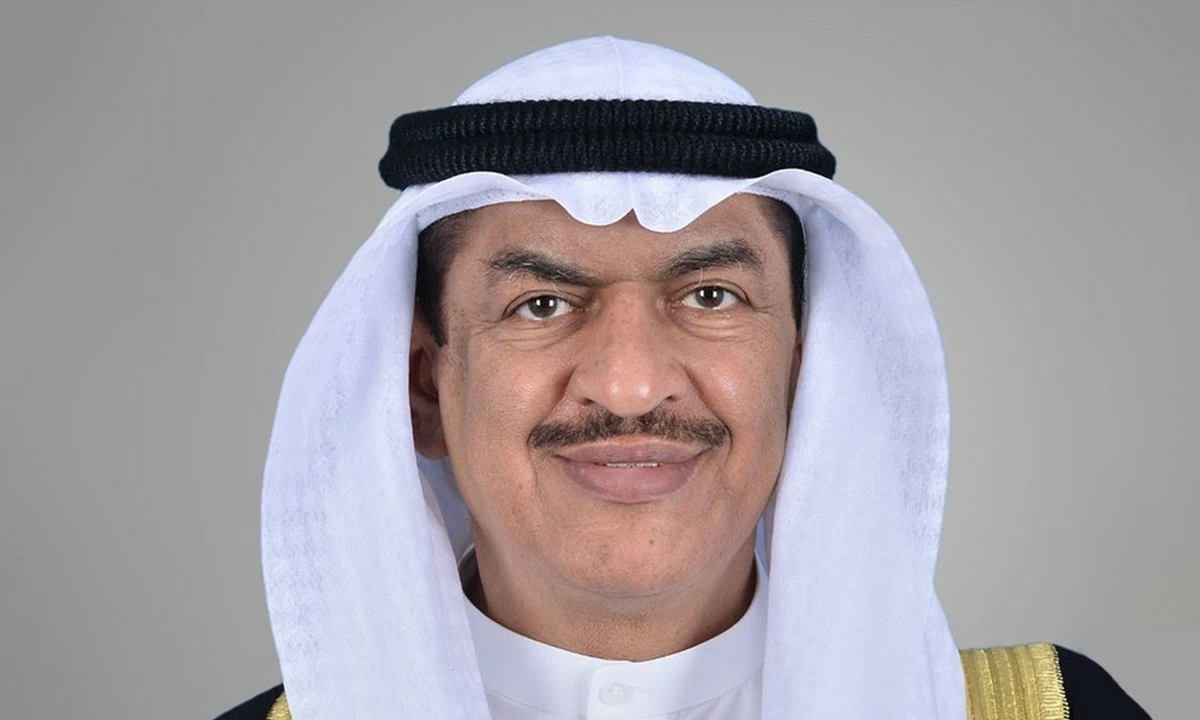
Jahra Governor Hamad Al-Habashi
KUWAIT CITY, Sept 27: Jahra Governorate is prioritizing road infrastructure, new residential areas and public services, focusing on Mutlaa City, development of the road network and support for agricultural areas. These efforts are in addition to activating the role of the Jahra Governorate Council and its committees in addressing the needs of residents and coordinating with government agencies. In an interview with the newspaper, Jahra Governor Hamad Al-Habashi pointed out that efforts are focused on field monitoring, expediting the resolution of issues, and completing various service and development projects that affect the lives of citizens and expatriates.
Following are excerpts of the interview:
Question: What are the main achievements of Jahra Governorate recently?
Answer: We began by enhancing operational mechanisms in the administrative office of the governorate to improve monitoring and activate the functions of the office in a more organized and effective manner. Workflows were streamlined and clear mechanisms were established to identify, document, refer and follow up issues and comments. A field monitoring team and a complaint management and follow up team were formed, linking administrative operations with the reality and feedback of citizens. We then moved to activate the role of Jahra Governorate Council by establishing its standing committees -- Public Services Committee, Security Affairs Committee, Health, Education and Community Development Committee, and Complaints and Proposals Committee. These committees began fulfilling their role by assessing the needs of the governorate, monitoring projects, services and issues raised, submitting recommendations and tracking their implementation. The scope of work expanded to include monitoring various files and initiatives in the governorate -- roads, infrastructure, facilities, new developments, initiatives targeting children and youths, community, cultural, volunteer and environmental programs, in collaboration with government agencies, public interest associations and the private sector. Regarding the environment, an environmental sustainability team was established to monitor environmental aspects and indicators, in coordination with the Environment Public Authority and other relevant bodies, and to support awareness programs and initiatives that promote sustainability and environmental responsibility. These mechanisms helped activate various files and address many issues within the governorate’s jurisdiction. Issues falling under the purview of ministries and government agencies are handled through their representatives in the Governorate Council and its standing committees. This facilitates coordination, assignment of responsibilities, and monitoring actions taken to overcome challenges and find optimal solutions for the governorate and its residents.
Q: What about areas that have seen development in the governorate, such as infrastructure, public services and roads?
A: The roads and infrastructure sector witnessed improvements in monitoring procedures through coordination with relevant authorities. This oversight covered internal road maintenance, upgrading of main roads, assessment of entry and exit points in Jahra and Mutlaa, Saleel Road and several other locations requiring review of traffic and engineering specifications. Oversight extends to the agricultural areas like Abdaly. Efforts are coordinated to upgrade roads for the benefit of farmers and production logistics, in addition to addressing the issue of treated water supplies and ensuring more consistent delivery to farms. The Governorate Council also monitors major road network maintenance plans included in the annual schedule of the relevant authorities. The governorate’s role includes setting priorities based on field assessments, citizen feedback and infrastructure projects, while tracking each issue until it enters the study or execution phase with the competent authority to ensure that concerns are resolved rather than merely addressed through correspondence.
Q: What is the status of the Abdaly Road development project?
A: The Al-Abdaly Road development project— from kilometer 10 to kilometer 34—has been completed. The road is set to officially open within a few days, in coordination with the relevant authorities.
Q: What about the ongoing maintenance and repair works on Road 80 (opposite the gas station) and the Sixth Ring Road?
A: The work is being carried out by the competent authorities as part of their maintenance and development programs. The governorate monitors progress closely due to the impact of these locations on citizen mobility and connectivity between areas in Jahra. Traffic-related concerns regarding the Sixth Ring Road and its connecting routes have been discussed with the Ministry of Public Works and the General Traffic Department, with emphasis on enhancing safety and minimizing the impact of construction on traffic flow. We are committed to tracking completion rates and addressing issues that arise during execution by reporting them to the relevant authority, while ensuring high-quality workmanship and timely completion in accordance with the approved schedule.
Q: How do you rate the level of services provided to citizens and residents in Jahra areas?
A: Realistically, based on observations by specialized governorate teams and feedback from citizens, the level of service is good and showing tangible improvement in several areas. However, there are needs requiring further work, particularly in Mutlaa City, agricultural areas, and those experiencing rapid population and urban expansion. Our assessment now relies on three interconnected sources -- findings from the field monitoring team, feedback received by the complaint management and follow up team through the Sahel app and direct channels, and reports presented by government entities during Governorate Council and committee meetings. This provides us with a more accurate picture of service levels and the challenges requiring attention. Our benchmarks are rapid response, quality resolution, and verification that issues have been fully addressed. Consequently, we see progress in several areas, though we acknowledge that certain challenges persist. We prioritize these based on their impact on the residents of the governorate.
Q: What about coordination between the governorate and state ministries and institutions?
A: Government coordination is the core of the work and it is continuous through the Governorate Council and its permanent committees, coordination meetings, work teams and field tours. We are keen to coordinate with the concerned authorities, determine the responsibility of each party, and set a clear follow up path until the result appears on the ground. Examples of this include coordination with the Ministry of Education, General Traffic Department, and Public Authority for Housing Welfare regarding Mutlaa schools and their entrances and exits, and with the Ministry of Public Works regarding roads. Coordination with the Public Authority for Agriculture Affairs and Fish Resources is on treated water, developing public parks, and opening the way for owners of small enterprises and productive families, and with the General Traffic Department regarding organizing movement in front of the new Jahra Hospital. There is also coordination with the Coast Guard and the concerned authorities to allocate a site to inspect marine vessels at the Citizen Service Center in Qasr. Coordination extends to the cultural, environmental, and societal aspects with the National Council for Culture, Arts and Letters, Environment Public Authority, public benefit associations, and the private sector. These files confirm that the role of the governorate is to initiate, gather efforts, coordinate, and follow up, while approval and implementation remain the responsibility of the competent authority.
Q: What are the most important priorities of Jahra Governorate in the next phase?
A: Our first priority is to consolidate practical follow up, that is, moving each file from monitoring and correspondence to determining the procedure, responsibility and duration, then verifying the achievement and closing the observation. The field monitoring team and the complaints management and follow up team will continue to support this approach, along with the Governorate Council and its committees. Mutlaa City and the new areas top the priorities, including roads, entrances and exits, schools, water and hygiene, facilities and community services, while following up Salail Road and the roads linked to the new areas. The agricultural sector is prioritized as well through the development of Abdaly roads and overcoming the challenges of treated water and supporting productive farmers. Our priorities are also to develop parks, pedestrian walkways and green spaces, and transform public parks into more active and sustainable facilities by organizing the participation of small business owners and productive families, in coordination with the Agriculture Authority and other concerned authorities, in addition to implementing the sustainable Jahra Governorate initiative and raising environmental awareness. We will continue to support youths, expand cultural, social and sports activities, and develop the Jahra cultural season, carnivals and community initiatives in partnership with government agencies, public benefit associations and the private sector.
By Munif Naif Al-Seyassah/Arab Times Staff