


09/12/2025

Share:
09/12/2025
Share:

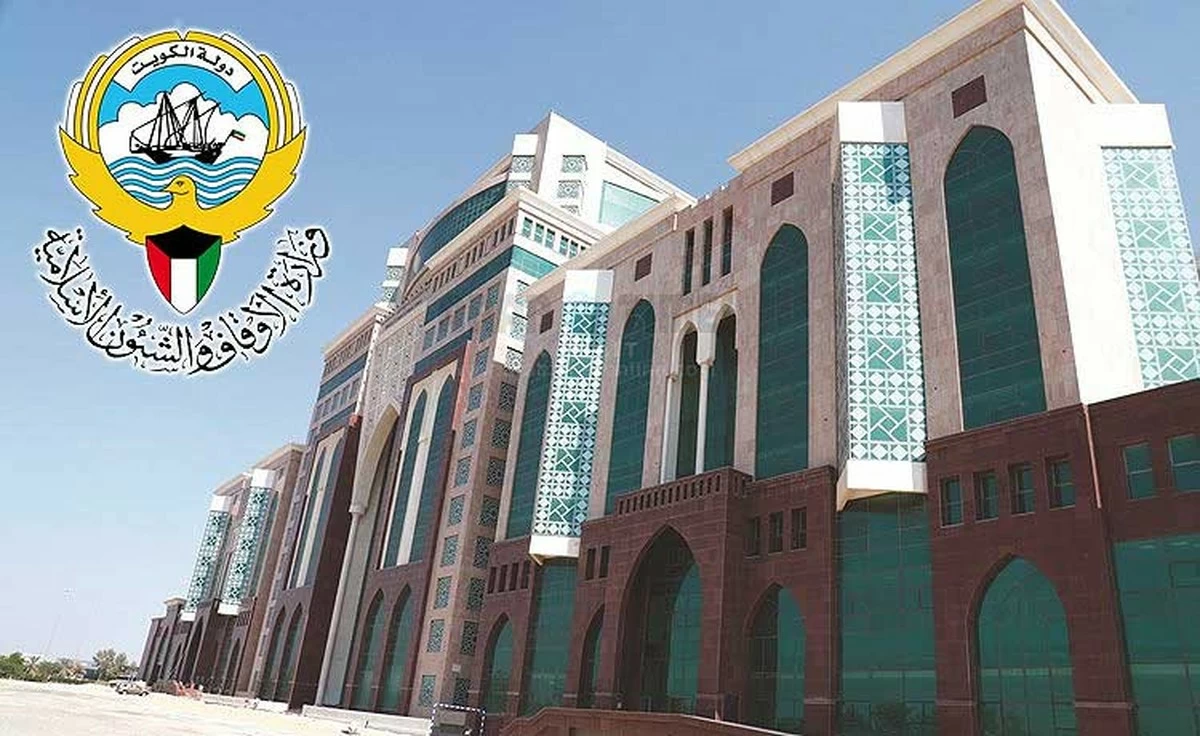
KUWAIT CITY, Dec 9: In a move aimed at regulating places of worship within a clear and comprehensive legal framework, the Ministry of Islamic Affairs has completed the preparation of a draft decree-law governing the establishment, management, and oversight of places of worship. The ministry has also begun seeking the views and feedback of relevant government authorities before submitting the draft for final approval.
According to the draft law, the proposed legislation seeks to promote freedom of religious practice and ensure equality among citizens, while enhancing transparency and objectivity in the administration of places of worship. It is designed to prevent the misuse of religious spaces for political, non-religious, or profit-driven activities, and to strengthen technical, administrative, and financial oversight over their operations. The law also aims to regulate activities and events held within places of worship in a manner consistent with public order and to reinforce Kuwait’s regional and international standing. The provisions of the draft do not apply to places of worship that are established and directly managed by the Ministry of Islamic Affairs.
The draft law provides for the establishment of a “Places of Worship Committee,” which will be tasked with issuing opinions on standards, regulations, and conditions relating to the establishment and management of places of worship. Among its responsibilities will be the preparation of an organizational map identifying approved locations, ensuring that the number of places of worship allocated to each religion or sect is proportionate to the size and population density of the actual resident community.
Under the proposed legislation, every place of worship will be required to open a dedicated bank account under the supervision of the Ministry of Islamic Affairs. In addition, each house of worship must maintain records, books, databases, and electronic systems documenting its religious, administrative, and financial activities for a period of no less than ten years. The destruction or disposal of these records will be prohibited unless prior approval is obtained from the relevant authorities.
The draft also includes provisions outlining penalties for violations, ranging from financial fines to imprisonment. It further grants the Ministry of Islamic Affairs the authority to order the closure of places of worship that violate the law and, where applicable, to liquidate their funds in accordance with procedures and rules set out in the executive regulations.
The draft law stipulates that places of worship must spend their funds strictly in line with the objectives for which they were established. Several explicit prohibitions are also laid down to prevent misuse. These include insulting or showing contempt for any religion, sect, or belief; interfering in the internal or external policies of the State of Kuwait or disrupting public order; inciting sectarian or racial hatred, extremism, or violence; and organizing events or practicing rituals outside licensed places of worship without official permission.
Further prohibitions include conducting rituals or ceremonies that cause harm to individuals or endanger public health, safety, or security; communicating with diplomatic or official institutions of any foreign country without authorization; interfering in the internal or external affairs of other states; and using places of worship as platforms for political activities related to foreign or domestic issues.
The proposed law, once enacted, is expected to provide a clear regulatory framework that safeguards freedom of worship while ensuring that religious institutions operate responsibly, transparently, and in accordance with the laws and interests of the State.