

19/11/2026

Share:
19/11/2026
Share:

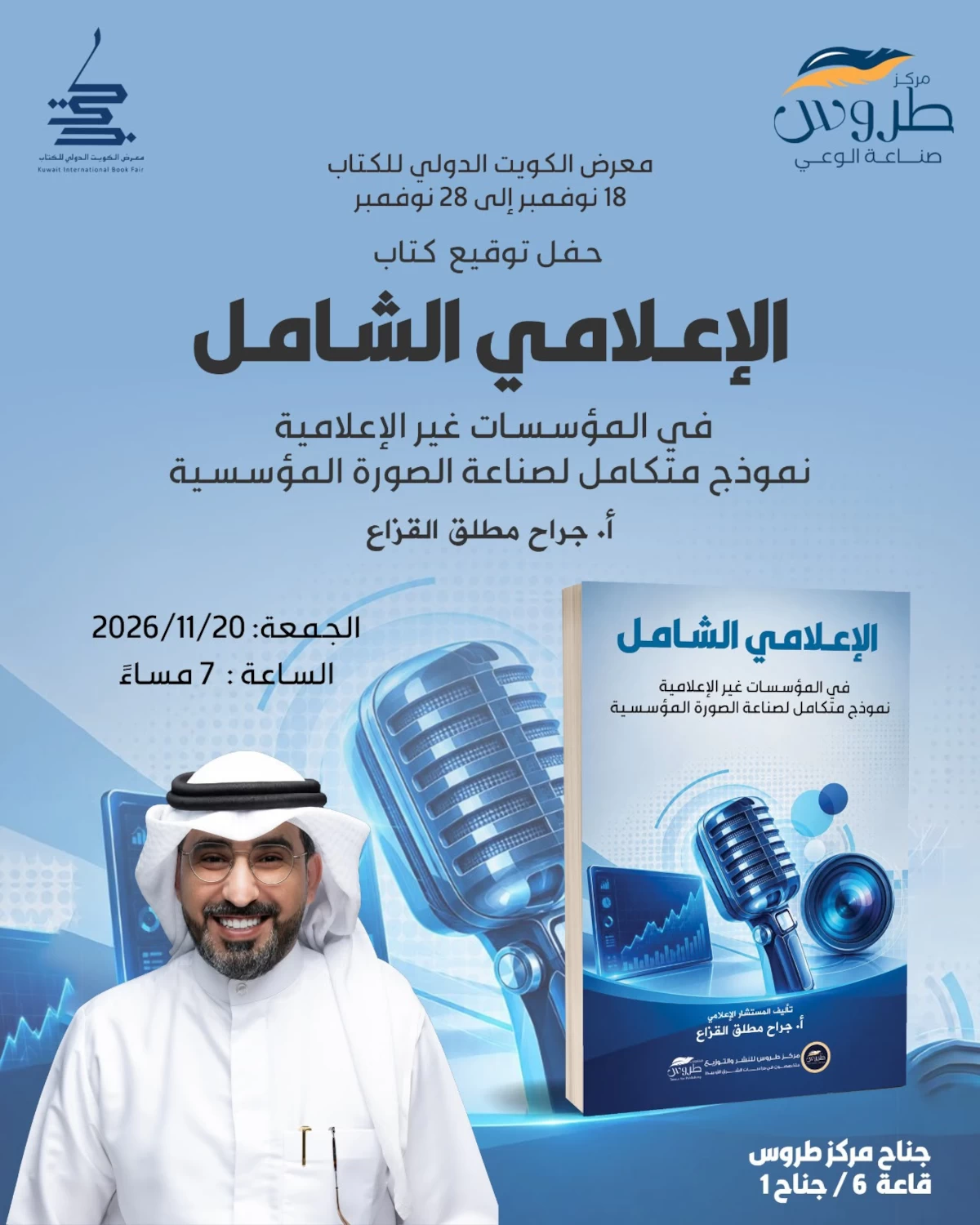
KUWAIT CITY, Nov 19: Kuwaiti media figure and academic Jarah Mutlaq Al-Qazaa has released a new book titled “The Comprehensive Media Professional in Non-Media Institutions: An Integrated Model for Building Institutional Image,” introducing a proposed Arab concept and practical framework for managing institutional media and reputation.
The book presents the concept of the “comprehensive media professional,” a role that extends beyond conventional media functions and brings together multiple communication skills within institutions whose primary activities are not media-related.
It proposes an integrated model that can be applied across government and private-sector institutions, including educational, healthcare, service and oil-sector organizations.
Combining a theoretical framework with documented professional experience and practical training tools, the publication draws on Al-Qazaa's years of work within a non-media institution. His responsibilities included photography, production, graphic design, media coverage, news writing and publishing at both local and international levels.
The book examines the professional skills required for this role, workplace challenges such as burnout, relationships between media professionals and institutional management, and recommendations for developing the profession.
A dedicated chapter focuses on institutional media monitoring, describing it as the organisation's “sixth sense” for identifying potential crises, anticipating developments and protecting its public image and reputation.
Al-Qazaa is the Kuwait correspondent of the British newspaper The Independent, founder of the online newspaper Kaifan News, an academic and a media adviser specialising in human rights. The book also notes recognition of his work by the Kuwait Media Association.
The publication is intended for media and public relations professionals, institutional executives, university students, researchers and academics.
Beyond presenting a professional framework, the book seeks to address a growing requirement among organizations for integrated media capabilities that connect communication, content production and reputation management. It also offers universities and media departments material linking academic curricula with the practical demands of institutional media work.
By combining field experience with a supporting theoretical framework, the publication opens further discussion and research into the evolving role of media professionals within institutions whose core activities lie outside the media sector.