



17/09/2026

Share:
17/09/2026
Share:
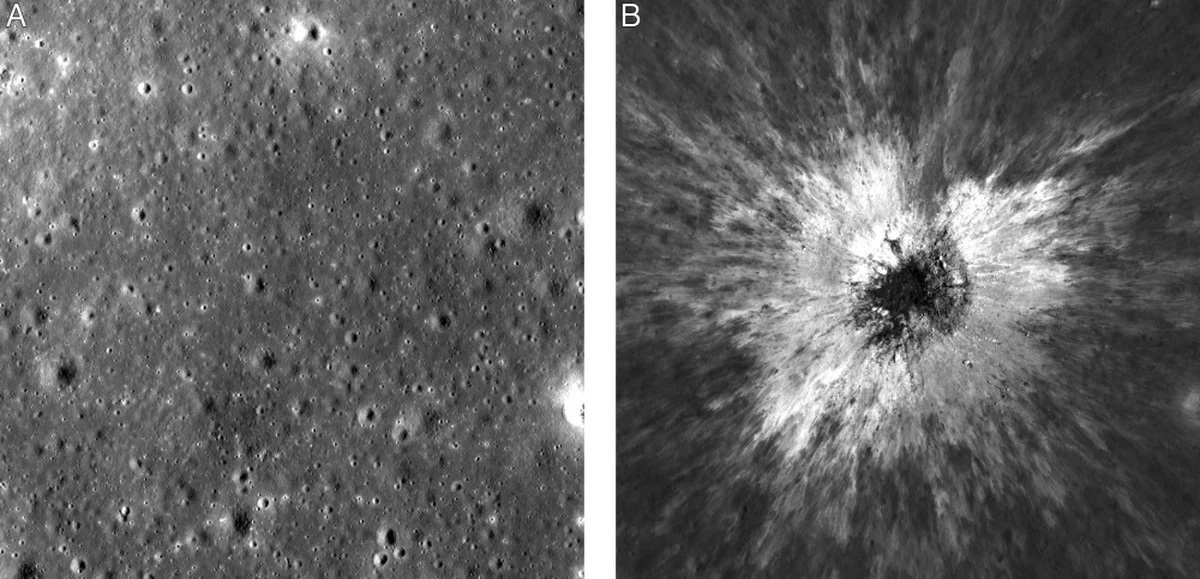

CAPE CANAVERAL, Fla, Sept 17, (AP): Scientists have discovered a crater on the moon that's bigger than the Roman Colosseum and is the result of a powerful impact two years ago that initially went undetected. The steep-sided hole - about 728 feet (222 meters) across and up to 141 feet (43 meters) deep - is the solar system’s biggest known impact crater carved out in recent times.
Such a large-scale event is estimated to occur only once every 132 years, researchers said, making this a treasure trove of information as NASA prepares to build a base for astronauts on the moon. "This event constitutes a statistically rare, effectively once-in-a-lifetime observation,” the scientists wrote in one of two studies appearing on the subject Wednesday in the journal Science Advances.
NASA’s Lunar Reconnaissance Orbiter spotted the crater on the moon’s near side in May 2024 soon after it was formed by an incoming fragment of an asteroid or comet. The moon strike escaped real-time detection by telescopes on Earth and in space. LRO's wide-angle images were not identified in the crush of data until August 2025.
The spacecraft gathered more detailed pictures last fall, followed by confirmation of the discovery early this year. The crater - named for the late Thomas McGetchin, a former director of Houston’s Lunar and Planetary Institute - is three times bigger than the previous record-holder found by the LRO a decade ago.
Pockmarked since ancient times, the moon bears some of the solar system's largest impact craters, including one that stretches more than 1,500 miles (2,400 kilometers) across. This latest impact churned the lunar surface for more than 66 miles (100 kilometers).
Dust and rocky soil were hurled away at a higher angle than expected, according to Mark Robinson, chief scientist for the LRO’s cameras who works at Intuitive Machines. Robinson was the lead author for one of the studies.