


15/10/2026

Share:
15/10/2026
Share:

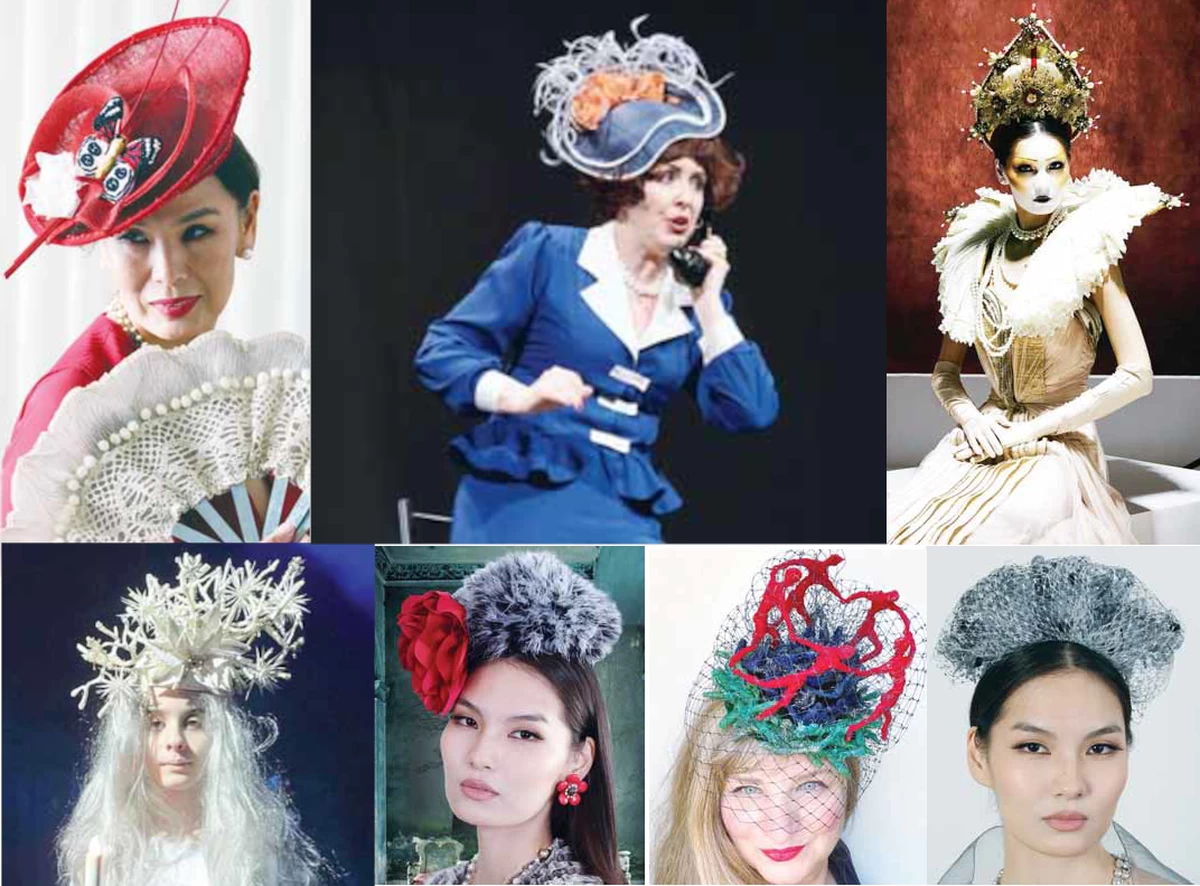
Some people see a flower and admire its colors. Stanka Kostadinova sees a flower and wonders how it might look perched on someone’s head. A painting can become a sculptural hat. A frozen forest can inspire a queen’s crown. Even Kuwait’s blue and white water towers, admired from a coffee shop in Adailiya, can spark an idea for her next creation. For Kostadinova, inspiration is everywhere. The trick is knowing how to turn it into something nobody has worn before. Her adventure in millinery began in 2012, when she watched The Great Gatsby and found herself longing for the glamour of another era. “I realized that what I was missing in my life in Kuwait was glamour,” she told Arab Times. A family wedding soon provided the perfect excuse to experiment. She made feathered fascinators for herself, her sisters and the bride. The headpieces attracted so much attention that the occasion became a sensation. What began with a handful of fascinators opened the door to a world where fashion, sculpture, theatre and imagination could share the same stage. “I have always been interested in art, design, architecture. I love beautiful houses, objects, art, nature, in general everything beautiful,” she says. “Millinery became the expression of my artistic talent.” Fashion, after all, had been part of her life since childhood. At 10, she was already buying her own clothes. She also loved costumes, once preparing herself as Pippi Longstocking for a school Christmas carnival. Years later, that childhood instinct for dressing up would find its most extraordinary expression in hats.
No two hats, no two stories
Kostadinova is not interested in making the same thing twice. While some designers build their reputations around recognizable shapes, she prefers to follow each idea wherever it leads. During a class at London Hat Week, she remembers an American designer with 26 years of experience explaining that she had made six hat models for Walt Disney. Kostadinova’s reaction reveals much about her creative temperament. “I barely make the same hat twice. I always make different hats!” Her creations are not simply accessories designed to match an outfit. They are individual works of art, often with stories that begin far beyond the world of fashion. Her hat The Dancers, inspired by Henri Matisse’s painting of the same name, was selected among the five best entries at an exhibition at a major hat museum in France. It subsequently appeared in a ballet performance and was presented on French television. Another masterpiece, The Pillars of Creation, drew inspiration from the immense beauty of a galaxy. Made for the London fashion show To the Future and Back, the hat combined impressive volume with an unexpectedly lightweight structure. Even renowned milliner Philip Treacy was surprised by how light it was while retaining its dramatic form. For Kostadinova, this balance between imagination and engineering is essential. A hat can be visually extravagant, but it must also stand properly, sit securely and remain comfortable enough to wear. Her talent for sculpting wire structures allows her to create striking forms without weighing them down. Then there is Cactus You Crazy, a wonderfully unconventional creation made for X Terrace’s Flower Garden exhibition during London Hat Week. Selected among the 10 best pieces for a fashion show at Harrods, it later inspired a painting by German portrait artist Alice Rudolf. Apparently, even a cactus can have a fashionable afterlife.
Kostadinova is not interested in making the same thing twice. While some designers build their reputations around recognizable shapes, she prefers to follow each idea wherever it leads. During a class at London Hat Week, she remembers an American designer with 26 years of experience explaining that she had made six hat models for Walt Disney. Kostadinova’s reaction reveals much about her creative temperament. “I barely make the same hat twice. I always make different hats!” Her creations are not simply accessories designed to match an outfit. They are individual works of art, often with stories that begin far beyond the world of fashion. Her hat The Dancers, inspired by Henri Matisse’s painting of the same name, was selected among the five best entries at an exhibition at a major hat museum in France. It subsequently appeared in a ballet performance and was presented on French television. Another masterpiece, The Pillars of Creation, drew inspiration from the immense beauty of a galaxy. Made for the London fashion show To the Future and Back, the hat combined impressive volume with an unexpectedly lightweight structure. Even renowned milliner Philip Treacy was surprised by how light it was while retaining its dramatic form. For Kostadinova, this balance between imagination and engineering is essential. A hat can be visually extravagant, but it must also stand properly, sit securely and remain comfortable enough to wear. Her talent for sculpting wire structures allows her to create striking forms without weighing them down. Then there is Cactus You Crazy, a wonderfully unconventional creation made for X Terrace’s Flower Garden exhibition during London Hat Week. Selected among the 10 best pieces for a fashion show at Harrods, it later inspired a painting by German portrait artist Alice Rudolf. Apparently, even a cactus can have a fashionable afterlife.
A forest fit for a queen
Of all her creations, Elysara, The Queen of Snow and Ice carries a particularly personal story. Its inspiration came from a winter experience in the Bulgarian mountains. After a night of rain followed by freezing temperatures, the trees became encased in ice and snow. When the sun rose, the entire landscape glittered like an enchanted forest. The memory stayed with her. Years later, when Alison Shan Price asked her to create a hat representing a queen of a winter forest for Charles Dickens’ The Story of Scrooge, Kostadinova immediately remembered that magical morning. The result earned her recognition at the second edition of the Queen’s Hat Exhibition organized by Le Salon de la Mode, attended by prominent figures from international fashion, including representatives of Dolce & Gabbana. For Kostadinova, the recognition meant more than an award. “It let me know I am good enough,” she says. The hat also proved unexpectedly popular with women who tried it on in Kuwait and Italy. Some even imagined wearing it on their wedding day. A creation born from a frozen forest had found admirers far beyond its original theatrical purpose. Her work for the stage has offered similar moments of transformation. In Freya, Letters from Kuwait, directed by Abdulaziz Al Wazan, she designed hats for Alison Shan Price, who portrayed British traveller and writer Freya Stark during her time in Kuwait before the oil era. The production’s minimalist setting made the costumes and headpieces even more striking. “When Alison as Freya appeared with all her beauty, energetic presence and the amazing hats, everything changed,” Kostadinova recalls. “The projectors and our eyes were on her face and … hats!” For her, that is the magic of millinery. The right creation does not merely decorate a character. It helps bring the character to life.
Of all her creations, Elysara, The Queen of Snow and Ice carries a particularly personal story. Its inspiration came from a winter experience in the Bulgarian mountains. After a night of rain followed by freezing temperatures, the trees became encased in ice and snow. When the sun rose, the entire landscape glittered like an enchanted forest. The memory stayed with her. Years later, when Alison Shan Price asked her to create a hat representing a queen of a winter forest for Charles Dickens’ The Story of Scrooge, Kostadinova immediately remembered that magical morning. The result earned her recognition at the second edition of the Queen’s Hat Exhibition organized by Le Salon de la Mode, attended by prominent figures from international fashion, including representatives of Dolce & Gabbana. For Kostadinova, the recognition meant more than an award. “It let me know I am good enough,” she says. The hat also proved unexpectedly popular with women who tried it on in Kuwait and Italy. Some even imagined wearing it on their wedding day. A creation born from a frozen forest had found admirers far beyond its original theatrical purpose. Her work for the stage has offered similar moments of transformation. In Freya, Letters from Kuwait, directed by Abdulaziz Al Wazan, she designed hats for Alison Shan Price, who portrayed British traveller and writer Freya Stark during her time in Kuwait before the oil era. The production’s minimalist setting made the costumes and headpieces even more striking. “When Alison as Freya appeared with all her beauty, energetic presence and the amazing hats, everything changed,” Kostadinova recalls. “The projectors and our eyes were on her face and … hats!” For her, that is the magic of millinery. The right creation does not merely decorate a character. It helps bring the character to life.
The secrets stitched into every hat
Behind the feathers, flowers and dramatic silhouettes lies a craft that demands patience, precision and a considerable amount of handwork. Kostadinova practices couture millinery using techniques she studied with experienced makers in London. Her hats are hand blocked and hand stitched, with minimal use of sewing machines and no glue guns. Each commission begins with research. She studies an outfit’s colors, textures and style, or explores the historical period and artistic references behind a theatrical creation. Then comes the hunt for materials. Specialist supplies are not always available in Kuwait, so she sometimes orders them from abroad. She dyes straw, feathers and silk to achieve the exact colors she needs. “If you see me with colorful hands, this is the reason!” she says. She shapes the materials over wooden blocks, adds wire for stability, stitches in the sweatband and begins the intricate process of trimming. Silk flowers, velvet, lace, crystals, feathers and embroidery may all find their way into the final design. Some hats take hours to complete. Others require days or weeks. There is no assembly line, no rush to reproduce a bestseller and no guarantee that the next creation will resemble the last. Kostadinova recalls advice from iconic British designer Stephen Jones, who once spoke about the importance of being in a good mood while making hats because the maker’s thoughts can be transferred to the person wearing them. She has embraced the idea. “I always make happy hats!” It is a charming philosophy for an art form whose purpose, at least in her hands, is to make people feel extraordinary.
Behind the feathers, flowers and dramatic silhouettes lies a craft that demands patience, precision and a considerable amount of handwork. Kostadinova practices couture millinery using techniques she studied with experienced makers in London. Her hats are hand blocked and hand stitched, with minimal use of sewing machines and no glue guns. Each commission begins with research. She studies an outfit’s colors, textures and style, or explores the historical period and artistic references behind a theatrical creation. Then comes the hunt for materials. Specialist supplies are not always available in Kuwait, so she sometimes orders them from abroad. She dyes straw, feathers and silk to achieve the exact colors she needs. “If you see me with colorful hands, this is the reason!” she says. She shapes the materials over wooden blocks, adds wire for stability, stitches in the sweatband and begins the intricate process of trimming. Silk flowers, velvet, lace, crystals, feathers and embroidery may all find their way into the final design. Some hats take hours to complete. Others require days or weeks. There is no assembly line, no rush to reproduce a bestseller and no guarantee that the next creation will resemble the last. Kostadinova recalls advice from iconic British designer Stephen Jones, who once spoke about the importance of being in a good mood while making hats because the maker’s thoughts can be transferred to the person wearing them. She has embraced the idea. “I always make happy hats!” It is a charming philosophy for an art form whose purpose, at least in her hands, is to make people feel extraordinary.
Finding glamour in Kuwait
Kostadinova credits Kuwait with shaping her eye for color and detail. The country’s intense light, she says, makes colors look especially beautiful. Its markets offer an abundance of fabrics, trimmings and garments, while its many social occasions provide opportunities to experiment with complete looks. She has become a collector of beautiful clothes and objects, often browsing vintage markets in Kuwait and abroad. Finding an unusual dress can lead to her favorite activity: creating a hat to complement it and styling the entire outfit. Yet she recognizes that elaborate occasion hats remain relatively uncommon among local clients. Most bespoke commissions are for ceremonies, weddings and other special events. She has also designed couture turbans, Ramadan accessories, bridal headpieces and more practical creations, including velvet headbands and lightweight visors suited to Kuwait’s climate. She believes hats deserve a more prominent place in everyday fashion because their effects can be surprisingly powerful. “They elevate tremendously our look,” she says. “They can add class, status, create interest, make you taller, accentuate face features or cover them, make you mysterious.” She has seen that transformation happen firsthand. At a British Ladies Society Kuwait patron afternoon tea at The Select restaurant in 360 Mall last January, she styled guests in her creations. The women emerged with different personalities and styles. One reminded her of Audrey Hepburn in Breakfast at Tiffany’s, while others took on a polished royal elegance or a more dramatic look. “We all changed. The whole atmosphere of the restaurant changed,” she says. That afternoon captured what she loves most about her craft. A hat can alter an outfit, but it can also change how a person carries herself. For a few hours, someone can become more glamorous, more mysterious or more daring simply by trying on a different version of herself.
Kostadinova credits Kuwait with shaping her eye for color and detail. The country’s intense light, she says, makes colors look especially beautiful. Its markets offer an abundance of fabrics, trimmings and garments, while its many social occasions provide opportunities to experiment with complete looks. She has become a collector of beautiful clothes and objects, often browsing vintage markets in Kuwait and abroad. Finding an unusual dress can lead to her favorite activity: creating a hat to complement it and styling the entire outfit. Yet she recognizes that elaborate occasion hats remain relatively uncommon among local clients. Most bespoke commissions are for ceremonies, weddings and other special events. She has also designed couture turbans, Ramadan accessories, bridal headpieces and more practical creations, including velvet headbands and lightweight visors suited to Kuwait’s climate. She believes hats deserve a more prominent place in everyday fashion because their effects can be surprisingly powerful. “They elevate tremendously our look,” she says. “They can add class, status, create interest, make you taller, accentuate face features or cover them, make you mysterious.” She has seen that transformation happen firsthand. At a British Ladies Society Kuwait patron afternoon tea at The Select restaurant in 360 Mall last January, she styled guests in her creations. The women emerged with different personalities and styles. One reminded her of Audrey Hepburn in Breakfast at Tiffany’s, while others took on a polished royal elegance or a more dramatic look. “We all changed. The whole atmosphere of the restaurant changed,” she says. That afternoon captured what she loves most about her craft. A hat can alter an outfit, but it can also change how a person carries herself. For a few hours, someone can become more glamorous, more mysterious or more daring simply by trying on a different version of herself.
Dreams bigger than the brim
Kostadinova has little interest in fast fashion. Every creation is made using couture techniques, with individuality and craftsmanship taking precedence over quantity. That commitment, however, comes with challenges. The market for elaborate hats in Kuwait is limited, specialist materials can be expensive to import, and uncertainty in the region makes long term planning difficult. She dreams of having a dedicated atelier where she can organize her collection, store her materials properly and welcome clients into a space devoted to millinery. She once spotted a shop with large windows at an event at Crown Plaza and immediately imagined a hat boutique, perhaps complemented by jewelry. The idea remains a dream, but her imagination is already furnishing the windows. Her creativity also extends beyond hats. She has made masks, fans, brooches, collars, gloves, belts and even lampshades. During the Covid 19 pandemic, she produced protective masks in nearly 100 shades, turning an everyday necessity into something colorful and personal. She hopes to explore more collaborations with fashion designers, artists, theaters and cultural institutions. Teaching millinery is another possibility, allowing her to share the skills she acquired through years of study and experimentation. Meanwhile, new ideas continue to emerge from the world around her. Her next inspiration could be a painting, a building or Kuwait’s distinctive water towers. At her first London Hat Week, Kostadinova recalls, Stephen Jones warned her that Kuwait was not a country where people commonly wore occasion hats. She understood the challenge. She simply refused to let it define her. After all, the woman who once watched The Great Gatsby and decided that life needed more glamour has spent years creating her own version of it. Ask how she wants her work to be remembered, and she does not reach for complicated definitions. As art. As fashion. As something stylish and beautiful. And perhaps that is the point. In Kostadinova’s world, a hat does not have to be practical, predictable or even entirely sensible. Sometimes it simply has to make an entrance.
Kostadinova has little interest in fast fashion. Every creation is made using couture techniques, with individuality and craftsmanship taking precedence over quantity. That commitment, however, comes with challenges. The market for elaborate hats in Kuwait is limited, specialist materials can be expensive to import, and uncertainty in the region makes long term planning difficult. She dreams of having a dedicated atelier where she can organize her collection, store her materials properly and welcome clients into a space devoted to millinery. She once spotted a shop with large windows at an event at Crown Plaza and immediately imagined a hat boutique, perhaps complemented by jewelry. The idea remains a dream, but her imagination is already furnishing the windows. Her creativity also extends beyond hats. She has made masks, fans, brooches, collars, gloves, belts and even lampshades. During the Covid 19 pandemic, she produced protective masks in nearly 100 shades, turning an everyday necessity into something colorful and personal. She hopes to explore more collaborations with fashion designers, artists, theaters and cultural institutions. Teaching millinery is another possibility, allowing her to share the skills she acquired through years of study and experimentation. Meanwhile, new ideas continue to emerge from the world around her. Her next inspiration could be a painting, a building or Kuwait’s distinctive water towers. At her first London Hat Week, Kostadinova recalls, Stephen Jones warned her that Kuwait was not a country where people commonly wore occasion hats. She understood the challenge. She simply refused to let it define her. After all, the woman who once watched The Great Gatsby and decided that life needed more glamour has spent years creating her own version of it. Ask how she wants her work to be remembered, and she does not reach for complicated definitions. As art. As fashion. As something stylish and beautiful. And perhaps that is the point. In Kostadinova’s world, a hat does not have to be practical, predictable or even entirely sensible. Sometimes it simply has to make an entrance.
By Marlon Aquino Malinao
Managing Editor, Arab Times