



06/02/2026

Share:
06/02/2026
Share:
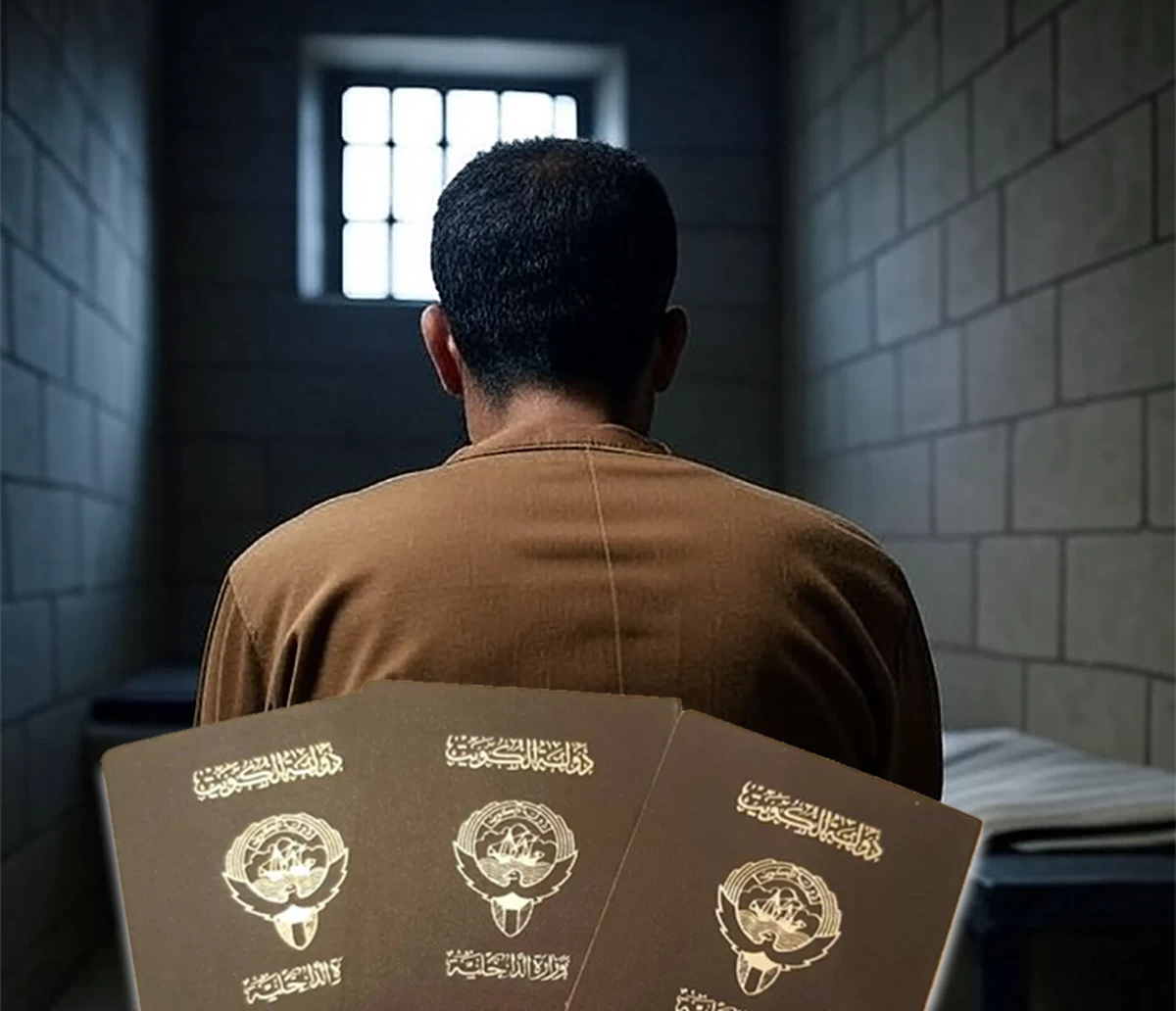

KUWAIT CITY, Feb 6: A failed escape attempt at the Nuwaiseeb border crossing late at night has exposed one of the most complex citizenship forgery cases in recent years, leading to the arrest of three forgers and revealing illegal naturalization links involving 133 individuals.
The case began quietly—but explosively—around 8:00 PM, when a man holding Kuwaiti citizenship attempted to flee the country illegally through Nuwaiseeb to evade the execution of a seven-year prison sentence in a drug-related case. Border officers intercepted him and, during a precautionary search, discovered official Gulf documents bearing only his first and last names.
Biometric fingerprinting immediately raised red flags. While the man appeared in the Kuwaiti database, investigators found a critical discrepancy: his first and second names matched across records, but his third and fourth names differed entirely, casting serious doubt on the authenticity of his nationality.
Within minutes, coordination began between the Ports Authority and the Nationality Investigations Department. By 10:00 PM, a security alert was issued—after investigators confirmed that the man’s father had originally obtained Kuwaiti citizenship through forgery, using Gulf documents under a different identity.
The operation moved swiftly.
At 2:00 AM, the father attempted to flee Kuwait. He was stopped instantly, the security alert closing in before he could escape. During interrogation, he openly confessed to falsely affiliating himself with a Kuwaiti citizen and registering under a father who was not biologically his own.
Sources stressed that the entire sequence—from the son’s arrest to the father’s detention—unfolded within just a few hours, underscoring the high-level coordination and operational efficiency of Kuwait’s security agencies.
The revelations did not end there.
The following day, the Nationality Investigations Department summoned 13 alleged brothers listed under the same family file. Confronted with the evidence, all thirteen denied any relationship with the accused, admitting that their deceased father had fraudulently added two unrelated individuals to the nationality file as brothers.
A second security alert was immediately issued for the other forged “brother.” He was arrested later that same day while attempting to flee Kuwait through the Al-Salmi border crossing.
DNA testing delivered the final blow: results confirmed that the 13 brothers were genuine siblings from one father, while the other two were impostors who had forged their identities. Investigators also found that the forged individuals had previously waived inheritance rights, and their Gulf documents were seized.
The scale of the fraud was staggering. The convicted son was linked to 79 individuals within the citizenship file, while the second forged brother was connected to 54 more, bringing the total number of illegally naturalized individuals to 133.
Four decisive pieces of evidence sealed the case:
- Genetic fingerprint (DNA) testing
- Explicit confessions
- Inheritance manipulation records
- Official Gulf documents
What began as a single border arrest ended with the exposure of a far-reaching forgery network—dismantled in mere hours by coordinated security action.