



08/06/2026

Share:
08/06/2026
Share:

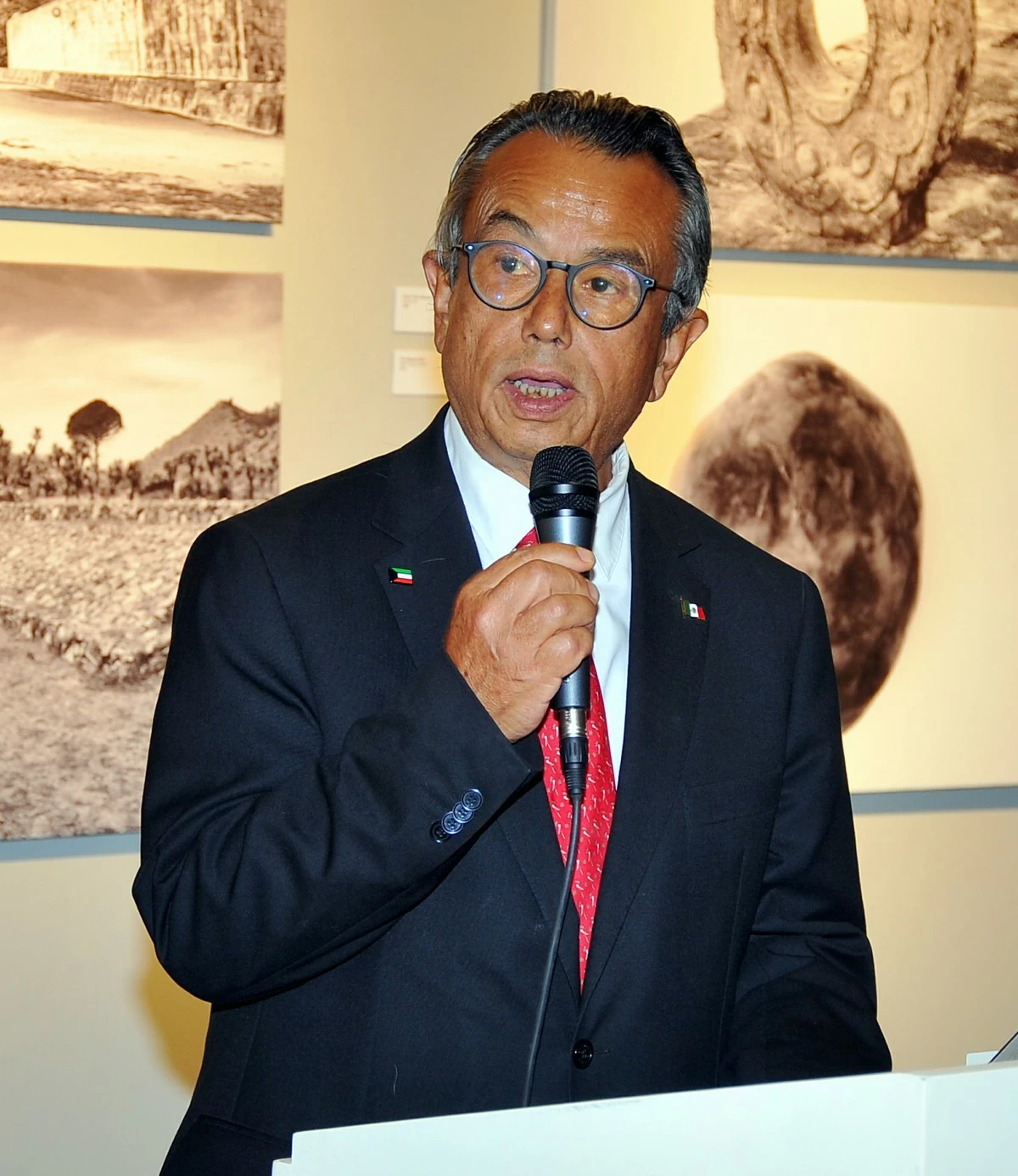
H.E. Eduardo Patricio Peña Haller, Mexico’s Ambas-- sador to Kuwait, speaking at the opening ceremony.
KUWAIT CITY, June 8: The Embassy of Mexico in Kuwait, in cooperation with the Contemporary Art Platform (CAP), inaugurated a photographic exhibition titled “Sacred Court: The Mesoamerican Ballgame” by renowned Mexican photographer Javier Hinojosa, offering visitors a glimpse into one of humanity’s oldest sporting traditions ahead of the 2026 FIFA World Cup. Speaking at the opening ceremony on Sunday at CAP, Mexico’s Ambassador to Kuwait, H.E. Eduardo Patricio Peña Haller, welcomed guests and expressed appreciation for CAP’s support in hosting the exhibition.
The ambassador highlighted the significance of the upcoming 2026 FIFA World Cup, which will kick off on June 11 and be jointly hosted by Canada, Mexico, and the United States. Describing it as the largest edition in the tournament’s history, he noted that 48 national teams will compete in 104 matches across 16 host cities over 39 days. Against this backdrop, the exhibition presents 25 photographs by Hinojosa, whose work explores the archaeological and cultural legacy of the Mesoamerican Ballgame.
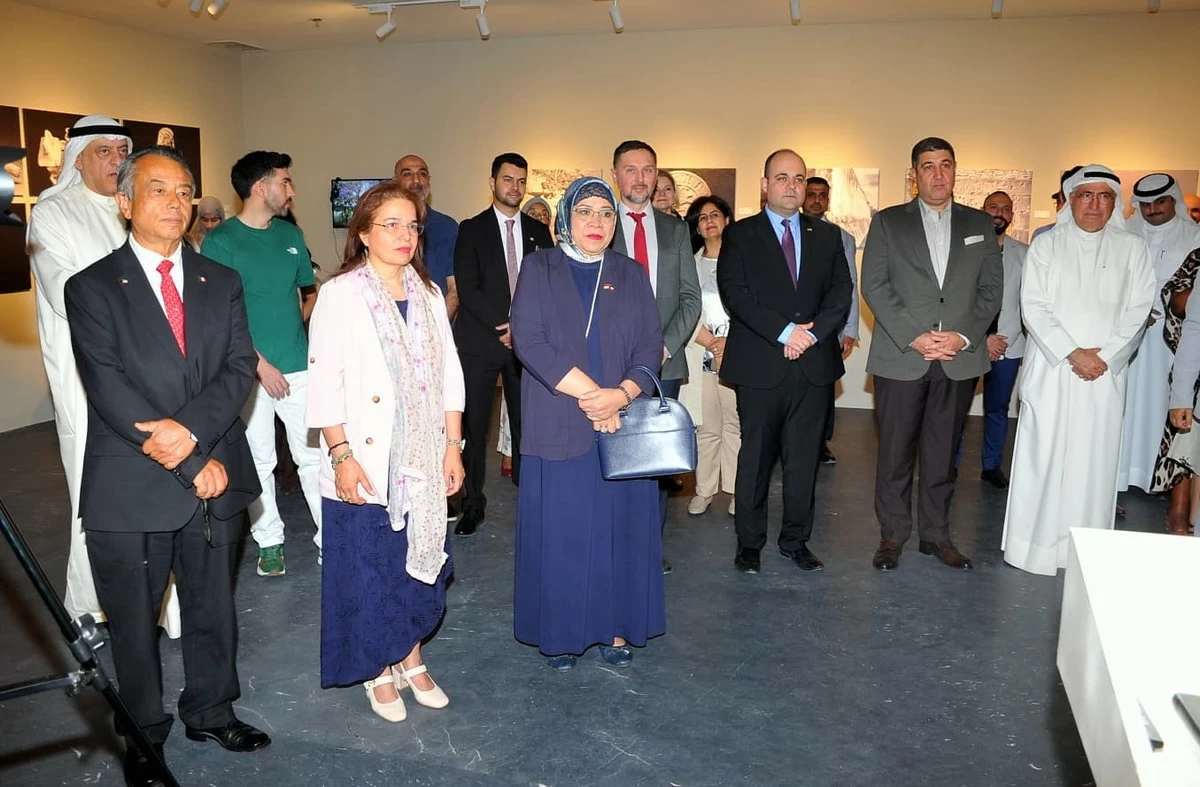
Dignitaries and guests at the opening of the ‘Sacred Court: The Mesoamerican Ballgame’ exhibition at CAP.
Through his masterful use of light, shadow, and landscape, Hinojosa captures the enduring spirit of a tradition that dates back more than 3,600 years. The ambassador explained that the Mesoamerican Ballgame, considered the oldest ball sport in human history, was practiced throughout central and southeastern Mexico and parts of Central America by civilizations including the Olmecs, Maya, and Aztecs. Archaeological evidence traces its origins to around 1650 BCE. The game was played on specially designed courts shaped like the letter “I” or a double “T,” with sloping side walls that helped keep the ball in motion. Players were allowed to strike the ball only with their hips, elbows, knees, forearms, and thighs.
Photographic exhibition reveals the enduring legacy of Mesoamerican civilizations
The rubber ball, made from natural vulcanized latex, weighed between one and four kilograms and had a circumference similar to that of a modern football. Matches were typically contested between teams of two to four players who wore thick leather belts to protect themselves from the force of the ball. Ambassador Peña Haller emphasized that the ballgame was much more than a sporting event. It carried deep religious, political, and social significance, symbolizing the struggle between light and darkness and the cycle of life, death, and rebirth. In many cases, it served as a peaceful mechanism for resolving territorial disputes, trade disagreements, and conflicts between communities, offering an alternative to warfare. Scientists and historians, he noted, view the game as an early form of conflict resolution that helped maintain stability among neighboring societies.
The ambassador also pointed out that the sport was played recreationally by children and, in some cases, women. More than 1,300 ballcourts have been discovered across Mesoamerica, stretching from present- day Arizona in the United States to Nicaragua in Central America. These venues often doubled as public spaces for festivals, ceremonies, and musical performances.
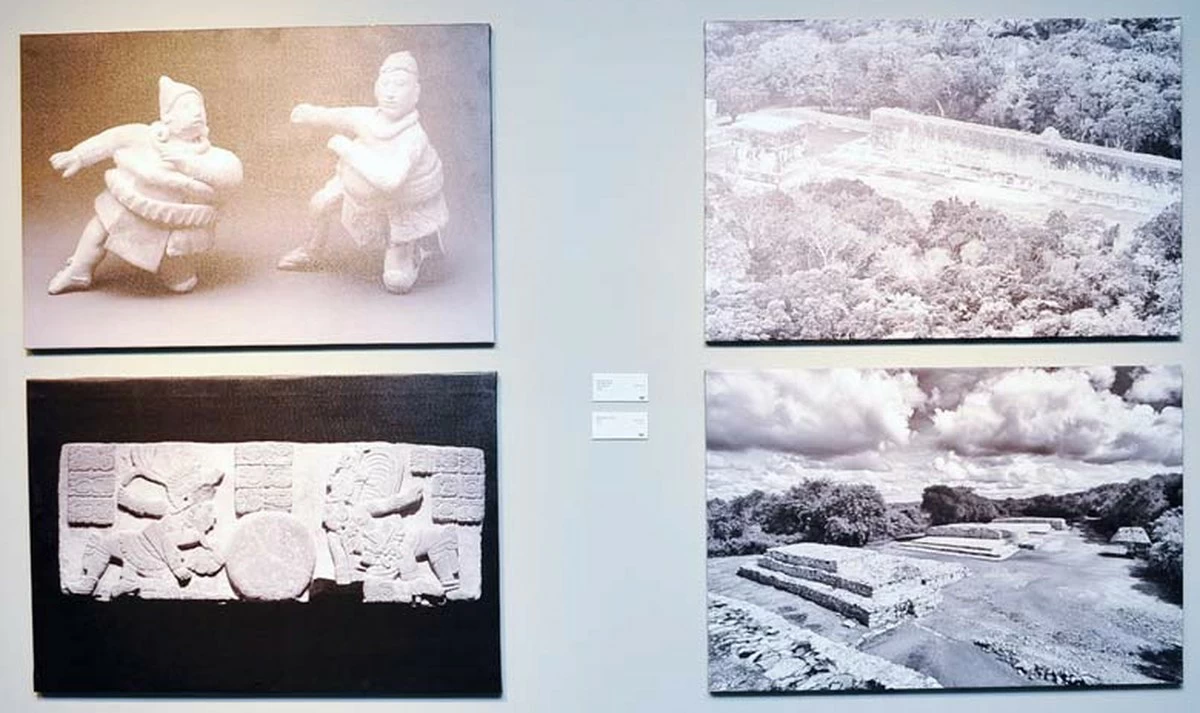
Photographic exhibition reveals the enduring legacy of Mesoamerican civilizations
Among the exhibition’s historical highlights is the story of Spanish conquistador Hernán Cortés, who in 1528 sent a group of Mesoamerican ballplayers to Spain to demonstrate the game before Emperor Charles V. Europeans were reportedly fascinated not only by the players but also by the remarkable bouncing rubber balls they used. Although the practice was largely prohibited after the Spanish conquest because of its association with indigenous religious rituals, the ambassador noted that the tradition survived. Today, teams continue to play versions of the ancient game in several regions of Mexico as well as in countries such as Belize and Guatemala. The exhibition will remain on display at CAP, offering visitors an opportunity to explore the rich cultural heritage of Mexico and the historical roots of one of the world’s earliest ball sports.