


26/04/2026

Share:
26/04/2026
Share:

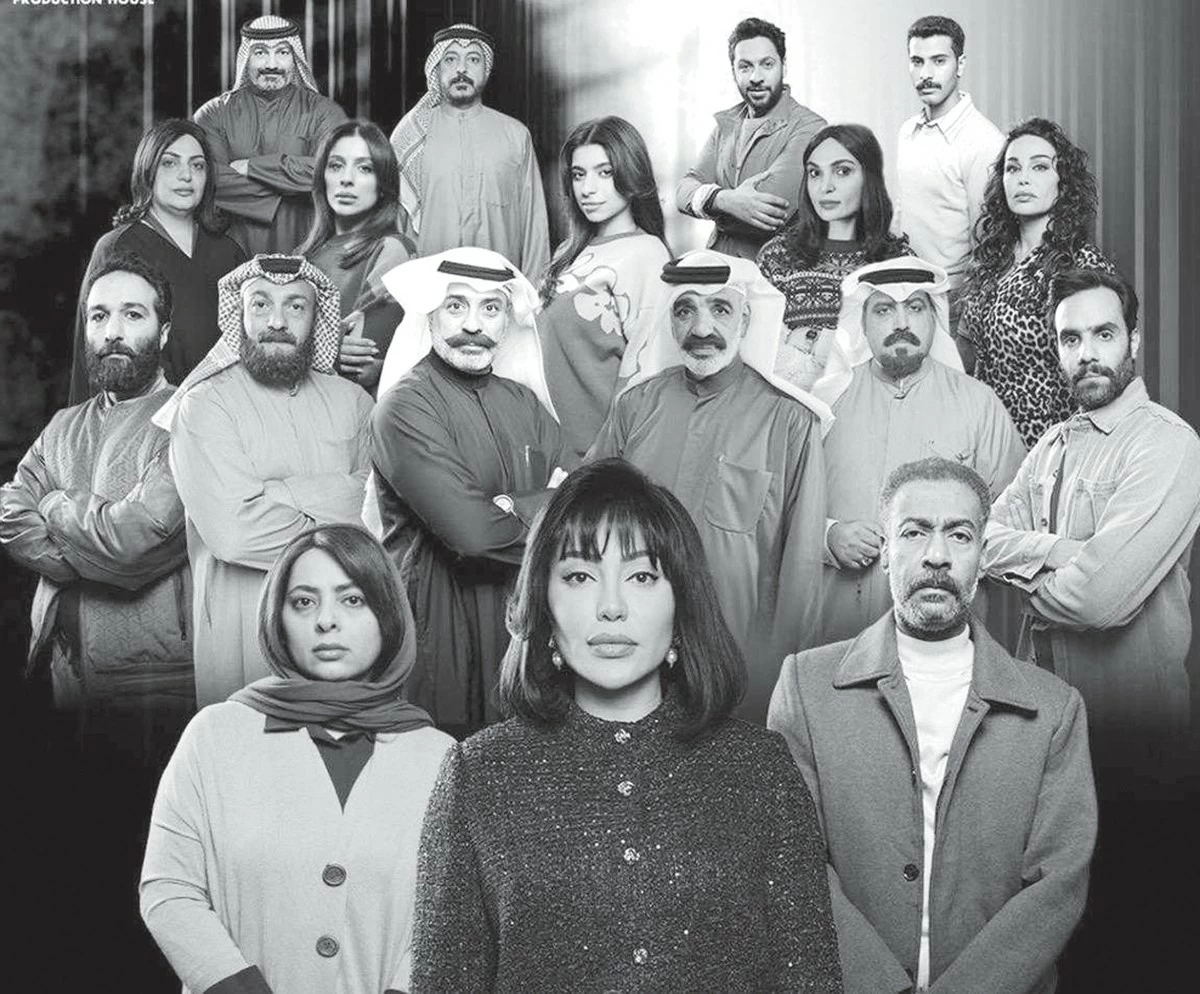
The cast of ‘Maze’
KUWAIT CITY, April 26: The series, “Maze,” currently airing on Shahid, stands out in the context of Gulf dramas, which often combine social commentary with a sense of mystery surrounding the events and leave viewers with unanswered questions. This new run comes after it was forgotten amidst the crowded lineup of shows aired last Ramadan. Written by Ali Shams and Directed by Mohammad Daham Al-Shammari, the series stars prominent Gulf actors in leading and guest roles, including Salah Al-Mulla, Faisal Al-Omairi, Fawz Al-Shatti, Reem Rahma, Abdullah Al-Turkmani, Hussein Al-Haddad, Nour Mahmoud, Rahaf Al-Enezi, Abdullah Zaid, Abdulmohsen Al-Qaffas, Khaled Amin, Latifa Al-Majran and Abdulnasser Al-Zayer. It is a fitting title for a unique experience that leaves viewers with countless questions.
The plot lines intertwine, weaving together themes of revenge, murder, crime, mystery, power struggles and money laundering. This array of themes, presented by Shams, sometimes leaves us bewildered and, at other times, makes us belatedly grasp the situation. The beauty of this work lies in its departure from the norm, emphasizing that this type of production enjoys high viewership, because it attempts to break free from traditional molds. This allows the director to flex his creative muscles and work with a relaxed mindset, especially since the events in the series revolve around multiple dimensions like crime, psychology, suspense, thriller and the complexities of the human psyche, which yearns for both revenge and fear. Although the story and elements of the crime are clear to the viewers, Daham skillfully draws the audience in, making them participants in the game.
Their emotions are manipulated to the point of sympathizing with the killer in a struggle to decipher the dramatic codes. From its very first episodes, the series revealed its nature: answers exist, but they are not easy, clear and linear paths unfold, yet they are winding, a web of intertwined relationships gradually unravels within a structure resembling a puzzle. The narratives intertwine and clash, creating disorientation for the characters.
This approach is commendable for the creators in terms of ambition, but it also puts the work in a delicate position. Ambiguity sometimes transforms from an aesthetic tool into a dramatic burden that weighs down the viewers, especially when it overshadows the clarity of motivations or the sequence of events. It is a clever script. The dialogues in the series made the difference, allowing certain actors to shine and steal the show, particularly in important scenes that delve into psychological conflict. However, at other times, it falls into the trap of direct explanation, as if the script does not fully trust the visuals’ ability to express meaning.
Indeed, the detective stories are supposed to remain mysterious until the very end. With Fawz Al-Shatti as ‘Sarah’, Reem Rahma as ‘Hayat’, Faisal Al- Omairi as ‘Colonel Ahmed’, Abdullah Al-Turkmani as ‘Attorney Abdullatif’, Salah Al-Mulla as ‘Judge Jassim’, Abdullah Al-Zaid as ‘Officer Salem’, Hussein Al-Haddad as ‘Officer Raed’, Nour Mahmoud as ‘Maryam’, Ali Al-Muhaini as ‘Bader’ and Rahaf Al-Enezi as ‘Habiba’, these characters are the main elements forming the dramatic scene. They participate in most of the confl icts and dialogues, resulting in a duel of performances. This is the ‘game’ of Director Bouaziz, who is keen on building independent and complex characters, where no one is presented as ‘absolute good’ or ‘pure evil’. Rather, motivations drive the scene. Actor Hussein Al-Haddad, despite his masterful performance, has a body of work and aspirations as an actor that far surpass this role. Abdullah Al-Zaid makes a strong comeback, although some of his dialogue is exaggeratedly emotional. Khaled Amin, a guest star, is the main catalyst for events after his character’s murder, while other actors excel in delivering a quiet, internal performance that leaves a deeper impression. The work adopts a clear vision, creating a visually charged atmosphere of tension. The slow pace is not a casual choice, but rather part of the work’s philosophy, used to prolong moments of anxiety and immerse the viewer in the characters’ psychological states. Lighting plays a vital role, with reliance on shadows and sharp contrasts, enhancing the sense of mystery and suffocation. The camera also gets very close to faces, attempting to capture the subtlest emotions, while unconventional angles contribute to creating a constant feeling of instability. However, this vision, despite its coherence, suffers from some repetition. The excessive use of the same visual tools gradually diminishes the impact, making some scenes seem like a mere rehash of what was shown before. Furthermore, the slow pace – important as it is – may become a source of boredom for a segment of the audience, especially in episodes lacking clear dramatic development. Daham always relies on actress Fawz Al-Shatti for the female lead. She is the talisman of his successful works and a ‘joker’, while Reem Rahma is a performance actress. “Maze” is not an ambitious work but a purely professional one, not a risky adventure but a guaranteed success due to the presence of all the elements of a successful production.
By Faleh Al-Enezi Al-Seyassah/Arab Times Staff