

26/10/2026

Share:
26/10/2026
Share:
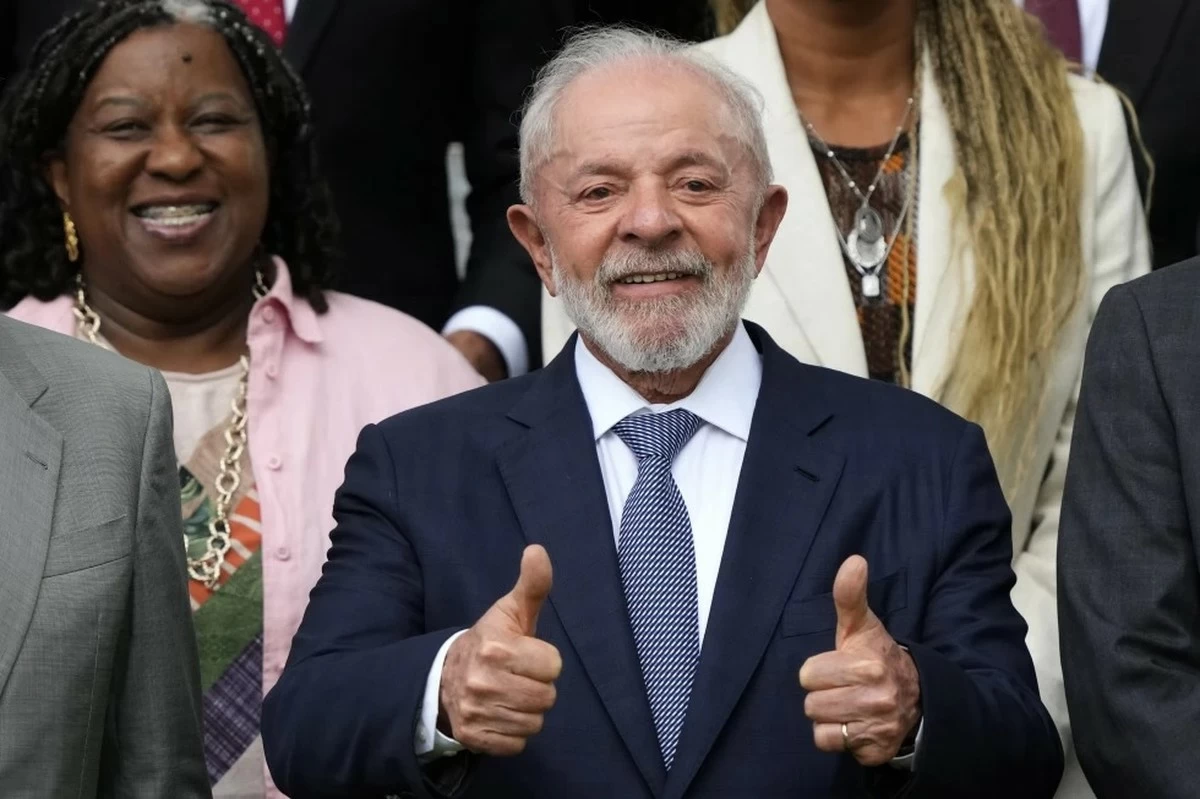

BRASILIA, Oct 26: Brazilian President Luiz Inacio Lula da Silva has secured an unprecedented fourth presidential term, defeating Senator Flavio Bolsonaro in a closely contested runoff, according to the results cited in the supplied report.
Brazil's Superior Electoral Court (TSE) put Lula's share of valid votes at 51.78%, against 48.22% for Bolsonaro, with 99.98% of polling stations counted.
The reported victory marks another major turn in Lula's political career, which has taken him from poverty and factory work to the presidency, followed by imprisonment on corruption charges, the annulment of his convictions and a return to power.
Lula, 80, leads the left-wing Workers' Party (PT). He finished second in the first round on October 4, receiving 45.16% of valid votes, compared with 47.03% for Bolsonaro. His reported runoff victory would make him the first candidate since Brazil's return to democracy to win the presidency after finishing second in the first round.
Speaking in Sao Paulo after the result, Lula pledged to govern for Brazilians across the political divide.
"Nobody is obliged to like the elected president, but he was elected to govern for everyone," he said, stressing the importance of respecting the Constitution.
The campaign focused on the cost of living, public security, corruption and Brazil's international relations, particularly tensions with the United States under President Donald Trump.
From poverty to national politics
Born on October 27, 1945, in Pernambuco in northeastern Brazil, Lula grew up in poverty before moving with his family to Sao Paulo. He trained as a metalworker and lost a finger in an industrial accident, an experience that later became part of his public identity as a representative of working-class Brazilians.
During Brazil's military dictatorship, Lula became active in the labour movement and rose to lead the metalworkers' union in Sao Bernardo do Campo, an industrial city near Sao Paulo.
His leadership during major strikes in the late 1970s brought him national recognition. In 1980, he helped establish the Workers' Party, bringing together trade unionists, left-wing intellectuals and other opponents of military rule.
Elected to Congress in 1986, Lula made unsuccessful presidential bids in 1989, 1994 and 1998 before winning the presidency in 2002. He took office in January 2003, pledging to reduce poverty while preserving economic stability.
During his first two terms, which ended in 2010, Brazil benefited from strong commodity exports and economic growth. Social programmes, including Bolsa Familia, provided financial assistance to millions of low-income households, while poverty declined substantially.
However, his administration was also affected by corruption scandals involving senior officials and lawmakers. Lula left office with high approval ratings and was succeeded by political ally Dilma Rousseff, who was impeached in 2016.
Prison sentence and return to power
Lula's political career suffered a severe setback during Operation Car Wash, a major corruption investigation involving politicians and business executives accused of bribery and money laundering.
He was convicted of corruption and money laundering and imprisoned in April 2018, preventing him from contesting that year's presidential election. He spent 580 days in prison before his release in November 2019.
In 2021, Brazil's Supreme Court annulled his convictions, ruling that the court responsible for his cases lacked jurisdiction. The court also found that former judge Sergio Moro had been biased in one of the proceedings.
The rulings restored Lula's political eligibility. He returned to the presidency after narrowly defeating incumbent Jair Bolsonaro in the 2022 election, securing approximately 50.9% of valid votes.
His inauguration in January 2023 was followed a week later by an assault on Congress, the Supreme Court and the presidential palace by Bolsonaro supporters seeking to overturn the election result.
Economic promises and domestic challenges
During his third presidency, Lula prioritised poverty reduction, social assistance, public investment and environmental protection while seeking to maintain fiscal stability.
His government expanded welfare programmes and pursued measures to improve wages and employment. However, the cost of living, concerns over public spending and violent crime weighed on his popularity.
His administration also faced difficulties advancing legislation in Congress, where centrist and conservative parties held considerable influence.
For his reported fourth-term campaign, Lula promised to maintain Bolsa Familia, expand affordable housing and strengthen public healthcare and education. His economic agenda included higher taxes on high-income earners, infrastructure investment, support for domestic manufacturing and further increases in the minimum wage.
He also backed reducing the standard workweek from 44 to 40 hours without a wage cut. According to the supplied report, a constitutional amendment adopted on October 16 provides for the change to be implemented gradually over 14 months.
Environmental policy remains another priority. Lula has pledged to eliminate deforestation by 2030 while continuing to support oil and gas development.
Despite the reported electoral victory, his ability to implement the agenda will depend on negotiations with Congress. Conservative parties strengthened their influence in the October elections, potentially complicating efforts to advance tax reforms, social spending, public security measures and environmental legislation.
Relations with Washington and the Global South
Lula has sought closer cooperation among emerging economies through BRICS, strengthened ties with China and advocated a greater diplomatic role for Brazil.
He has criticised Israel's military operations in Gaza, supported Palestinian statehood and called for negotiated solutions to international conflicts.
Relations with Washington have become strained after Trump imposed tariffs on Brazilian goods and publicly supported former president Jair Bolsonaro. Trump stopped short of formally endorsing Flavio Bolsonaro in the 2026 election, according to the supplied report.
Lula has criticised what he considers US interference in Brazilian affairs, making national sovereignty a central theme of his political message.
The reported result would leave Brazil among Latin America's major governments pursuing an independent diplomatic approach towards Washington while seeking closer cooperation with countries across the Global South.
Lula's new four-year term is scheduled, according to the supplied report, to begin on January 5, 2027, extending his presidential career across nearly three decades.