



30/12/2025

Share:
30/12/2025
Share:

KUWAIT CITY, Dec 30: The Al-Ujairi Scientific Center has announced that the Al-Murabba‘aniyah season, one of the coldest periods of the year, is approaching its conclusion with the appearance of its third and final star, Al-Shula, beginning on Friday, January 2, 2026.
In a press statement, the center explained that the Al-Shula star period lasts for 13 days and marks the final phase of Al-Murabba‘aniyah. This period is characterized by some of the most pronounced winter conditions of the season.
According to the center, sunrise reaches its latest time of the year during Al-Shula. On the first day of this phase, the sun will rise at 6:43 a.m., while sunset will occur at 5:01 p.m., resulting in extended nighttime hours. Nighttime duration during this period averages approximately 13 hours and 42 minutes, reflecting the continued dominance of darkness over daylight.
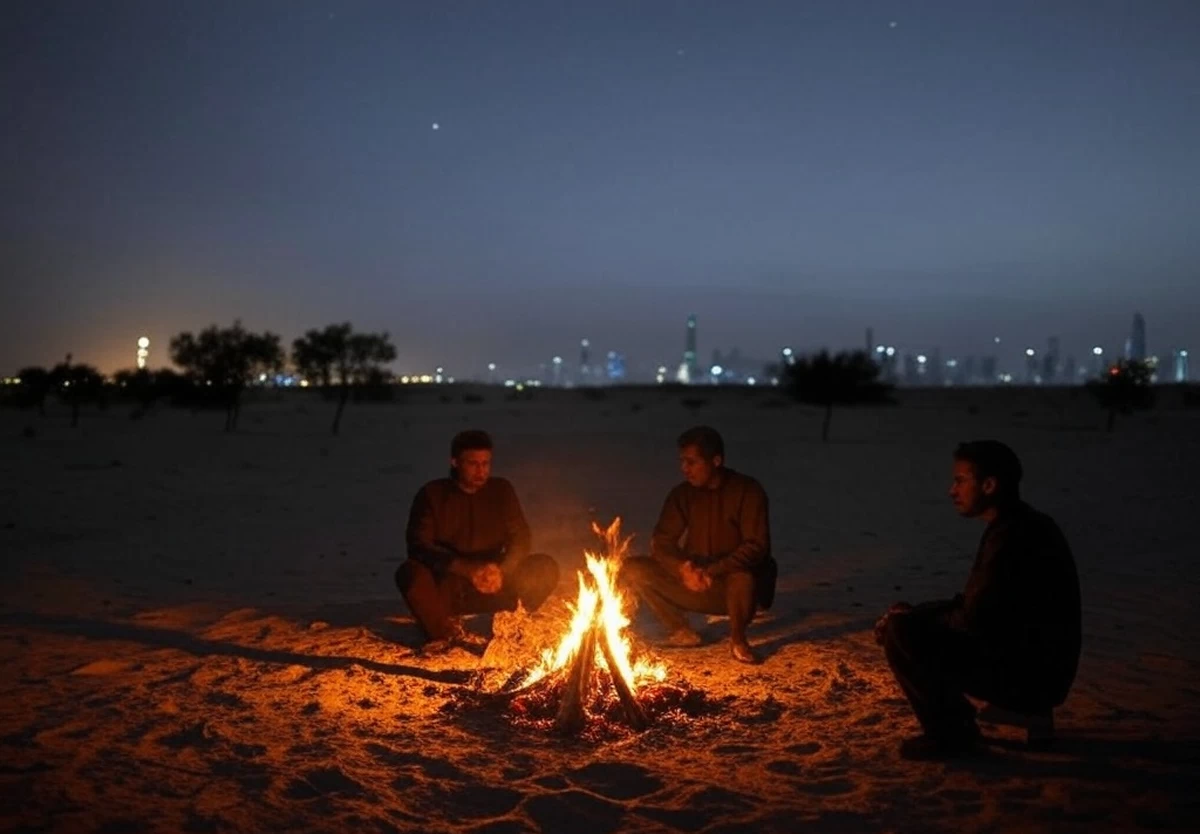
The Al-Ujairi Scientific Center noted that temperatures drop sharply at night, particularly in open and desert areas, where the cold becomes more intense. Frost may form in exposed locations, and fog is expected to appear in the early morning hours, especially in low-lying areas.
Explaining the astronomical features of Al-Shula, the center said the star consists of two closely positioned bright stars located at the tip of the Scorpio constellation’s tail, often described as resembling a needle. The upper star is classified as second magnitude, while the lower is third magnitude, making both visible to the naked eye under clear conditions. The name Al-Shula derives from an Arabic expression meaning “the camel raised its tail.”
The center added that Al-Shula is traditionally associated with persistent cold weather, the final shedding of leaves from deciduous trees, and the onset of harsher winter nights, particularly in exposed regions.
With the completion of the Al-Shula period, the Al-Murabba‘aniyah season officially draws to a close, paving the way for the next transitional phase in the annual climatic cycle.