



06/09/2026

Share:
06/09/2026
Share:

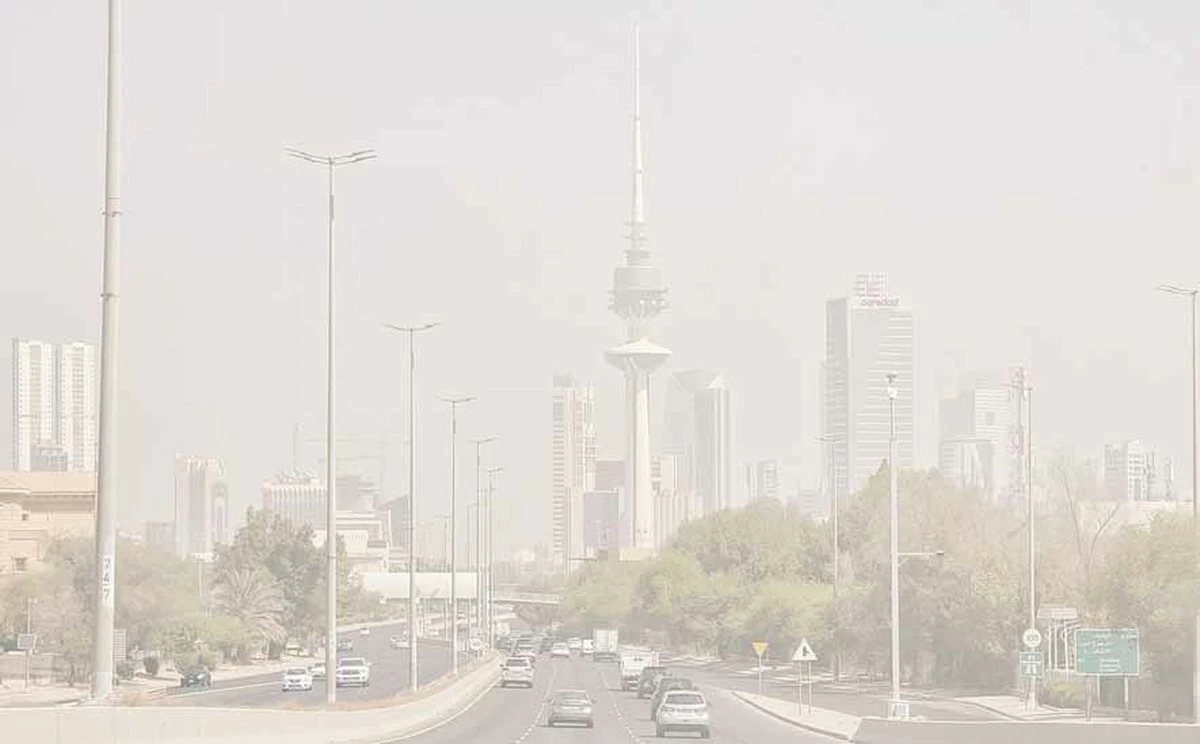
Kuwait sweats under a blanket of humidity as motorists navigate the highway, with the Liberation Tower looming through the hazy Sunday air
KUWAIT CITY, Sept 6: The Al-Ojeiri Scientific Center announced that the Al-Jabha season, the first phase of autumn and the second phase of the Suhail star, began in Kuwait on Sunday, September 6, and lasts for 13 days, until September 18, reports Al-Seyassah daily. The center explained that one of the most prominent features of the Al-Jabha season is the feeling of cooler temperatures at night, while daytime temperatures remain moderate and nighttime hours gradually increase. Kuwait will then enter the Al-Sufri season, which coincides with the beginning of autumn and lasts for 26 days during the last third of September. The Al-Sufri season is characterized by fluctuating temperatures, with the possibility of sandstorms and dust storms when winds become active, causing the sky to take on a yellowish hue.
Migratory birds are active during this season. The arrival of Al-Sufri heralds the coming of winter, as noticeable changes in the weather begin to emerge, especially at night and dawn, with continued high humidity and the formation of fog during the early morning hours. The center went on to explain that this September will witness seven notable astronomical phenomena, beginning on September 6 with the conjunction of the Moon and Mars, as the Moon passes 3 degrees north of Mars. The pair will be visible in the dawn sky over Kuwait City starting at 1:00 am, before disappearing with sunrise.
On September 9, the Moon will be in conjunction with Jupiter, passing 50 arcminutes north of Jupiter. The pair will be visible in the dawn sky over Kuwait City starting at 3:00 am. The new moon of Rabi’ al-Thani 1448 will occur on September 11. On September 14, the Moon will be in conjunction with Venus, passing 31 arcminutes north of Venus. The pair will appear in the sky over Kuwait City around 6:00 pm, at an altitude of 15 degrees above the southwestern horizon.
Venus will reach its greatest brightness of 2026 on September 22. It will be prominent in the Kuwaiti sky, reaching an altitude of 32 degrees above the horizon at sunset. On September 23, the autumnal equinox will occur, when the Sun’s rays are almost perpendicular to the equator and the lengths of day and night are nearly equal, marking the beginning of autumn in the Northern Hemisphere.