


10/08/2026

Share:
10/08/2026
Share:
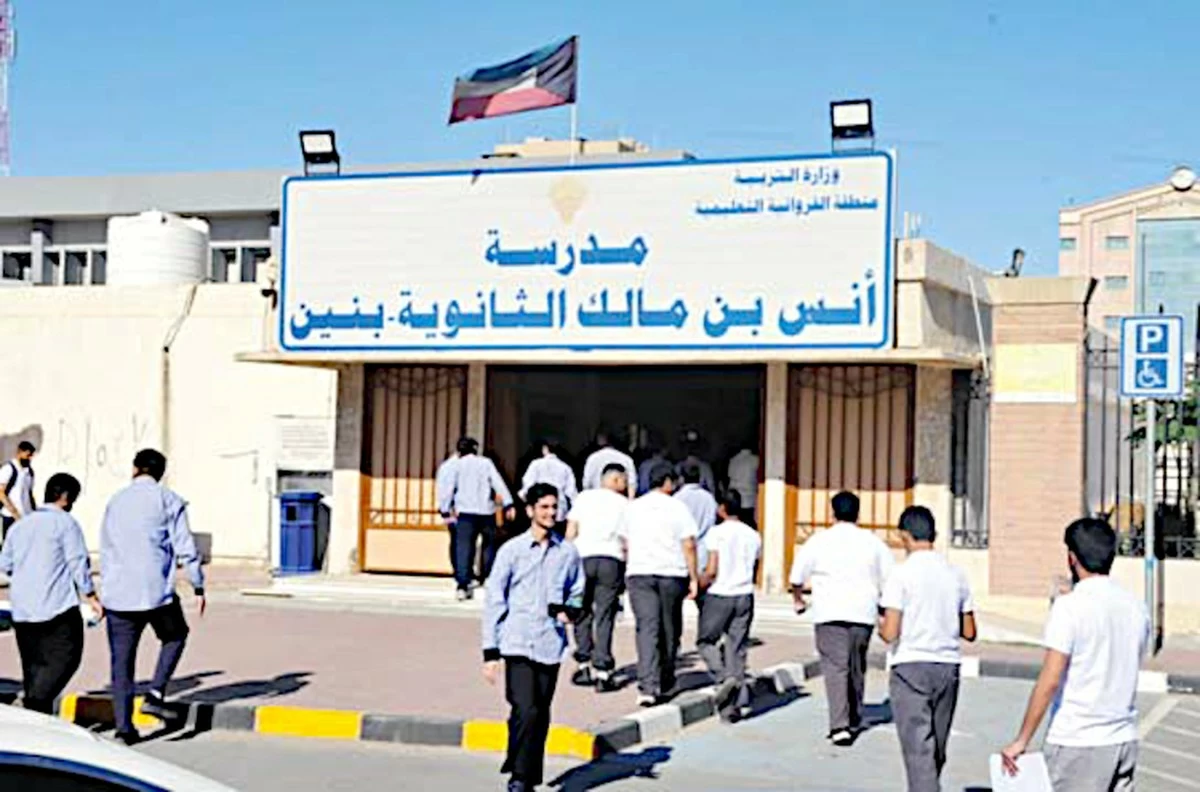

KUWAIT CITY, Aug 10: Kuwait’s Ministry of Education is moving toward implementing a comprehensive set of regulations governing dress, appearance, conduct and professional responsibilities for teachers, administrators, service employees and students in government schools.
The preliminary regulatory framework has been circulated to education-sector employees to gather their views, observations and suggestions before implementation.
Under the proposed rules, teachers and administrative staff would be required to maintain a professional and modest appearance. Male employees would be expected to wear the Kuwaiti national dress — dishdasha, ghutra and agal — or a formal or semi-formal suit, while female employees would be required to wear modest formal or semi-formal clothing appropriate to the educational environment.
The regulations require clothing to be clean, modest and non-conspicuous, while prohibiting sportswear, short or revealing clothing, excessively tight clothing and ripped garments. Tattoos, where present, must also be covered. Physical education teachers would be exempt from the sportswear restriction and allowed to wear appropriate athletic clothing.
Service employees would be required to wear clean and appropriate uniforms throughout their shifts and comply with occupational safety requirements, including the use of gloves, masks and other protective equipment when necessary.
Strict rules proposed for students
Students would be required to wear the approved school uniform without modifications. The uniform must be loose-fitting and not tight, revealing or excessively decorated.
The proposed rules also set standards for students’ hairstyles. Hair must be neat and must not cover the eyes or neck or extend beyond the ears. Unusual hairstyles, haircuts, hair gel, dyes and colored highlights would be prohibited.
Students would also be required to wear closed shoes in non-conspicuous colors without excessive decoration.
The proposed regulations prohibit students from wearing chains, bracelets, large rings and other conspicuous or inappropriate accessories inside schools.
Uniform length would be standardized according to grade level. For elementary students, the uniform should cover the knee when seated, while for middle and high school students it should extend to mid-calf. The regulations also require a white cotton cap for students at all grade levels.
The rules would apply during official school hours as well as school activities, although school administrations could permit special clothing for particular events based on their nature and in accordance with the regulations.
Warnings and disciplinary measures
The regulations would form part of the schools’ internal systems and apply to employees and students. School administrations would have the authority to issue warnings and take administrative action against violations.
For employees, listed violations include missing classes, failing to follow academic support plans, skipping school meetings without an acceptable excuse, failing to follow approved curricula, poor cooperation with colleagues, creating workplace disputes, arriving late to classes and violating administrative instructions.
The proposed disciplinary process begins with a verbal warning documented in writing, followed by a written warning for repeated violations and possible referral to the stage supervisor for further action, including salary deductions where applicable.
More serious violations include insulting or belittling colleagues, spreading false information about the school, refusing administrative instructions, abusing staff through social media, disclosing confidential work information, leaving the workplace without permission, manipulating working hours or assignments and improperly calculating student grades.
Repeated or serious violations could result in referral to the competent legal authorities within the ministry.
Zero tolerance for serious violations
The framework sets out tougher measures for serious misconduct, including physical assault or threats, harassment of students, discrimination, defamation, abuse of administrative authority, favoritism, deliberate harm to students or employees, imposing disciplinary penalties without investigation, examination fraud and manipulation of student grades.
Cases involving serious violations would require a written statement, an incident report and witness testimonies before being referred to the stage supervisor and the ministry’s competent legal authorities.
Rules on school admissions
The proposed framework also sets detailed controls for the admission of non-Kuwaiti students to government schools.
Exempted categories include children of Kuwaiti mothers, GCC citizens, diplomats, non-Kuwaiti martyrs and employees of certain educational, academic and military institutions, in accordance with existing ministerial decisions.
The regulations also establish age requirements for students entering or re-enrolling in government schools from Grade 1 through Grade 12, including procedures for exceptions involving students transferring from kindergartens, home education or private schools.
Exam cheating to face formal procedures
An appendix to the framework sets out violations related to examination cheating and attempts to undermine academic integrity.
Violations include cheating or attempting to cheat, helping another student cheat, possessing materials or devices intended for cheating, handing an answer sheet or cheating materials to another student, using a false name, removing an answer sheet or part of it from the examination hall, and refusing to follow examination committee instructions.
When a violation is detected, supervisors would prepare a formal report signed by the observers and examination committee head. The student’s statement would be recorded in writing, with any refusal to sign documented, before the appropriate disciplinary decision is taken.
Teachers’ workload capped at 18 periods
The framework also proposes a quota system for teachers and heads of departments, covering the number of classes and performance rates at different educational levels.
The aim is to ensure a fair distribution of teaching workloads based on specialization and school requirements. Performance standards would be reviewed when study plans for scientific subjects are modified.
Under the proposed framework, a teacher’s workload would not exceed 18 class periods per week, with the ministry saying the limit is intended to maintain teaching quality and stability in the educational process.
The proposed regulations are currently being reviewed and are intended to establish clearer standards for professional conduct, student discipline, academic integrity and the distribution of responsibilities across Kuwait’s schools.