



10/12/2025

Share:
10/12/2025
Share:

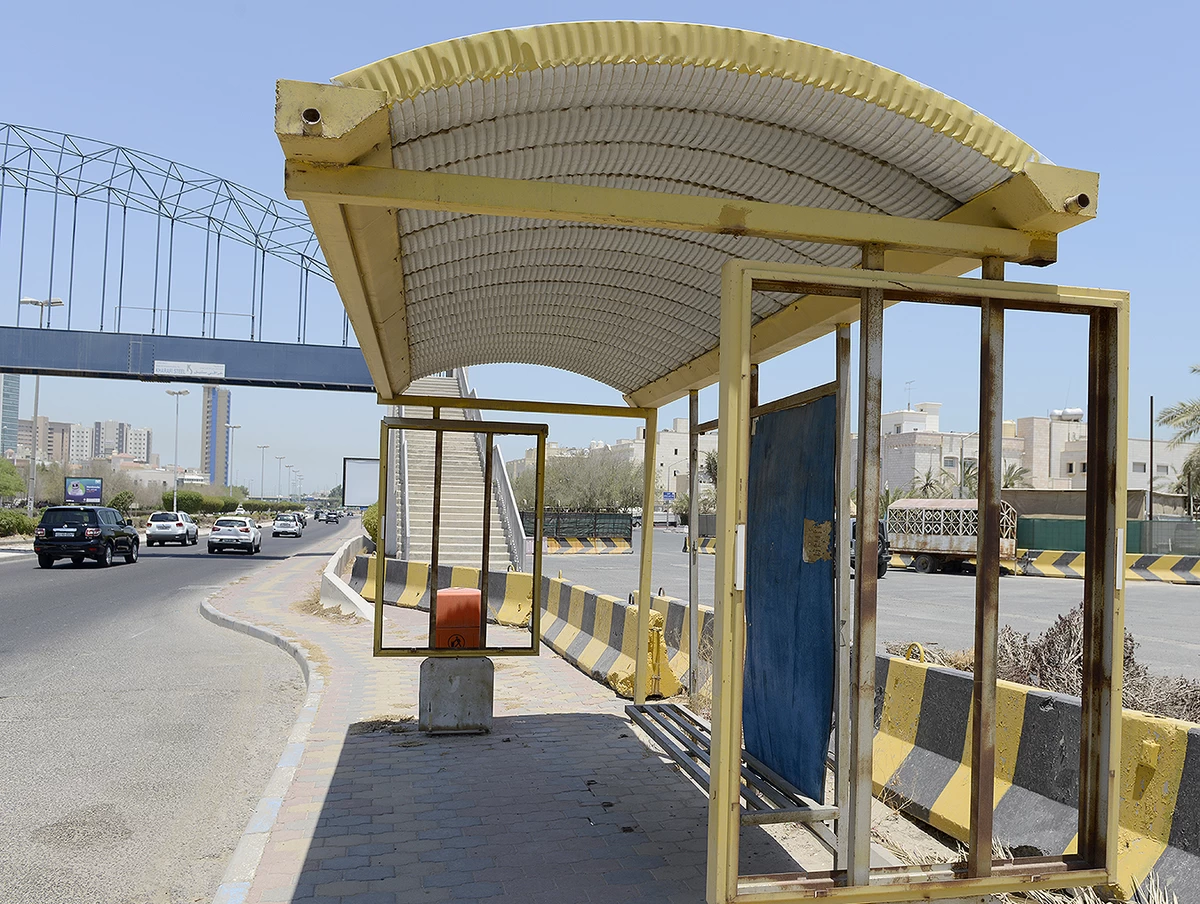
KUWAIT CITY, Dec 10: Municipal Council member Alia Al-Farsi has submitted a question to the executive branch regarding the public transportation system in Kuwait, specifically concerning the bus passenger waiting stations. In the preamble to her inquiry, she referred to Article 21, Paragraph 4 of Law No. 33/2016, which outlines the Municipal Council’s jurisdiction in “determining projects and their locations, beautifying cities, villages, suburbs, districts, islands, roads, streets, and squares, and their expansion.” She also cited Paragraph “d” of the same article, which states that “The Municipal Council, within the framework of the state’s general structural plan and the approved budget, is responsible for public roads, squares, sidewalks, and open spaces.” Al-Farsi explained that the state provides public bus services as a primary means of mass transportation to ensure safe and convenient movement for residents.
This helps reduce traffic congestion, lowers emissions, protects the environment, and supports individuals without private transportation by offering an affordable means of reaching workplaces, educational institutions, and essential facilities. An efficient public transportation network enhances urban development and facilitates movement within cities. She highlighted that Kuwait is currently experiencing a degree of disorder due to overlapping responsibilities among operating entities and the spread of unregulated routes, along with weak adherence to arrival and departure schedules and insufficient monitoring of compliance with designated bus stops. She revealed that some drivers stop outside the assigned areas, which negatively affects traffic flow and safety levels.
Al-Farsi stressed that the limited infrastructure for bus stops contributes to their insufficient distribution and worsens the existing disorder. She indicated that all these factors combined create a less organized transportation experience and highlight the need to modernize and develop the public transportation system to ensure more efficient and safer service. Al-Farsi directed her inquiry to the municipality, seeking clarification from the relevant authorities responsible for the public transportation system, specifically bus passenger waiting stations, in Kuwait.
She attached a list of related entities to her inquiry and requested that the municipality officially forward it to them for their responses. Al-Farsi said several entities may share responsibility for a single task, and in the case of bus passenger waiting stations, no single entity may be fully accountable. She concluded by emphasizing the importance of adhering to the legal timeframe for responding to questions from Municipal Council members in accordance with applicable regulations and bylaws
By Inaas Awad Al-Seyassah/Arab Times Staff