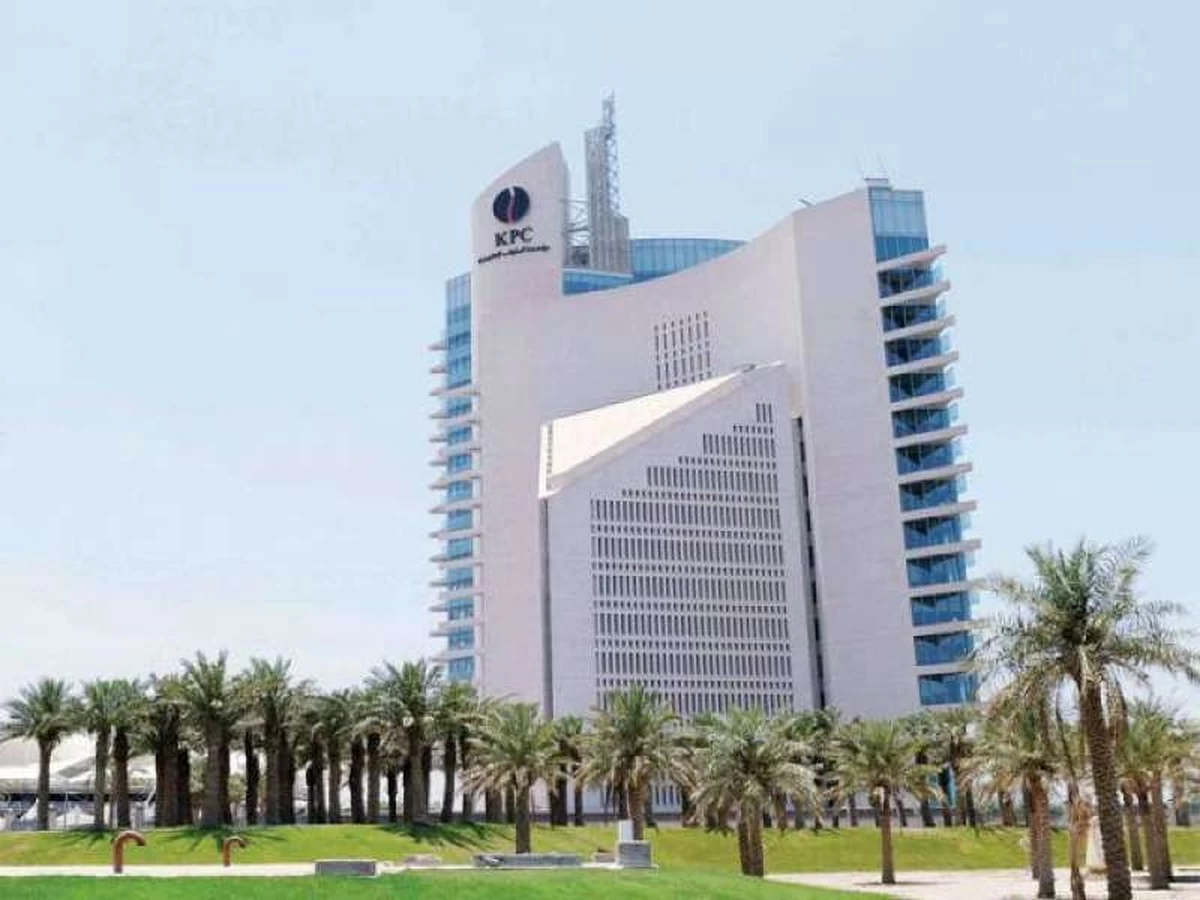
KPC Kuwait Petroleum Corporation headquarters
KUWAIT CITY, Oct 19: The list of successful applicants for employment at Kuwait Petroleum Corporation (KPC) and its subsidiaries has been approved, say reliable sources. Sources confirmed that the official announcement and final list of applicants who passed the tests will be published in the coming days, after which the appointment procedures and integration into field and administrative work will commence. Official data obtained by the newspaper showed a significant leap in the Kuwaitization indicators and job localization at Kuwait National Petroleum Company (KNPC). The total workforce reached 7,634 employees at the beginning of September, 7,144 of whom are Kuwaitis or 93.58 percent of the total workforce, compared to 5,979 by the end of the fiscal year that closed on March 31. A source disclosed that the growth of national talent in the oil sector is a manifestation of the commitment of the sector to create an environment suitable for Kuwaiti youths and provide promising career paths, which guarantee their job and professional stability and open broad horizons for advancement.
The source indicated that KPC supports national talent through intensive training and development programs for transferring complex technical expertise to young professionals, thus, ensuring the continuity of production with high operational efficiency. The source explained that KPC’s role is not limited to the nationalization of jobs, as it extends to major industrial and technological developments spearheaded by national talents to increase the capacity of local refineries and develop oil and gas production processes. According to the source, these national talents contribute to the implementation of environmental projects, production of clean fuels, meeting all the requirements of global markets and international environmental standards, and solidifying the country’s global competitive position.
The source stated that this clear synergy between developing human resources, upgrading the infrastructure of oil facilities, and increasing crude oil production rates aligns with the expansion and innovation plans to ensure that Kuwait remains a major and reliable hub for oil supplies. Meanwhile, in another development, Al-Khafji Joint Operations (KJO) has signed a significant strategic memorandum of understanding (MoU) with Aramco Digital and SLB. According to informed sources, the agreement aims to study and develop the “Raed” platform, which is expected to usher in a new era for the oil and gas industry as the first fully autonomous, smart offshore production platform in Saudi Arabia and the Arabian Gulf region. The initiative seeks to improve the efficiency of offshore operations and position the region at the forefront of technological innovation in the global energy sector. Senior executives from all three organizations attended the signing ceremony.
Musaed Al-Mazid, Executive Director of Projects and Engineering at Al-Khafji Joint Operations, signed the agreement on behalf of KJO in the presence of Naif Al-Sulami, President of Al-Khafji Joint Operations. Eid Al-Harbi, CEO of the Telecommunications Sector at Aramco Digital, signed the agreement on behalf of the company in the presence of its CEO, Dr. Ashraf Al-Tahini. Representing SLB, Reda Kelkouli, Managing Director for Saudi Arabia and Bahrain, signed the agreement in the presence of Jesus Lamas, President of SLB’s Middle East and North Africa region.
The sources explained that the strong interest in signing the agreement reflects the high priority these major corporations place on the success of this digital initiative. The “Raed” (Pioneer) platform, in particular, represents a tangible, real-world embodiment of the next generation of advanced digital oilfields. The platform is designed to rely entirely on generative artificial intelligence and autonomous systems to manage and operate oil and gas production at offshore fields and advanced platforms, eliminating the need for constant or direct human intervention on-site. This approach is expected to reduce operational costs while enhancing safety in harsh marine environments. The pioneering platform incorporates a range of advanced technologies, including cloud computing, real-time big data analytics, and the Industrial Internet of Things (IIoT). This sophisticated technological ecosystem enables the platform to monitor oil reservoir behavior with exceptional precision and autonomously adjust operations to ensure the optimal flow of oil and gas.
By Najeh Bilal Al-Seyassah/Arab Times Staff