



15/04/2026

Share:
15/04/2026
Share:

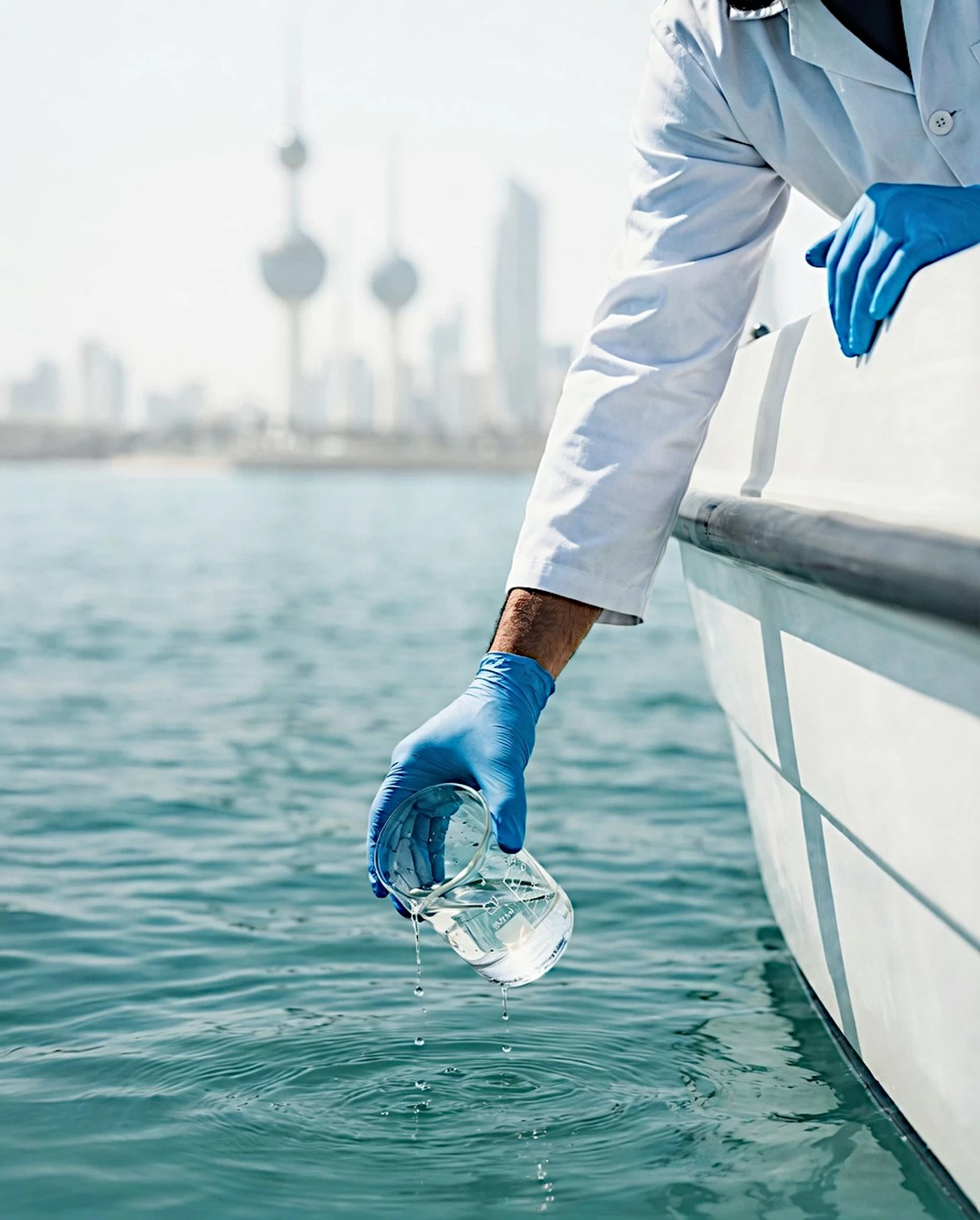
KUWAIT CITY, April 15: Director of the Chemical Testing Department at the Environment Public Authority (EPA) Abdullah Al-Yateem reassured the public that the seawater and drinking water in the country are free of chemical pollutants, as confirmed by the results of continuous monitoring and analysis over the past six weeks.
In a televised interview, Al-Yateem stated that fish, shellfish and seabed sediments are safe as well, proving the stability of the environmental situation. He said EPA continues its intensive efforts to monitor water quality, focusing on seawater, as it is the primary source of drinking water in the country. He pointed out that these efforts are being exerted in coordination with other concerned authorities like the Ministry of Electricity, Water and Renewable Energy to ensure accurate and efficient monitoring and oversight procedures. He revealed that EPA is using an integrated monitoring system, which combines fieldwork and laboratory analysis.
He said the concerned teams conduct inspections regularly, covering the northern, central and southern marine areas, during which water samples are collected and measurements are taken, including temperature, salinity, dissolved oxygen and pH levels. He explained these are the main indicators of the environment and water conditions. On the testing mechanism at EPA laboratories, he disclosed that the collected samples are transported according scientific procedures that ensure the preservation of their characteristics. He added that these samples undergo a series of advanced chemical analyses using modern, high-precision equipment, such as spectrometers and chromatographs, to detect traces of organic or inorganic pollutants like heavy metals, hydrocarbons and microchemical compounds. He went on to say that rigorous quality control systems are applied in the laboratories, such as periodic calibration of equipment and the use of reference samples to ensure the accuracy and reliability of results according to international standards.
He clarified that monitoring programs are not limited to water, as they include analyzing fish and shellfish samples to detect pollutants in the marine food chain, in addition to examining seabed sediments, which serve as a long-term indicator of the condition of the marine environment. He pointed out that the sediments are considered an ‘environmental record’, which allows tracking changes or potential pollutants over an extended period. He affirmed that EPA intensified its monitoring efforts in the seasonal transition from winter and spring to summer, a period that may witness increase in algal blooms and marine microorganisms. He reiterated that all indicators are within normal limits and no alarming phenomena have been recorded.
He said EPA keeps on developing its technical infrastructure and monitoring capabilities by upgrading laboratories and adopting the latest technologies in environmental analysis, along with training national personnel, to guarantee the preservation of water resources and marine environment. He stressed that the environmental situation is reassuring and it is subject to close monitoring round the clock.
By Inaas Awadh Al-Seyassah/Arab Times Staff