


21/10/2026

Share:
21/10/2026
Share:

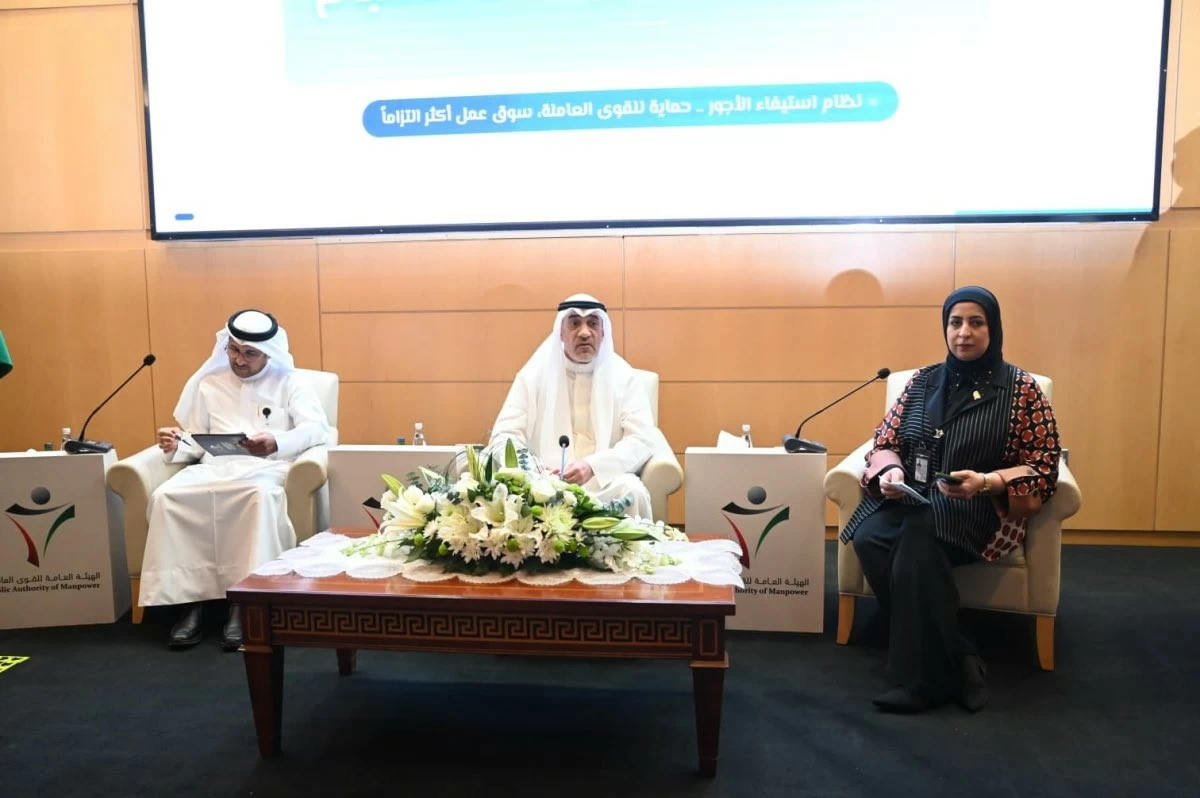
KUWAIT CITY, Oct 21: First Deputy Prime Minister and Minister of Interior Sheikh Fahad Al-Yousef has warned companies that fail to pay workers’ salaries that they will face legal action, stressing that Kuwait will not tolerate labour exploitation, human trafficking, money laundering or violations of workers’ rights.
Sheikh Fahad revealed that around 10,000 companies, each employing approximately five workers, had failed to pay their expatriate employees’ salaries for months. He also cited a case in which a Kuwaiti citizen was registered as earning KD3,000 a month but was receiving only KD180, highlighting concerns over fictitious salary records and possible manipulation of wage data.
He announced that the 20th of each month would be the deadline for companies to pay their employees’ salaries, underlining the need for greater compliance and accountability in the private sector.
The First Deputy Prime Minister stressed that the law applies equally to everyone, regardless of the names or status of company owners. He warned that failure to pay wages, human trafficking and money laundering were serious violations that damage Kuwait’s reputation.
“Anyone who breaks the law will face the law,” he affirmed, calling on employers to meet their obligations and respect the rights of their workers.
300 delivery workers dismissed in two weeks
Sheikh Fahad expressed concern over the dismissal of 300 delivery workers during the previous two weeks, particularly amid reports that wages were being deducted under the pretext of violations.
He described such deductions as unacceptable and called for better treatment of delivery workers, emphasising that employers must not use alleged violations as a justification for withholding wages unfairly.
He also criticised working arrangements that require delivery workers to remain on the road for as long as 18 hours, stressing the need to protect their welfare and ensure reasonable working conditions.
The First Deputy Prime Minister said companies should make use of drivers who have already been trained to drive in their home countries rather than subjecting delivery workers to excessive working hours.
“Have mercy on foreigners,” Sheikh Fahad urged, calling on business owners to take workers’ living conditions into account and fulfil their legal and financial obligations towards them.
His remarks highlighted the need to address practices that leave expatriate workers without their wages while continuing to face living expenses and other financial commitments.
Manpower Authority to close non-compliant company files
Director General of the Public Authority for Manpower Eng. Rabab Al-Osaimi confirmed that the authority would close the files of companies that fail to pay their workers’ salaries.
She said some companies were registering fictitious salaries, creating discrepancies between the wages recorded in official documents and the amounts actually received by employees.
The authority is working with the Central Bank of Kuwait to address loopholes associated with such practices and strengthen oversight of salary payments.
Sheikh Fahad also directed the Public Authority for Manpower to make the assessment of manpower needs available to everyone without inspection, as part of efforts to facilitate procedures. However, he warned that any company found violating the law would be held accountable.
He further disclosed that the possibility of resuming the transfer of domestic workers’ residency permits under Article 20 to the private sector was under consideration. The proposal remains under study, and no decision to resume the transfers was announced.
8,849 company files suspended over unpaid wages
Data presented by the Public Authority for Manpower showed that 8,849 company files had been suspended for non-payment of wages up to June 2026.
The suspended files represented 18.3 percent of the 48,408 company files registered with the authority for businesses employing five or more workers.
The figures underline the scale of wage-payment violations in Kuwait’s labour market and the challenges facing authorities in ensuring that companies meet their obligations to employees.
Despite the violations, the authority reported a significant improvement in wage compliance, with the rate rising to 75.6 percent in July 2026, compared with 38.7 percent in July 2025. This represents an increase of 36.9 percentage points in one year.
The improvement reflects progress in monitoring salary payments and encouraging companies to comply with wage-protection requirements, although the number of suspended files indicates that substantial enforcement challenges remain.
Wage collection applications rise by 195.6 percent
Al-Osaimi said companies submitted 93,865 applications through the wage collection system between January and September 2026, an increase of 195.6 percent compared with 31,757 applications during the corresponding period in 2025.
Of the applications submitted during the first nine months of 2026, 93,852 were approved, indicating a high rate of application processing through the system.
The wage collection system is intended to strengthen monitoring of salary payments, improve compliance among employers and protect workers from delayed or withheld wages.
The authority said the system’s indicators provide a clearer picture of companies’ compliance levels and help improve discipline in the labour market.
Stronger enforcement to protect workers’ rights
The announcements were made during the second meeting with First Deputy Prime Minister and Minister of Interior Sheikh Fahad Al-Yousef, titled “The Wage Collection System: Protection for the Workforce, a More Compliant Market.”
The meeting was attended by company owners, with the Public Authority for Manpower presenting the system’s performance indicators and reviewing the level of compliance among businesses in paying workers’ salaries.
The discussions focused on strengthening wage protection, addressing violations and ensuring that employers fulfil their responsibilities towards their employees.
Sheikh Fahad’s remarks sent a clear warning to companies that wage violations would not be tolerated and that business ownership or social standing would not exempt anyone from accountability.
The government’s stated position is that protecting workers’ rights is essential not only to ensuring fair treatment of expatriates but also to safeguarding Kuwait’s international reputation and maintaining a more transparent and compliant labour market.