



02/12/2025

Share:
02/12/2025
Share:
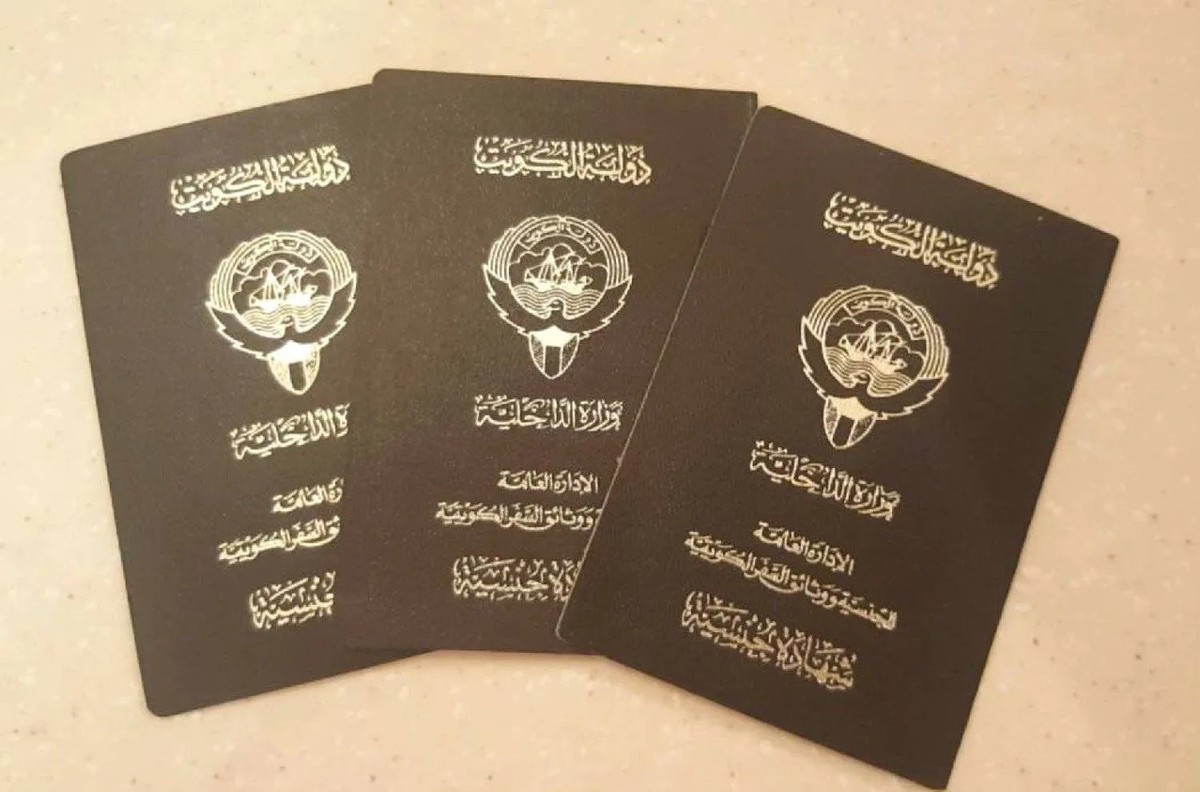
Kuwait revokes the citizenship of 11 individuals through two official decrees.

KUWAIT CITY, Dec 2: The practical experience of citizenship revocation cases, particularly those involving forgery, has revealed procedural challenges in companies where the affected individuals hold shares, impacting the rights and status of the remaining shareholders. Officials at the Ministry of Commerce and Industry are coordinating with relevant authorities, primarily the Ministry of Justice, to develop legal and procedural solutions that protect the interests of the remaining shareholders and prevent any negative effects on their financial and legal standing.
In this context, informed sources explained that the Ministry of Commerce and Industry recently received inquiries from owners of unlisted companies whose Kuwaiti citizenship was revoked due to forgery related to strategic shareholdings. These owners requested that the ministry develop procedures to resolve their cases, ensuring the renewal of their commercial licenses and the uninterrupted flow of funds to and from the company’s accounts, as any disruption could negatively affect liquidity generated from the company’s operations.
Among the cases under legal and procedural review by the ministry are companies where non-Kuwaiti shareholders hold approximately 49 percent of the shares, while the remaining 51 percent are owned by individuals whose Kuwaiti citizenship was revoked due to forgery. Although the 49 percent shareholders hold a general power of attorney for the affected partner, and one of them serves as the company’s general manager, they face legal and procedural obstacles in renewing the commercial license and in implementing the process to replace the partner whose citizenship was revoked. This is due to the regulations of the Ministry of Justice, as the individual being removed is on a blacklist, preventing the disposal of any of his assets, including cash, company shares, or other funds.
The sources said, “Since the entry of new partners and the exit of existing ones requires official documents proving the eligibility of the partner and the consent of all parties, the 49 percent shareholder faces obstacles in removing the partner whose citizenship has been revoked or dissolving the partnership. This limits the ability of the remaining shareholders to fill the power gap necessary to ensure the company’s continued operation at the same level of efficiency and to prevent potential legal disputes with the partner or the state. The general power of attorney issued in the name of the partner whose citizenship has been revoked is no longer valid with the Ministry of Justice.
Consequently, the company’s shareholders face challenges in renewing the commercial license, as the law requires a Kuwaiti partner holding 51 percent of shares, a requirement that cannot be fulfilled while the partner whose citizenship was revoked remains under a legal block.” The sources indicated that officials of the Ministry of Commerce and Industry are exploring potential legal solutions to this unprecedented issue, which current company law does not adequately address, adding that the situation reflects recurring cases and therefore requires a proper procedural mechanism to protect the rights of all parties, including the state.
The sources explained that one proposal under consideration is to suspend the shareholder whose citizenship has been revoked, effectively freezing their share, while allowing the remaining owners to continue managing the company. These owners would assume responsibility for their decisions and protect the company’s interests, as they currently hold a majority, enabling them to operate the business.
Alternatively, authorities could permit the revoked partner to withdraw their share and appoint a guardian for the transferred share until a decision is made by the relevant authorities, whether for liquidation or continued freezing. During this period, a mechanism would be established to regulate the entry and exit of funds from the company’s accounts, preventing circulation in cash or personal transactions and minimizing the risk of payment defaults that could adversely affect the company’s financial stability and the interests of its shareholders.
One of the initial scenarios under discussion involves allowing the relevant state authorities to offer shares in companies whose ownership was affected by citizenship revocation due to forgery, through a public auction. The proceeds from such sales would be allocated to the state treasury. This approach would protect the state’s rights while simultaneously preserving the financial and legal standing of the remaining shareholders.
The sources emphasized that all these scenarios are preliminary proposals, and any action would require Cabinet approval, as it is the body responsible for authorizing mechanisms for handling citizenship revocation cases. They clarified that the Ministry of Commerce and Industry and the Ministry of Justice would serve as the executive bodies tasked with implementing Cabinet decisions in this regard.