


19/09/2026

Share:
19/09/2026
Share:

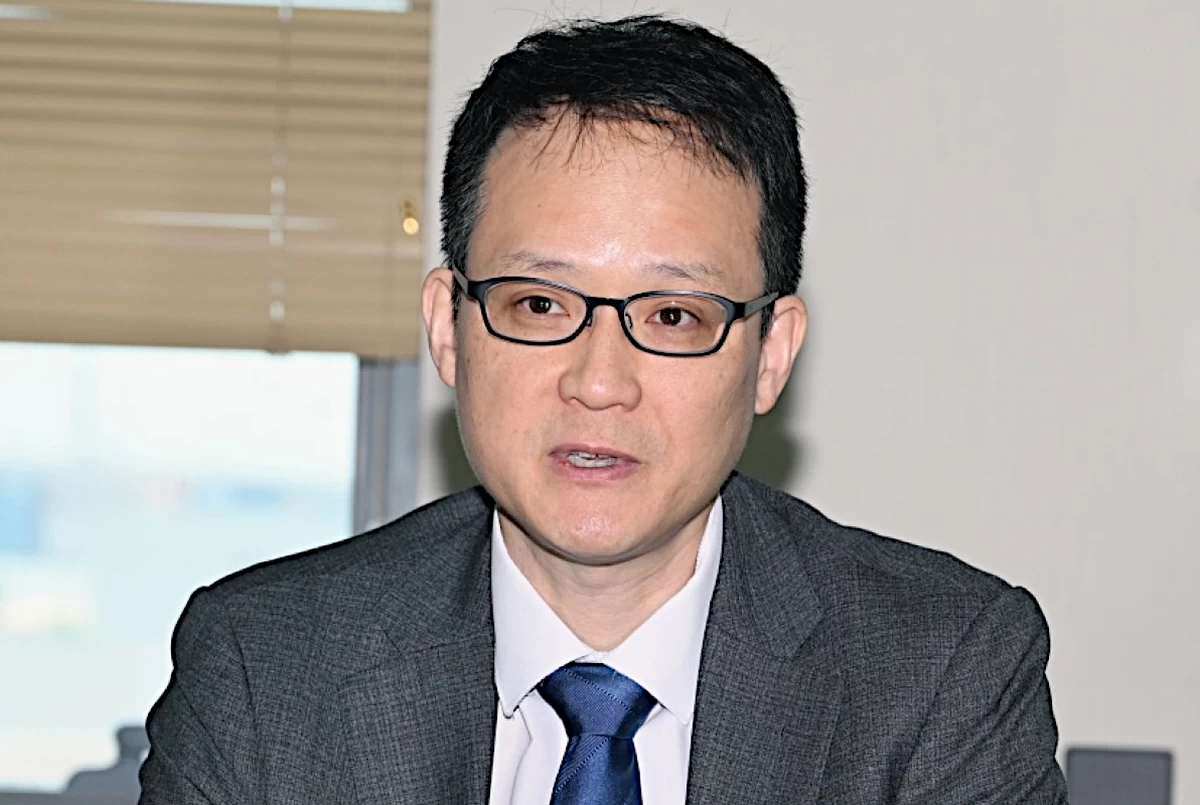
Ambassador of the Republic of Korea to the State of Kuwait H.E. Kim, Jang Hyun during a meeting with media representatives.
KUWAIT CITY, Sept 19: Ambassador of the Republic of Korea to the State of Kuwait H.E. Kim, Jang Hyun said his country is keen on elevating bilateral relations with Kuwait into a sustainable partnership. According to Kim, this commitment entails boosting mutual investments and expanding cooperation in different sectors like artificial intelligence, digital transformation, defense, health, culture, energy and infrastructure. Speaking during a meeting with media representatives, Kim disclosed that it is an honor to present his credentials to His Highness the Amir Sheikh Meshal Al-Ahmad Al-Jaber Al-Sabah, describing the occasion as one of the most memorable moments of his life.
He praised His Highness’ gracious and friendly demeanor and the warm reception he received. He added that His Highness the Amir expressed interest in strengthening investments and facilitating high-level visits and meetings. He conveyed the greetings of the South Korean president to His Highness the Amir who, in turn, asked him to convey his warmest regards to the South Korean leader. He stated that his priorities include strengthening cooperation in energy and infrastructure and extending it to artificial intelligence, digital transformation and knowledge exchange, while integrating modern South Korean technologies into project development and operations.
He cited the experience of the Incheon International Airport Corporation in operating Terminal Four at Kuwait International Airport and its interest in operating Terminal Two upon its completion. He confirmed the capability of South Korean companies to utilize artificial intelligence, smart office systems and facility management technologies to develop smart airports, thereby, raising efficiency and improving services and passenger satisfaction.
Regarding the defense sector, Kim pointed out that recent security developments in the region underscored the importance of bolstering air defense systems and protecting vital facilities. He expressed his admiration for the resilience of the Kuwaiti people and the calm continuity of their daily lives, as well as the government’s swift action to maintain order and stability. He highlighted the role of air defense systems in intercepting drones and missiles, indicating that the United Arab Emirates (UAE) utilizes the South Korean medium-range air defense system ‘Cheongung-II’, which achieved an interception rate of 96 percent as per media reports.
He added that the system offers competitive pricing and faster delivery times compared to similar systems and could help bolster Kuwait’s defense capabilities, affirming the interest of South Korean defense companies in collaborating with Kuwait. Regarding oil, Kim disclosed that South Korea’s imports of Kuwaiti crude declined in spring, according to official statistics, and have been rising again since June, although they have not yet returned to previous levels. He acknowledged the efforts made by Kuwait and the relevant companies to maintain the fl ow of crude to international markets. He pointed out that Kuwait is the fourth largest market for South Korean companies in infrastructure projects, with an annual average value of about $1.7 billion for projects executed between 2000 and 2025.
The highest value was recorded in 2014 at $7.7 billion, prior to the recent decline in the performance of South Korean companies. He stressed that South Korea welcomes Kuwaiti visitors, explaining that Kuwaiti citizens can enter the country for tourism or business meetings without a visa and stay for up to 90 days, provided they obtain the ‘KETA’ (Korea Electronic Travel Authorization), a system similar to the ‘US ESTA’. He added that while he does not recall the exact number of Kuwaiti visitors for the current year, the figure reached around 4,000 in 2024. He said more than 10 South Korean companies are operating in Kuwait, and several are maintaining offices and staff while executing projects in various sectors. He explained that discussions regarding defense deals remain in the preliminary stages, making it premature to announce any results or agreements. He also highlighted that South Korean equipment features a high level of interoperability with systems from other companies and suppliers.
By Fares Ghaleb Al-Seyassah/Arab Times Staff