


30/04/2026

Share:
30/04/2026
Share:

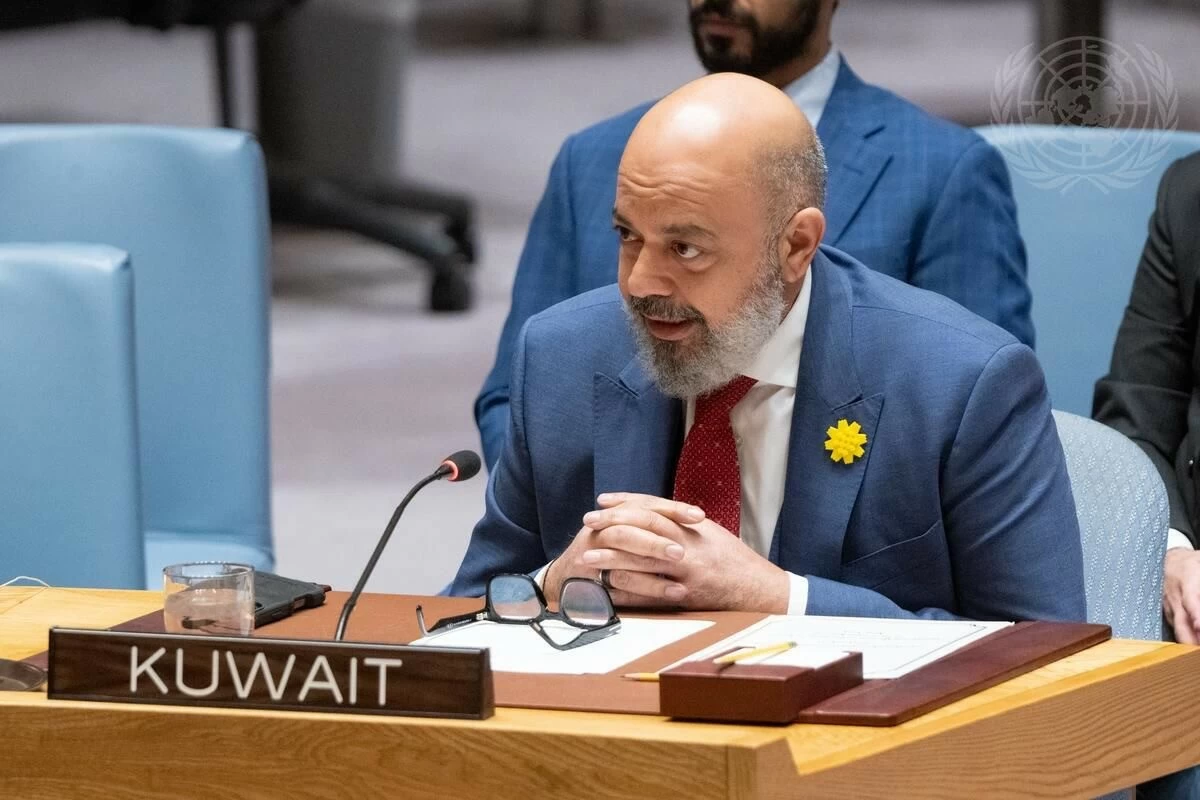
NEW YORK, April 30: Kuwait’s Permanent Representative to the UN Ambassador Tariq Al-Bannai voiced on Wednesday Kuwait’s categorical rejection of any Iranian measures aimed at shutting down the Strait of Hormuz or disrupting international navigation. Delivering a speech before a high-level Security Council session at the call of Bahrain to discuss the safety and protection of maritime passages, Al-Banni stressed that international straits are shared arteries of trade and passageways through which the interests of all countries pass. He noted that the session is being held at a critical moment in which commercial or technical dimensions of the issue of maritime navigation security go beyond to become a direct test of the international community's ability to uphold international law and preserve international security and peace as well as prevent turning vital waterways into tools of political coercion or arenas of open conflict.
The Strait of Hormuz is one of the arteries of the global economy as vital supplies of oil, gas, food commodities and fertilizers pass through this waterway, he said, noting that the chains of supply extending from the Arabian Gulf, Asia, Europe, Africa to the Americans are related to this Strait. The closure of the Strait of Hormuz by Iran, disrupting its navigation and subjecting crossing through it to unlawful conditions are not seen as a limited regional crisis but a direct threat to international security and peace, and an attack on the right of the whole world to freedom of navigation and legal trade, Al-Bannai elaborated Turning an international strait into a political or military bargaining chip is not accepted as this destroys bases on which the rules of passage through international straits are based and undermines confidence in the entire global maritime system, he noted. He cited international law, foremost of the UN Charter and the rules of the law of the sea, that established clear principles based on freedom of navigation, the nonobstruction of passage, and the prohibition of the use of force or threats against civilian and commercial vessels.
He highlighted the UN Security Council Resolution 522, which stressed the necessity of respecting freedom of navigation in international waters and maritime passages and the Resolution 2817 which apparently condemned acts and threats that target the obstruction of international navigation in the Strait of Hormuz. Al-Bannai warned that lax enforcement of Security Council resolutions sends a dangerous message that threatening navigation may go unpunished and international trade security can be left risk-taking and coercion, calling on the Council to take practical procedures which ensure the protection of international navigation and holding accountable those who threaten it. Kuwait, like its GCC sisterly countries and Jordan, has faced the repercussions of this escalation on its security, sovereignty and vital facilities, the ambassador pointed out. He indicated that the brutal Iranian attacks are part of a dangerous approach based on expanding the scope of threats from land to sea, from civilian facilities to international waterways and from the security of countries to the security of global economy.
The security of GCC States is an integrated part and that any attacks on the sovereignty of any country of this bloc, its vital facilities or maritime passages is an assault on the security of the whole region, he affirmed. Al-Bannai reiterated Kuwait’s stance aligning with the Gulf position based on firm abidance by international law, the respect for countries’ sovereignty and good-neighborliness, the rejection of interference into domestic affairs and prioritizing diplomacy. Safeguarding the Strait of Hormuz today is the protection of a broader principle, namely that law is stronger than force; the sea is a route for communication not an arena for threats; and the security of peoples must not be held hostage to political and military adventurism, he emphasized. Concluding the speech, Al-Bannai reiterated Kuwait’s call for taking coordinated international action to restore the security of navigation, stability to the region, and the international law, and to compel Iran to halt its blatant violations of all international laws and ensure the firm enforcement of relevant Security Council resolutions without any leniency. (KUNA)