


19/02/2026

Share:
19/02/2026
Share:

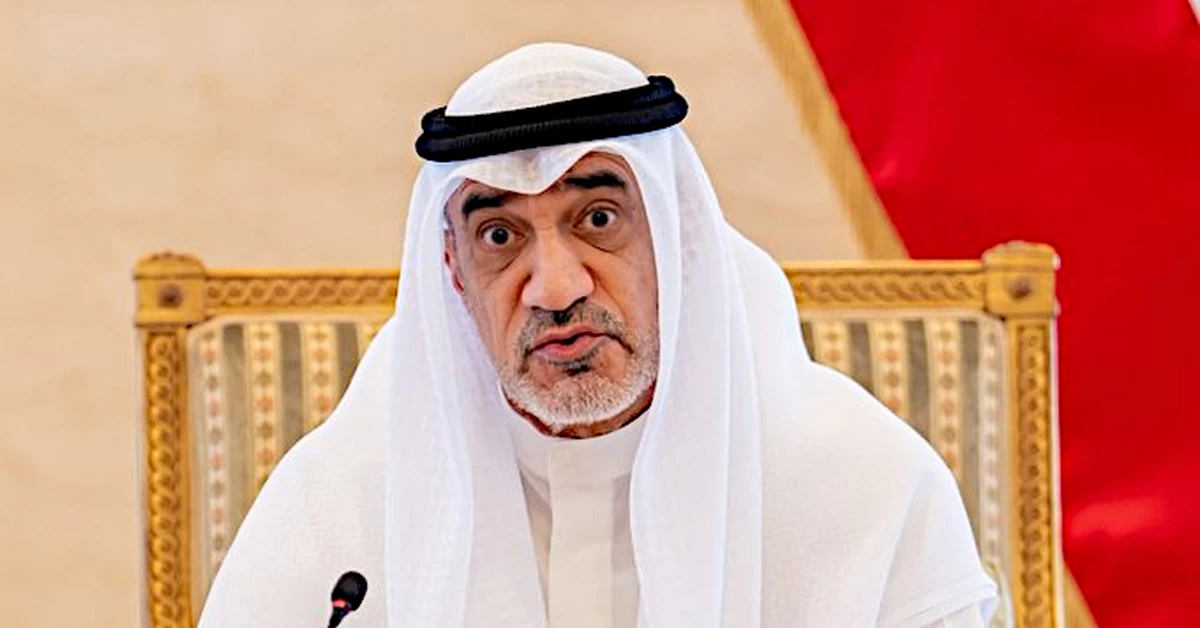
KUWAIT CITY, Feb 19: First Deputy Prime Minister and Minister of Interior Sheikh Fahad Yousef Saud Al- Sabah outlined a comprehensive strategy to tackle major national issues, including citizenship, development, corruption and the fight against drugs. In an interview in Al-Rai TV’s ‘Theater of Life’ program, Sheikh Fahad Al-Yousef reiterated the commitment of the State to the rule of law, declaring that in line with the directives of His Highness the Amir Sheikh Meshal Al-Ahmad Al-Jaber Al- Sabah “no one is above the law in Kuwait.” He also confirmed the closure of the ‘Article Eight’ and ‘Distinguished Service’ citizenship files. He disclosed that more than 60 percent of those naturalized under Article Eight have reverted to their original nationalities while retaining all rights and permanent residency in Kuwait. He said the ‘Distinguished Service’ file was concluded through the issuance of an Amiri decree recently. He added that a new Citizenship Law will eliminate the ‘distinguished service’ category, reserving special provisions only for the martyrs.
He stressed that the ongoing citizenship forgery investigation has no time limit, with new cases being uncovered regularly by the higher committee. He confirmed that the new Citizenship Law is expected this February, designed to resolve the status of several existing categories. He clarified that the new system will not grant Kuwaiti citizenship to the current population of illegal residents (stateless persons). Addressing domestic progress, he affirmed that major development projects resumed at full speed, including a threeyear plan to repave roads and the weekly monitoring of stalled projects. He added that the rigorous campaigns against corruption, money laundering, and drug trafficking are ongoing. He mentioned that two major corruption cases, involving high and low-ranking officials, are currently under investigation, revealing instances of bribery and embezzlement among government employees. He said drug cases now subject to unprecedented scrutiny following the enactment of what he described as a “most stringent and severe” law. Following are excerpts of the interview:
Question: How many citizenship revocation decrees were issued last year and this year?
Answer: We had Article Eight, which pertains to the wives of Kuwaiti citizens, those who performed distinguished service and forgers. Last year, we concluded the Article Eight case. More than 60 percent have regained their original citizenship. The directives of HH the Amir were clear: those under Article Eight who were Kuwaiti citizens and have regained their original citizenship retain all the rights they enjoy as Kuwaiti citizens, living in Kuwait with permanent residency, as long as they wish to reside in Kuwait. Regarding the distinguished service, we finished that one week ago, and they still enjoy the same privileges. Article Eight differs from the privileges of the distinguished service category. This stage was completed through the last Amiri decree issued on this regard a week ago. The issue of citizenship forgers remains. Every week we discover new cases. The Supreme Committee for Citizenship meets every two to three weeks. It is impossible for a session to be without discussions of the activities of forgers. Many of them have fled Kuwait because they realized they were being discovered. Some took half their families out of Kuwait, while others live in Kuwait. I do nothave a date for the completion of the forgery process.
Q: Have you reached a specific number?
A: The figures are not simple. At the beginning of our work as a citizenship committee, we used to put the numbers, and then we were satisfied with putting the cases whose citizenship was withdrawn, and the numbers are in the official gazette, Kuwait Al-Youm. We do not withdraw citizenship without announcing the names or numbers. In order to prevent becoming a public opinion issue, we put all the categories in Amiri decrees that are published in the official gazette. From one family with a single name, we reached 650 in a week, and within two months we will reach 1,060 from one person, all with fictitious affiliations. One uses his real name with six or seven wives. Only one wife has real children, and the rest are given fake names to have children who then obtain Kuwaiti citizenship. The Kuwaiti citizenship process in the past was not as rigorous as it is now. In approximately two years, let us say two committees a month, we have reached over 33 meetings of the Higher Committee for Citizenship. This is unprecedented in the history of Kuwait. There is only one reason -- the forgers we are uncovering. The forgery cases are so egregious that even a movie would not make sense the way people were forging documents.
Q: Have you restructured the distinguished services or abolished them entirely?
A: Honestly, there are no ‘distinguished deeds’ in the new Citizenship Law. There is no such thing as a ‘distinguished deed’ except for ‘martyrdom,’ which is a given and will have its own specific article regarding naturalization.
Q: What is the current status of those whose citizenships were revoked, especially if they do not hold another citizenship? Will they be excluded from Kuwait?
A: A large portion of those who performed ‘distinguished deeds’ are doctors and engineers. They all had other citizenship. When they got Kuwaiti citizenship for ‘distinguished deeds,’ they surrendered their original passports. Many of them rectified their status quickly -- within a week. As for those residing illegally, Kuwait and the government are working diligently with several countries to obtain citizenship for them. However, their residency and work are in Kuwait. I reiterate that His Highness said they will enjoy all the rights they had in Kuwait, regardless of any other citizenship they hold while living in Kuwait.
Q: What about the children of those who performed ‘distinguished deeds’ and held sensitive positions in the government?
A: Every country only employs its own citizens in sensitive positions, whether for important work or not. Even those who are not originally from Kuwait, their children fill sensitive positions. This is true everywhere, not just in Kuwait. The children of Kuwaitis fill sensitive positions. The Citizenship Law -- after a long period of deliberations between committees and its presentation to the Cabinet, and with some observations -- will be ready, God willing, within February.
Q: Is the stateless person file included in the Citizenship Law? Is there a solution for them, or have we forgotten their file?
A: There is no such thing as a stateless person becoming Kuwaiti. This matter was settled in the new Citizenship Law, which abolished several existing categories of citizenship. The stateless persons file has been closed for a long time. Those who are stateless should know that we are working to resolve this, but Kuwait is not willing to let them live without identity. If they do live without identity, they cannot travel or work. God willing, this week or next week, the Minister of Foreign Affairs will be traveling to several countries that have expressed their willingness to provide us with quotas.
Q: What are these countries?
A: We are not certain at this moment, but around five or six countries have promised us good things. I do not want to talk about them now. God willing, the issue will be resolved. The stateless population exists in every Gulf country, and each country has its own approach to resolving it. God willing, we will find a solution that suits both Kuwait and them.
Q: What is your personal opinion on how many development projects you have revived?
A: I challenge any Kuwaiti to say they have not noticed the development. All Kuwaitis used to feel their cars getting damaged on the roads. Today, we have a three-year plan to resurface every meter of road in Kuwait so that its streets become respectable, like those in developed countries. Two years ago, you could not drive on the streets, driving in the desert was better than driving on the streets of a country like Kuwait. Every Kuwaiti has noticed the roads. In the past, we suffered from 100 percent of the road problems, now we suffer from 50 percent.
Every day, we see improvements to the roads and all the ground services. Regarding development projects, HH the Prime Minister meets with half the Cabinet every Thursday to follow up the projects We have stalled projects in the Ministry of Interior. We have projects that were delayed by contractors, but the follow-up was not as thorough as it is today. There are also projects that have been completed, and the length of the project has been extended.
The Justice Palace, one of the stalled projects, was opened a year ago in the presence of His Highness the Crown Prince. The Mubarak Port project, one of the largest development projects in Kuwait, was signed a month ago by the government with one of the largest Chinese companies, and they will start work in April. There are also residential buildings that have been constructed recently. Kuwait Airport, which previously had an unknown opening date, now has a known date that is not far off. We have projects that have been opened in the Ministry of Health, such as the Maternity and Child Hospital in Adan and the Cancer Hospital, one of the largest hospitals in the Middle East, as well as other huge hospitals with a large number of beds. Some of these hospitals, including the Cancer Hospital, had agreement signed with one of the largest cancer treatment hospitals in France in the presence of His Highness the Amir, who met with them personally during his visit to France. On corruption and money laundering, he asserted “I believe Kuwait is committed to combating corruption.”
Every day, we see improvements to the roads and all the ground services. Regarding development projects, HH the Prime Minister meets with half the Cabinet every Thursday to follow up the projects We have stalled projects in the Ministry of Interior. We have projects that were delayed by contractors, but the follow-up was not as thorough as it is today. There are also projects that have been completed, and the length of the project has been extended.
The Justice Palace, one of the stalled projects, was opened a year ago in the presence of His Highness the Crown Prince. The Mubarak Port project, one of the largest development projects in Kuwait, was signed a month ago by the government with one of the largest Chinese companies, and they will start work in April. There are also residential buildings that have been constructed recently. Kuwait Airport, which previously had an unknown opening date, now has a known date that is not far off. We have projects that have been opened in the Ministry of Health, such as the Maternity and Child Hospital in Adan and the Cancer Hospital, one of the largest hospitals in the Middle East, as well as other huge hospitals with a large number of beds. Some of these hospitals, including the Cancer Hospital, had agreement signed with one of the largest cancer treatment hospitals in France in the presence of His Highness the Amir, who met with them personally during his visit to France. On corruption and money laundering, he asserted “I believe Kuwait is committed to combating corruption.”
Q: What about corruption, money laundering and the money of celebrities?
A: I believe Kuwait has a clear vision for combating corruption. We do not have a Ritz-Carlton in Kuwait, but we do have a central prison where celebrities are held. A large number of celebrities have been summoned, and we are opening their files. The Financial Investigations Unit is one of the most distinguished units working to uncover money laundering. We discover money laundering cases every week, involving large sums of money. A large number of those involved are in prison. We are talking about sums of 20, 30, 40 and even 100 million in money laundering operations, and all of them are in prison. Those who are detained are detained, and those who have been sentenced have been sentenced.
Corruption exists in Kuwait in various forms. Bribery is practiced by some government employees. Today, I have two major corruption cases under investigation by the time the episode airs during Ramadan. These cases are of great concern to His Highness the Amir and to me personally. Unfortunately, we are uncovering cases of bribery and embezzlement among some government employees. These cases are still under investigation, and the crimes have been proven. Some of those involved are still at large, including former officials, both high-ranking and low-ranking, some of whom are fugitives. They know who they are. Since the reform process began, those who knew they were corrupt have fled Kuwait. It is not just one, two, or three people, but we will not remain silent. We are filing lawsuits against them and will request Interpol red notices. His Highness the Amir affirms there is no one bigger than Kuwait. This is what encourages all the officers of the Ministry of Interior, and I am speechless with gratitude for these people who are working tirelessly.
Corruption exists in Kuwait in various forms. Bribery is practiced by some government employees. Today, I have two major corruption cases under investigation by the time the episode airs during Ramadan. These cases are of great concern to His Highness the Amir and to me personally. Unfortunately, we are uncovering cases of bribery and embezzlement among some government employees. These cases are still under investigation, and the crimes have been proven. Some of those involved are still at large, including former officials, both high-ranking and low-ranking, some of whom are fugitives. They know who they are. Since the reform process began, those who knew they were corrupt have fled Kuwait. It is not just one, two, or three people, but we will not remain silent. We are filing lawsuits against them and will request Interpol red notices. His Highness the Amir affirms there is no one bigger than Kuwait. This is what encourages all the officers of the Ministry of Interior, and I am speechless with gratitude for these people who are working tirelessly.
Q: What about the security campaigns against drugs?
A: A new anti-drug law has been passed. It is the most stringent and unique law in the world. Its impact is evident in the Ministry of Interior’s fear of enforcing it because it’s so harsh. We have eliminated 90 percent of that smuggling from outside Kuwait. We have a new, modern security system installed on the borders that helps combat drug trafficking. If a smuggler is caught, it means execution. The Minister of Justice is active, and the Judicial Council is helping to expedite cases. The faster the sentences are handed down, the more deterrent the punishments become.
Q: What about drug cases?
A: Raids are almost daily. Unfortunately, government lands and plots that are given as parks to people will not protect them. If you rent your place for drugs or immoral activities, we are taking action. We are raiding large warehouses containing all kinds of drugs. Today, drugs are not only natural but also synthetic.
We, in the Gulf countries, are blessed with abundance and prosperity. We have reached advanced stages in combating drugs, and after the new drug law, families are helping us at this level. We have methods for treating addiction, including personal follow-up. There is a shelter for treating addicts. They wear bracelets. We monitor them with the bracelets. They come to the hospital three days a week. For two months, the withdrawal symptoms subsided, and they reintegrated into society.
We, in the Gulf countries, are blessed with abundance and prosperity. We have reached advanced stages in combating drugs, and after the new drug law, families are helping us at this level. We have methods for treating addiction, including personal follow-up. There is a shelter for treating addicts. They wear bracelets. We monitor them with the bracelets. They come to the hospital three days a week. For two months, the withdrawal symptoms subsided, and they reintegrated into society.
By Munif Naif Al-Seyassah/Arab Times Staff