


09/02/2026

Share:
09/02/2026
Share:

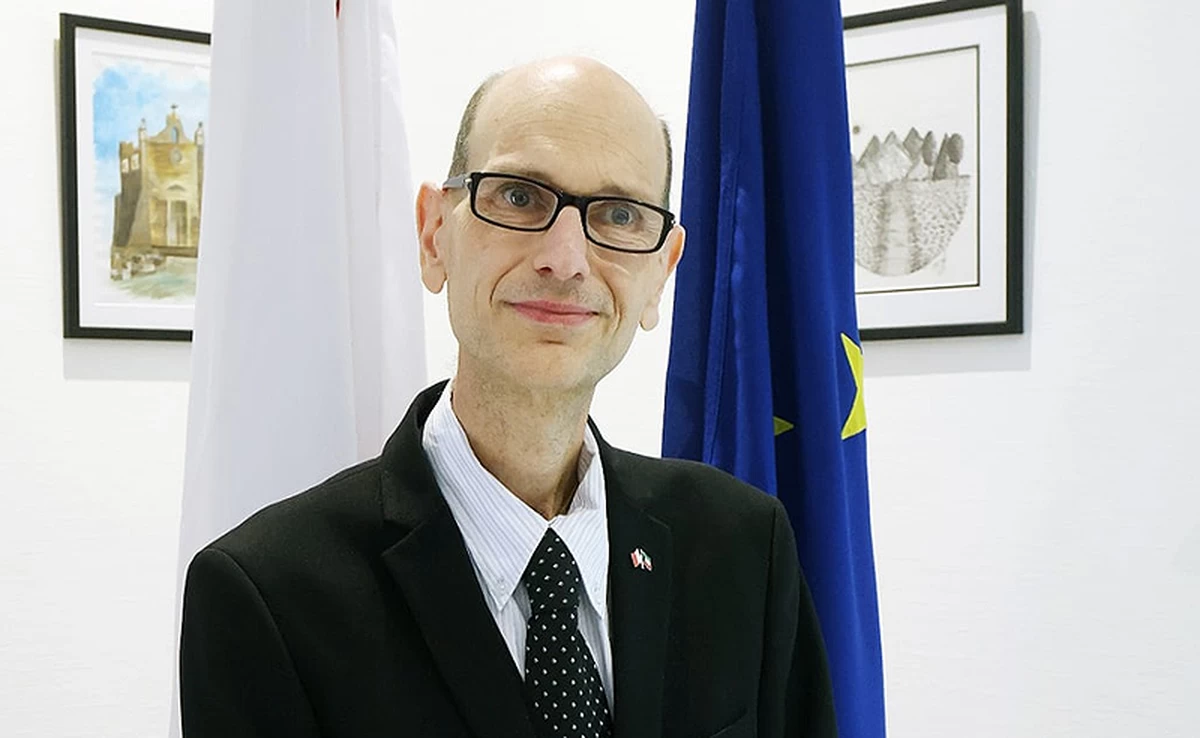
KUWAIT CITY, Feb 9: According to the Ambassador of Malta to the State of Kuwait, H.E. Prof. Dr. George A. Said- Zammit, the State of Kuwait is one of the friendliest and closest partners of the Republic of Malta. Both countries enjoy excellent diplomatic relations and there exist already opportunities of collaboration and cooperation in various sectors. Diplomatic relations between Malta and Kuwait go back to more than fifty years ago (since 3 October 1972).
The opening of embassies of the two respective countries have augmented bilateral relations with a view to further enhancing their political, economic, and cultural bridges. For Malta, the State of Kuwait is a reliable partner at the regional and international levels. On the other hand, Kuwait considers Malta’s strategic position in the centre of the Mediterranean Sea, and between South Europe and North Africa, as an ideal bridge between the Gulf region, North Africa and the European Union. During the last three years in particular, cooperation between the two countries witnessed progress in various fields, including the business sector, investment in real-estate, culture, education, and environmental management. He pointed out that Malta, as a Member State of the European Union, represents an important gateway to enhance economic cooperation between Kuwait and the European markets From the business perspective, Ambassador Said-Zammit referred that, during his tenure of office in Kuwait, a number of Maltese companies managed to penetrate successfully the Kuwaiti market, following rigorous quality assurance tests. He also mentioned that there is also interest in certain Kuwaiti companies in expanding part of their operations in his country.
These business opportunities came partly as a result of a webinar that the Embassy of Malta coordinated with the Kuwait Chamber of Commerce and Industry, the Malta Chamber of Commerce and Industry, and other related agencies and entities whose mission is to boost trade and business between the two countries. These positive opportunities of collaboration have to be contextualised in the light of Kuwait’s continuous efforts to diversify its economy and modernize its infrastructure, adding that the investment environment in this country provides promising opportunities for European investors, especially in the fields of renewable energy, blue economy, and logistics services. In 2024, Malta imported goods from Kuwait worth €20,645, while exporting €3,221,986 to Kuwait. Main imports of goods were articles of apparel and clothing accessories, footwear, and leather goods. Main exports of goods were cereals, edible preparations, and essential oils.
Inroads on education have been made again to attract Kuwaiti students to study at the University of Malta, mostly in medicine. There were also a good number of private Kuwaiti investor and corporate holder accounts that at some point held investments in securities listed on the Malta Stock Exchange. As far as direct connections between Malta and Kuwait, the two countries are working towards the possibility of establishing direct flights, thus eliminating the waste of precious time that travellers currently have to spend in transition airports. Both countries strongly believe that the development of direct roots will facilitate and boost tourism, business, and trade. In 2025, the Ambassador of Malta, in collaboration with the Malta Tourism Authority and Turkish Airlines, coordinated a one-week familiarisation trip in Malta to tour operators and travel agents from Kuwait. It was a successful experience for it gave the participants a real taste of Malta’s beauty, hospitality, and worth visiting.
Malta’s history, unique culture and scenic beauty are definitely some of the main ingredients that attract thousands of tourists all the year round to enjoy our beaches, resorts, monuments, museums, theatres, and churches. Malta is also an important destination for Kuwaiti students studying medicine and dentistry at the University of Malta. The Ambassador stressed that he wants to go beyond these two academic areas, and his desire is to diversify the areas of academic study that Kuwaiti students can take up in his country. He is also working for the possibility that Maltese students be granted scholarships to study Arabic and other subjects in Kuwait.
In this context, he referred to the various agreements that the University of Malta and the Malta College for Arts, Science and Technology signed in recent years not only with the Kuwait University, but also with respectable private universities, including the American University of Kuwait, the Arab Open University, and the Kuwait College for Science and Technology. He sees that educational opportunities for students from both countries will lead to a better understanding of each other’s culture and identity. From a cultural perspective, Ambassador Said-Zammit mentioned the cultural similarities that exist between Malta and Kuwait, especially in language, place names, family names, and cuisine. Historically, one has to keep in mind that, in the ninth century of our Common Era, the Maltese Islands came to form an integral part of the Dar al-Islam along with Spain, Sicily, and North Africa. When, almost four hundred years later the Maltese Islands were occupied by the Spanish, the local culture in Malta remained largely semitic. Today, the semitic element in Maltese culture is still an inherent component of our national identity.
The Maltese language is basically semitic, and about 60% of its vocabulary, for example the numbers and the days of the week, are exactly like Arabic. The rest of the language is made up of a mixture of Italian, French, Spanish and English vocabulary reflecting, in a way, Malta’s historical past when it was colonized by different dominations like the Knights of St. John, the French, and the British. Therefore, Maltese is the only semitic language in the world written in the Latin alphabet. This unique distinction has made Maltese one of the official languages of the European Union since 2003. Here, he referred to an exhibition organized in December 2025 by the Embassy of Malta, the National Archives of Malta, and the Kuwait College for Science and Technology. This exhibition selected a number of common themes which testify to the similarities and close ties between Kuwait and Malta. These included the language, folklore, the sea, migration, and colonization. At the end of his statement, the Ambassador of Malta to Kuwait expressed his aspiration to a new stage of joint cooperation, based on the launch of practical initiatives that enhance bilateral partnership and open up wider horizons for cooperation between the State of Kuwait and the Republic of Malta, in order to serve the interests of the two countries and enhance their presence in the international arena.