



19/04/2026

Share:
19/04/2026
Share:

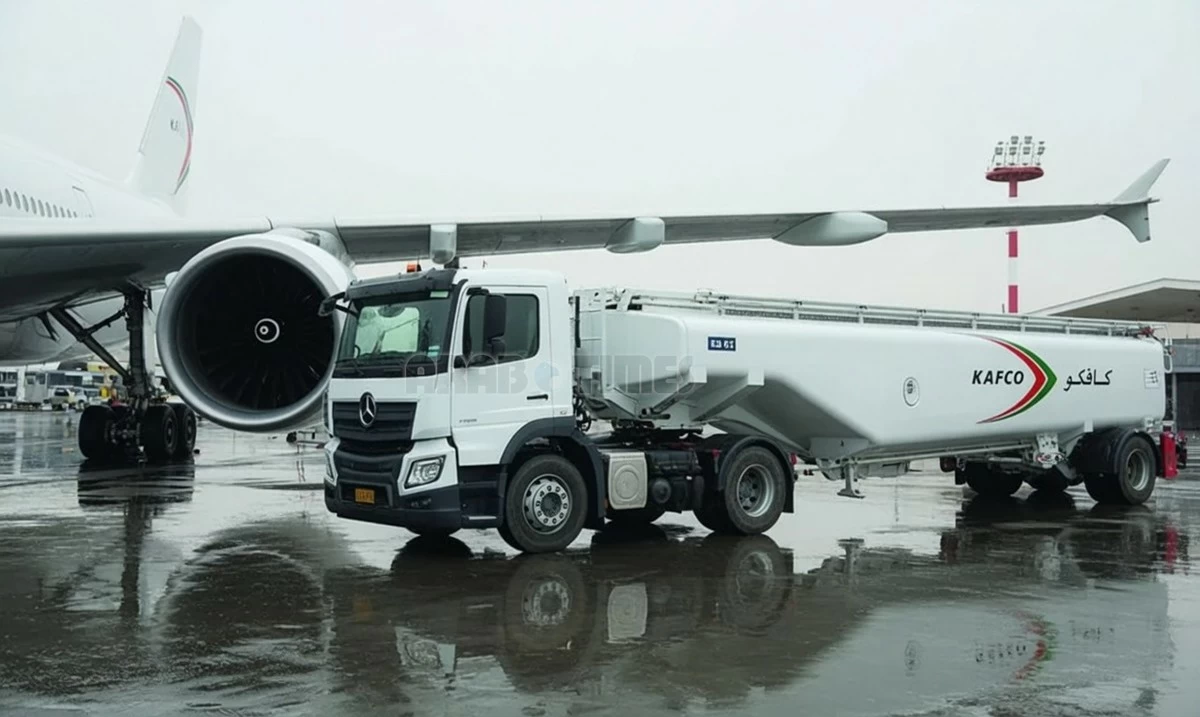
KUWAIT CITY, April 19: Unlike international reports, specifically The Telegraph magazine, which stated that Kuwait ranked second globally in jet fuel exports, an official report issued by the Kuwait Petroleum Corporation (KPC) confirmed that Kuwait achieved first place globally in jet fuel exports during 2025. The same report revealed that the net quantity of jet fuel (kerosene) produced by the Kuwait National Petroleum Company (KNPC) through the Mina Abdullah and Mina Al-Ahmadi refineries reached approximately 10,217.8 million metric tons in the first third of 2025. Production of the same fuel from the Al-Zour refinery during the same period reached approximately 3,352 million metric tons.
According to international reports, the head of the International Energy Agency (IEA) recently stated that the available jet fuel is sufficient for six weeks or slightly longer, and warned of the possibility of fl ight cancellations at many airports worldwide if the Iran war continues to disrupt oil supplies. The same reports predicted a slump in the global tourism and travel market this summer due to a shortage of jet fuel, which is impacting airline profitability.
The reports stated that jet fuel represents 27 percent of operating expenses, and that the USIsraeli war on Iran has caused jet fuel prices to jump from $90 to $200 per barrel in recent weeks, forcing the global aviation sector to raise airfares by more than 100 percent. According to the International Air Transport Association (IATA), the jet fuel shortage crisis could last for months, as it may take a long time to repair Gulf refineries damaged by Iranian attacks. In this regard, Mohammed Al-Mutairi, Head of the Kuwait Union of Travel and Tourism Offices, confirmed that the rise in jet fuel prices will inevitably affect travel and tourism this summer. He stressed that the impact will not necessarily be immediate or permanent on ticket prices, especially since pricing depends on several factors, including supply and demand, competition, and each company’s policies. Al-Mutairi predicted gradual increases in ticket prices or adjustments to the number of flights, depending on feasibility. He noted that airlines have tools to help mitigate the impact of rising fuel prices, such as advance planning and cost management.
Meanwhile, oil analyst and expert Kamel Al- Harami stated that the disruption of jet fuel and marine fuel supplies is a major issue for the global transportation sector, significantly affecting global trade. He explained that this highlights the world’s urgent need for these two fuels. The production capacity of jet fuel from Kuwait’s three local refineries - Al-Zour, Mina Abdullah and Mina Al- Ahmadi - is estimated at approximately 345,000 barrels per day. This amount represents a considerable share of the total production capacity of the three refineries, which is approximately 1.2 million barrels per day. Asian markets are expected to be affected, as Kuwait exports most of its refined products to these markets, including Japan, South Korea, China, and India.
These markets represent higher added value compared to the European and US markets, due to price differences and the availability of secure outlets for marketing KPC’s products. Al-Harami said KPC has moved to enter the Korean and Chinese markets due to intensifying competition, affirming that Kuwait’s refining sector is exerting concerted efforts to establish a presence in those countries to market Kuwaiti oil and its derivatives. In addition, international reports confirm that the world consumes approximately 8 million barrels of jet fuel. With the disruption of fuel supplies, the situation has worsened in low income markets that rely on imports, such as Vietnam, Myanmar, and Pakistan, after China and Thailand halted jet fuel exports.
This has forced airlines to reduce the number of flights, cut services on less profitable routes, or suspend some operations entirely. Other reports highlighted the problem arising from competition among air cargo companies for limited supplies. In many cases, airlines resort to transporting additional fuel from airports where it is cheaper or more readily available to avoid shortages at arrival airports. The reports explained that Gulf airlines incurred heavy losses as a result of the war, estimated at around $200 million per day in the initial weeks. In the event that the war resumes after a ceasefire, financial losses are expected to increase by at least $1.5 billion. If the war continues for half a year, losses in the Gulf aviation sector may exceed $3 billion.
By Najeh Bilal Al-Seyassah/Arab Times Staff