


02/02/2026

Share:
02/02/2026
Share:
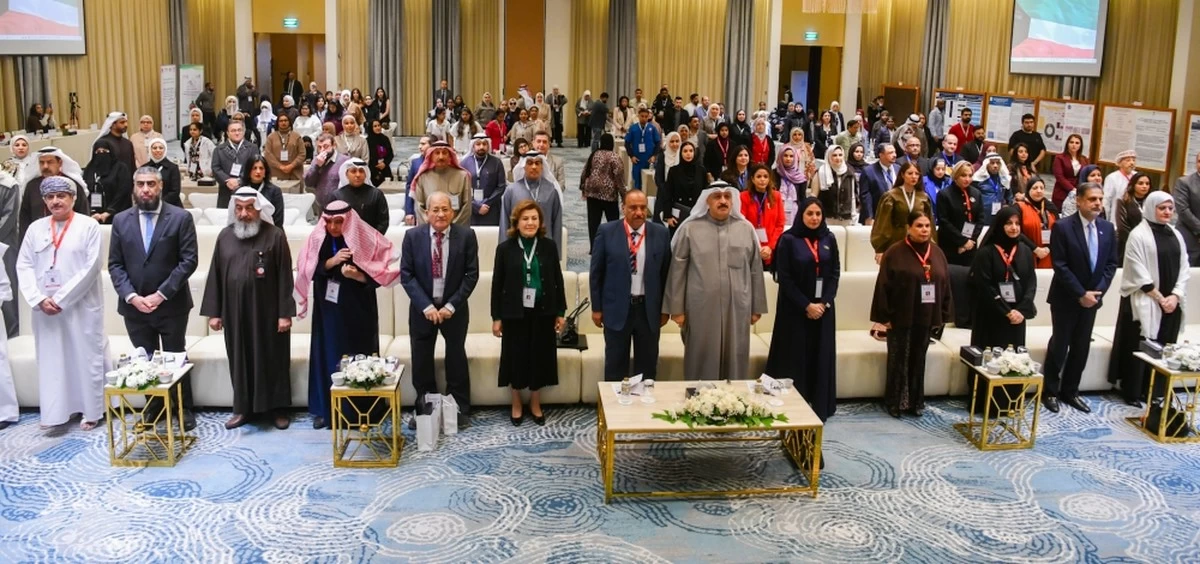

KUWAIT CITY, Feb 2: Minister of Health Dr. Ahmad Al-Awadhi on Monday stressed the need to unify efforts and strengthen regional cooperation to fight cancer, describing it as one of the world’s most significant health, social, and psychological challenges.
Speaking at the opening of the Regional Oncology Conference and the 13th Gulf Federation for Cancer Control (GUFC) Conference, Al-Awadhi said the rise in specialized oncology conferences in recent years reflects rapid scientific and technological progress in cancer diagnosis and treatment, particularly in the Gulf region.
“The conference serves as a leading regional platform, bringing together distinguished experts to exchange knowledge and learn about the latest developments in prevention, early detection, treatment, palliative care, and psychological support,” Al-Awadhi said. He added that the forum also enhances cooperation between government and private health sectors, civil society, and academic institutions.
Al-Awadhi highlighted the key role of Gulf cancer organizations, particularly the GUFC, in developing national strategies and evaluating their impact. He expressed hope that the conference’s recommendations would help improve cancer care across Gulf societies.
The minister underscored that scientific conferences are crucial for enhancing collaborative research among Gulf Cooperation Council (GCC) countries, which share similar genetic and environmental characteristics, while promoting innovation and modern technologies. He noted that such gatherings empower patients, survivors, and those living with cancer by involving them in treatment and healthcare decisions.
Al-Awadhi also praised the region’s advanced healthcare infrastructure, including specialized medical expertise, access to medications, palliative treatments, and psychological support, calling it a model of integration and cooperation between governmental and nongovernmental entities.
For his part, Dr. Khaled Al-Saleh, Chairman of the Board of Directors of the National Cancer Awareness Campaign (CAN) and chairman of the conference organizing committee, highlighted the long-standing collaboration between the Kuwait Anti-Smoking and Cancer Society and the GUFC. He said the partnership has contributed to raising public health awareness and promoting early detection, with the Federation achieving observer status at the World Health Organization after nearly 24 years of joint work.
Al-Saleh noted that Gulf Cancer Registry data recorded more than 310,000 cancer cases between 1998 and 2020, with an annual increase of approximately 4.4 percent. He detailed several initiatives, including training programs for primary healthcare physicians and dentists, campaigns promoting early detection, and the Gulf Cancer Awareness Week (CAN), which has trained around 182,000 female students in breast self-examination since 2010. He also cited the Gulf Oncology Journal, internationally indexed in global medical databases.
He emphasized that the conference provides an important platform for exchanging expertise, strengthening regional research collaboration, and producing practical, actionable recommendations for improving cancer care in the Gulf.