


23/03/2026

Share:
23/03/2026
Share:
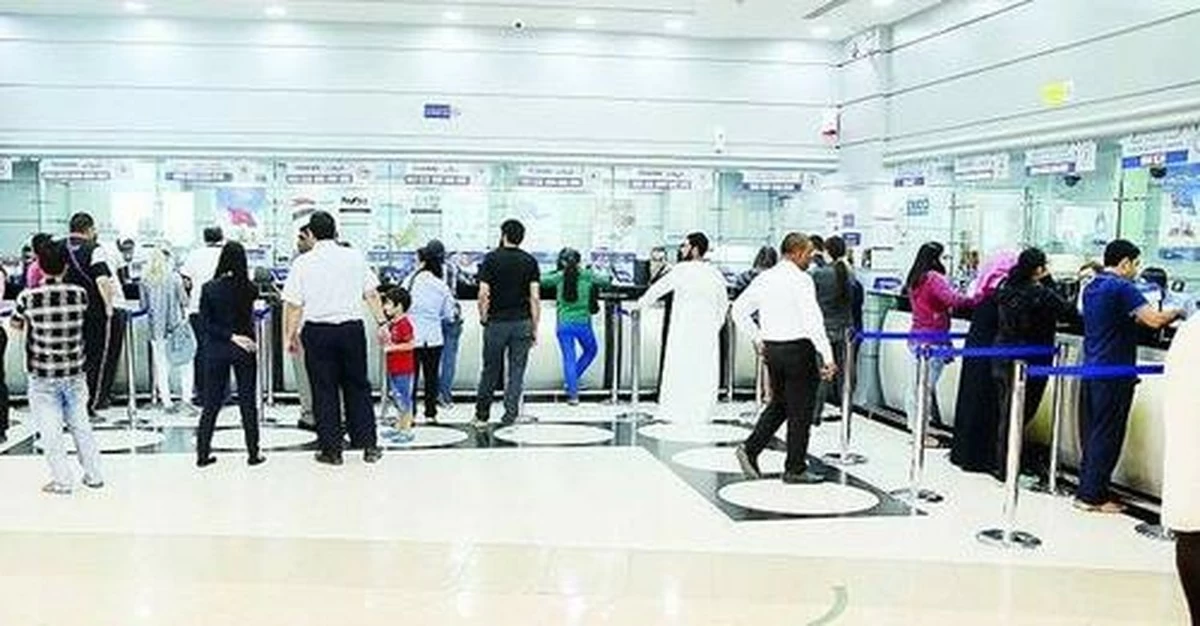

KUWAIT CITY, March 23: As the ongoing war between the United States of America and Israel against Iran enters its fourth week and despite its negative impact on the global economy and stock and financial markets, the local exchange market has remained resilient in facing challenges. Several branch managers of exchange companies confirmed to the newspaper that the current war has not affected the money transfer transactions and they have not experienced delays. They attributed this to the strong oversight and management of the exchange sector by the Central Bank of Kuwait, especially since many of the measures that the Central Bank took in 2025 cleansed the exchange market of ‘exchange brokers’.
Chairman of the Kuwait Federation of Exchange Companies Abdullah Najib Al-Mulla stressed that money transfers at local exchange companies have been proceeding at normal rates since the outbreak of the war. He clarified that the demand for money transfers may have decreased during this crisis, but the increase in online payment rates reduced the congestion that exchange markets witnessed previously. He disclosed that the Central Bank implemented certain regulations and conditions. He added majority of the customers of local exchange centers opted to send their remittances through the online applications provided by licensed exchange companies.
Meanwhile, Hamed Al-Husseini, an official at an exchange company, stated that money transfers in the Kuwaiti exchange market have been proceeding smoothly since the outbreak of the war. He explained that the congestion in exchange companies at the beginning of this month coincided with the start of the war, especially since exchange companies typically experience a relative increase in activity at the beginning of each month due to the deposit of expatriate workers’ salaries, so the congestion at the beginning of March was not related to the war.
He attributed the stability and continuity of the exchange market in Kuwait to the stability and strength of the Kuwaiti financial system and the Central Bank’s robust oversight of the exchange sector. He also cited the important measures taken by the Central Bank last year to eliminate unlicensed exchange centers proven to have engaged in illegal activities.
Ali Al-Azbi, another official at an exchange company, stressed that all Kuwaiti exchange companies are operating normally. He ascribed this to the strength of the Kuwaiti economy and availability of a smart network that allows certain customers to make transfers online, indicating that expatriate workers who had no access to education were the ones transacting in person as they cannot complete transfers through their phones. He said that the initial days of the war witnessed some increased activity and near-congestion, but after the first week, the money transfer activity began to subside due to customers’ confidence in the continuity and strength of the Kuwaiti economy and its financial system, which is wisely managed by the Central Bank of Kuwait, in addition to the stability of the security situation in the country.
An official at Wahba Sabri Exchange Company said that before Eid Al-Fitr and during the Eid holidays up to the present, money transfers through exchange companies have been proceeding smoothly and easily. He pointed out that although the war has been going on for almost a month, exchange companies in Kuwait are operating normally, so they have not witnessed any rush or unusual congestion due to the confidence of all customers in the continuity of transfers even in the most difficult circumstances. He emphasized that most money transfers are processed through the exchange company applications, which provided customers with online transfer services, thus, eliminating overcrowding before and during the crisis. He praised the role of the Central Bank, which regulated money transfer transactions. He added that the real crisis that local exchange companies faced was during the COVID-19 pandemic, which led to the closure of exchange companies for several months, resulting in accumulated rent arrears, and these companies were obligated to pay their employees’ salaries. He asserted that the measures taken by the Ministry of Interior and the Central Bank of Kuwait led to higher customer confidence in Kuwaiti exchange offices.
In addition, banking expert Fahad Al-Gharib revaeled that expatriate remittances reached around KD3.8 billion in the first nine months of 2025, compared to about KD3.15 billion in the first nine months of 2024 and KD2.97 billion in the first nine months of 2023. He pointed out that the significant growth in the value of expatriate worker remittances in recent years is due to the strength and resilience of the Kuwaiti economy and the stability of the labor market, as well as the strength of the Kuwaiti Dinar. He said the banking and exchange sectors are operating at normal rates during the current crisis, particularly since the Central Bank of Kuwait intensified its oversight mechanisms for exchange centers in such circumstances. He added the local banking institutions, including banks and major exchange companies, have implemented numerous contingency plans to ensure the continuity of transfer operations and the uninterrupted provision of all services. He affirmed that the local banking sector has systems and technologies that enable it to confidently provide services under normal and challenging conditions. He asserted that the banking and exchange sectors rely on Kuwait’s robust digital infrastructure, which facilitates banking and transfer services under various circumstances. “This is further enhanced by the robust and userfriendly ‘Wamd’ automated payment system, which allows 24-hour transfers between bank accounts, as well as the availability of ATMs in most areas, cooperative societies and parallel markets,” he concluded
By Najeh Bilal Al-Seyassah/Arab Times Staff