


20/08/2026

Share:
20/08/2026
Share:

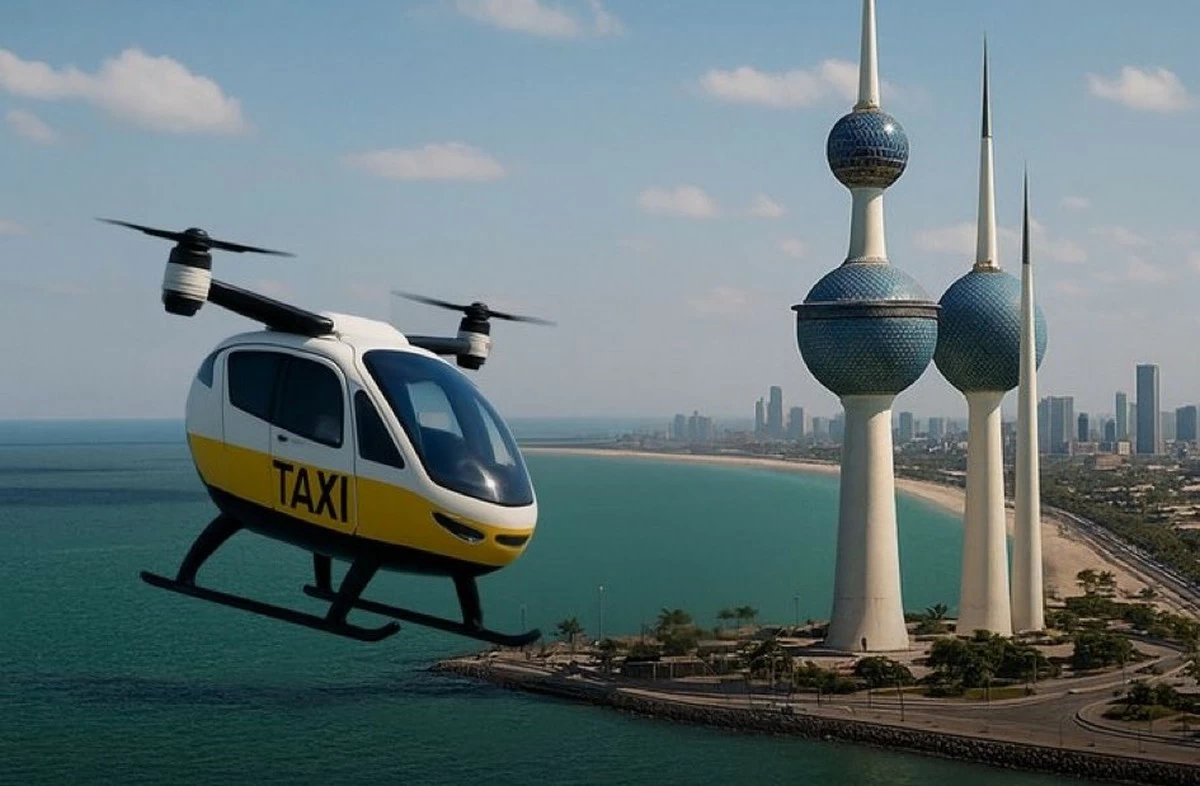
Photo shows AI-generated image of an air taxi.
KUWAIT CITY, Aug 20: Kuwaiti digital communications and advanced infrastructure solutions provider Knetco signed a memorandum of understanding (MoU) with Skyports Infrastructure to develop advanced air mobility (AAM) infrastructure in the country. According to SUAS News, Skyports will act as the specialist partner of Knetco in Kuwait, focusing on helipad development, market development, stakeholder coordination, and exploring future business opportunities.
The agreement combines the expertise of Knetco in critical infrastructure and communications with the global experience of Skyports in helipad infrastructure. The economic value of the agreement lies in its targeting of the ground floor of the new aviation economy, as the commercial deployment of eVTOL aircraft will not be achieved simply by having the aircraft. It requires a network of helipads, charging and power management stations, highly reliable communications, digital reservation and monitoring systems, operations centers, and clear safety and regulatory standards.
International estimates indicate that the majority of the future economic value of advanced air mobility will not come from aircraft sales alone, but from the surrounding ecosystem, including airports, runways, cargo, energy, software and operational services. Some global market studies estimate the value of the AAM market at hundreds of billions of dollars in the long term. Estimates vary considerably, because the sector is new and its market definitions differ from one organization to another.
This partnership comes at a crucial time as Kuwait continues to develop its air infrastructure, specifically the new Terminal Two (T2) at Kuwait International Airport. It is significant not only because of connecting the vertical takeoff and landing (VTOL) terminal to the new terminal, but also the potential to develop a multimodal air transport system that will connect airports, seaports, commercial areas and urban centers in the future through short-haul air solutions.
The scale of Kuwaiti investment in air infrastructure gives the agreement added dimension, as a modern and high-capacity airport can serve as the cornerstone for a new air transport network linking the airport to business centers, economic and coastal areas, and vital facilities, provided the technology and regulatory frameworks are developed up to the commercial operation stage. The memorandum of understanding does not specify the financial value of the deal, so any figure circulating should not be considered a confirmed investment value. According to the published information, the MoU is for cooperation and opportunity development, not an announcement of a contract to build the network of helipads with a fixed value.
The potential value of the agreement could later be derived from several separate projects, such as feasibility studies, helipad design, construction, operation, digital platforms, charging systems, maintenance and logistics services. The Gulf experience provides an indication of the scale of expenditure that infrastructure development might require. In Dubai, Skyports is working with the Roads and Transport Authority (RTA) to develop a network of helipads to serve air taxi operations, with a plan to launch the service commercially in the coming years. At the regional level, the United Arab Emirates (UAE) and Saudi Arabia are moving towards an electric aviation economy and advanced air mobility.
For instance, Dubai is one of the vital markets for commercial testing of helipads and electric aircraft in the region. The Gulf competition will not only be about owning the aircraft, but also about building the first infrastructure network capable of operating the aircraft commercially and on a large scale. This project is in line with the strategy of Kuwait to diversify its economy and invest in value-added sectors. If the memorandum of understanding translates into concrete projects, it could create a range of opportunities for Kuwaiti companies in engineering, construction, telecommunications, energy, software, cybersecurity and logistics. The economic impact could also extend to new sectors, such as low-altitude air traffic management services, electric aircraft maintenance, energy storage and charging systems, data management, insurance, training and digital services
By Inaas Awadh Al-Seyassah/Arab Times Staff