


30/07/2026

Share:
30/07/2026
Share:
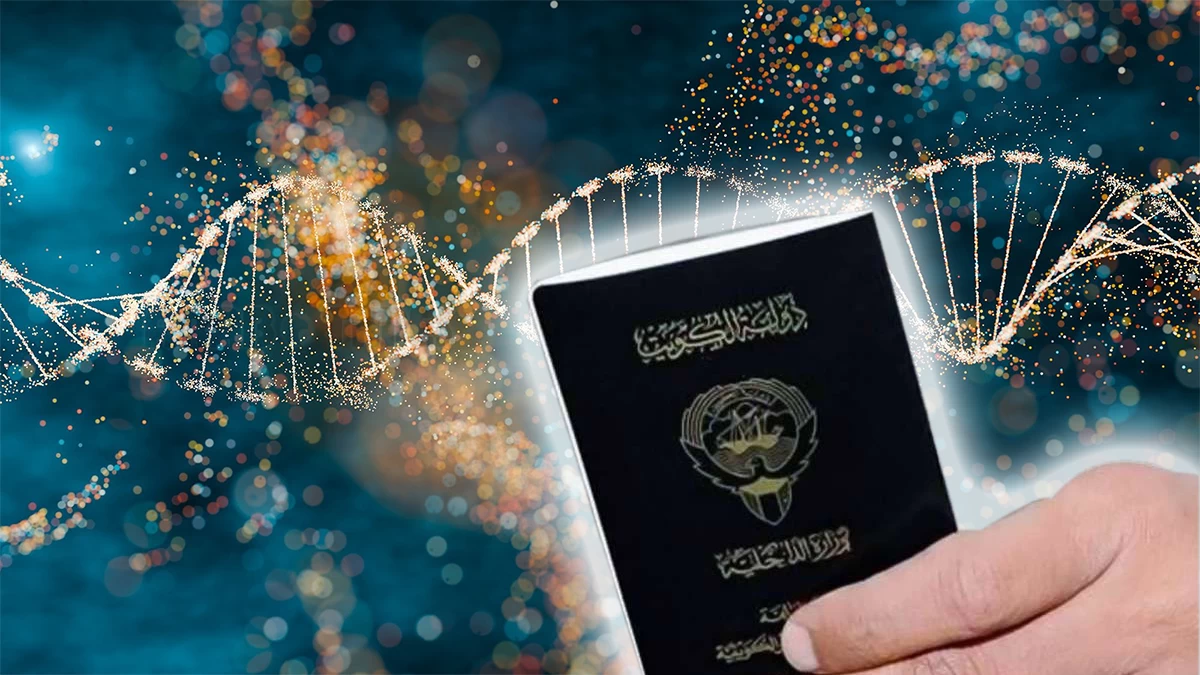

KUWAIT CITY, Jul 30: Kuwait’s Nationality Investigation Department has uncovered another major citizenship forgery case, with DNA testing and extensive data investigations revealing the real Gulf identity of a man who had been registered under a different identity in his Kuwaiti citizenship file.
The case emerged from an earlier forgery investigation involving the same family file and eventually led the Supreme Committee for Citizenship Investigation to decide to withdraw the Kuwaiti citizenship of the accused and all of his dependents, whose total number is 105 people.
According to security sources, the man was born in 1958 and has been outside Kuwait since 2024 after fleeing the country. His Kuwaiti file lists 32 sons and daughters from five wives, while the total number of people registered as his dependents reached 105.
Detectives trace his real Gulf identity
Nationality investigators succeeded in uncovering the man’s real Gulf name despite the different identity under which he was registered in Kuwait.
Investigators also managed to identify his Gulf sister, who is living in Kuwait, even though she was registered under her genuine name and had no apparent connection to the identity used by her brother in his Kuwaiti citizenship file.
Because the accused had fled the country, investigators could not directly obtain a DNA sample from him. Instead, his children were summoned and subjected to DNA fingerprint testing.
Their DNA profiles were then compared with a sample obtained from the woman identified as their father’s Gulf sister.
The results provided a crucial breakthrough: the DNA confirmed that the woman was the biological aunt of the children and the sister of their father.
However, investigators also discovered that the woman’s real name was completely different from the name under which her brother had been registered in the Kuwaiti citizenship file.
DNA exposes another part of the alleged forgery
The investigation went further and revealed that 10 men listed in the family file as the children’s uncles were not actually their uncles.
According to the security sources, the findings helped investigators establish the true family relationships and dismantle a chain of identities and family connections that had been allegedly fabricated.
The case is believed to trace back to 1976, with investigators saying the latest findings have helped unravel a forgery scheme that remained concealed for decades.
A security source explained that such investigations require extensive examination of records and the ability to establish links between apparently unrelated pieces of information.
“We have various methods for verification, linking, and reviewing data and files,” the source said. “These are arduous and extensive search operations, and they require intelligence and the ability to make connections after dismantling the methods of forgery that forgers have been following.”
The source added that investigators were ultimately able to establish both the lack of authenticity in the claimed relationships and the genuine biological connection between the children and their actual aunt.
10 supposed uncles found not to be related
One of the most significant findings was that the 10 individuals recorded in the file as uncles of the children were not their biological uncles.
Investigators said this helped expose another layer of the alleged fraudulent family structure and provided additional evidence supporting their findings concerning the true identity of the family.
The security source said: “The important thing is that we were able to prove the denial and prove the connection, and it was proven that the uncles of the ten children listed in the file are not their uncles.”
Main family file still under investigation
Authorities have not yet closed the wider investigation.
The security sources said the main citizenship file belongs to the father of the family, who was born in the late 1920s, and that the file still contains other suspected forgery cases that investigators are continuing to examine.
Investigators have already unraveled the identity of one of the father’s alleged sons, resulting in the withdrawal of his Kuwaiti citizenship and claimed affiliation.
A second son is also currently under investigation.
The latest case concerns the man born in 1958, for whom the Supreme Committee decided to withdraw citizenship along with the citizenship and affiliations of all 105 people registered as his dependents.
The investigation therefore remains ongoing, with authorities continuing to trace the different identities and relationships contained in the broader file as they work to uncover additional alleged cases of citizenship forgery.