



02/05/2026

Share:
02/05/2026
Share:

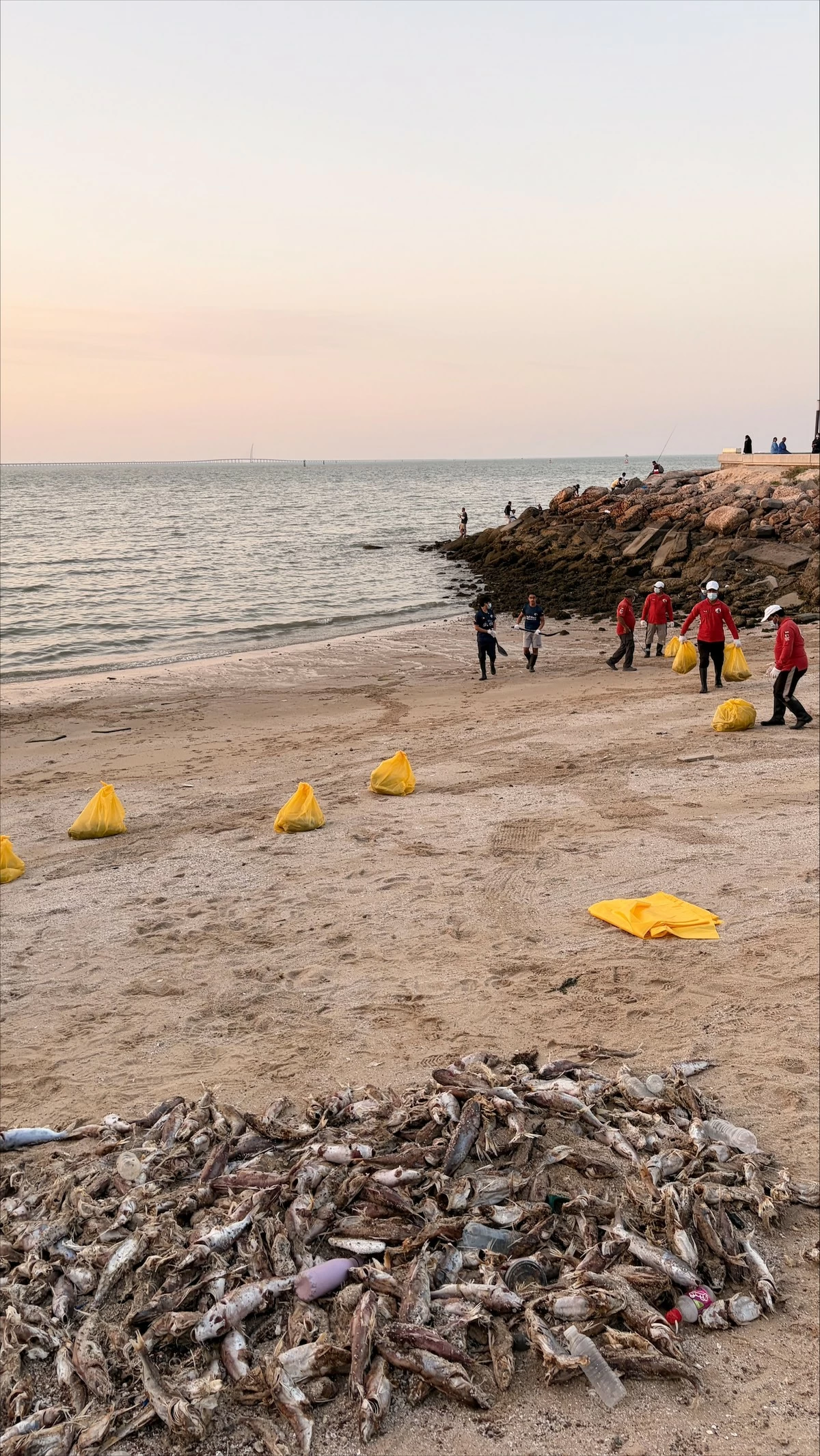
KUWAIT CITY, May 2: Kuwait Dive Team, affiliated with the Environmental Voluntary Foundation, announced on Saturday that it has removed three tons of dead fish during field cleanup campaigns along the Al-Watiya and Shuwaikh coasts. The team affirmed continued close coordination with authorities and the submission of periodic reports to the Environment Public Authority (EPA) documenting the quantities recovered. Team leader Waleed Al-Fadhel told KUNA that with the participation of junior members, the team conducted volunteer cleanup campaigns over the past two weeks along the southern shores of Kuwait Bay. The latest efforts targeted Al-Watiya and Shuwaikh, successfully removing three tons of dead fish in addition to plastic waste.
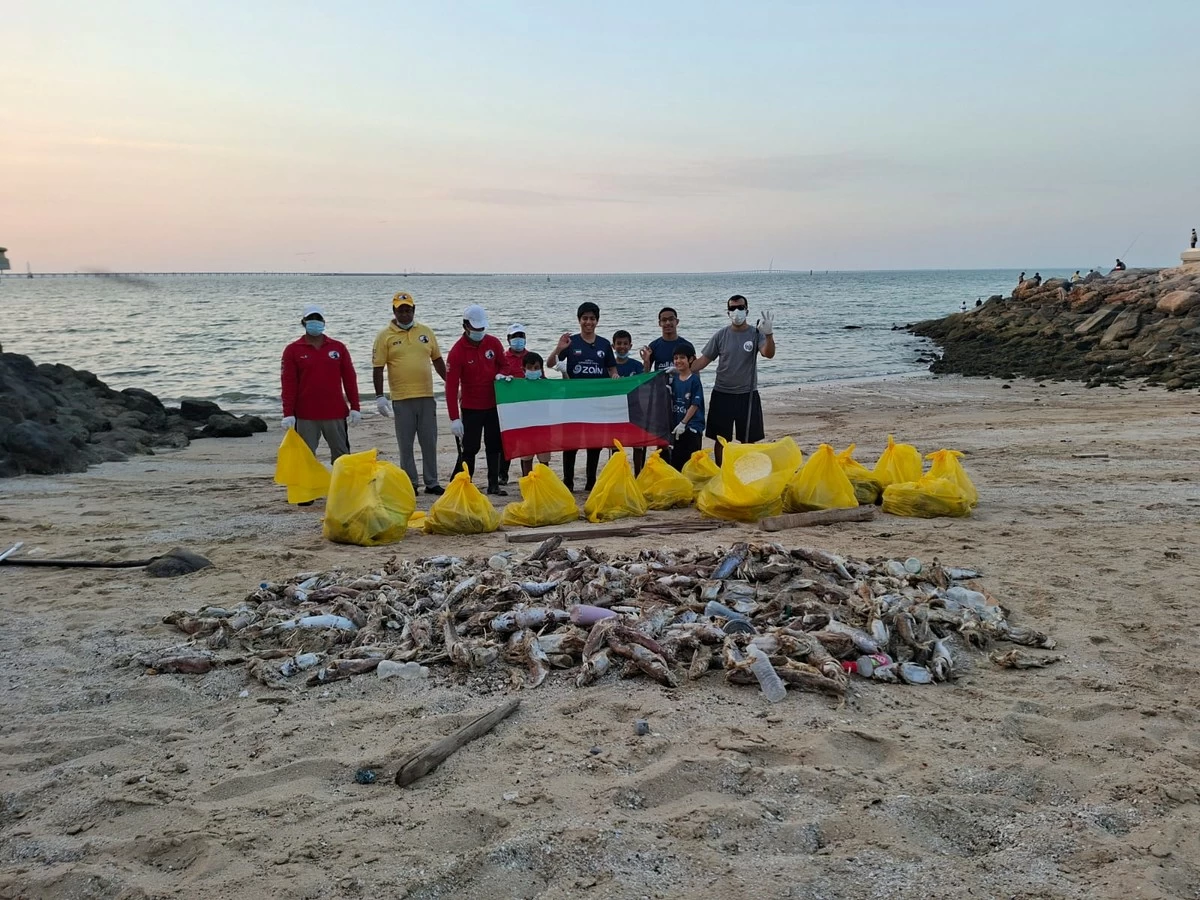
The Kuwait Dive Team affiliated with the Environmental Voluntary Foundation during field clean-up campaigns.
Regarding the causes of the fish deaths, Al-Fadhel explained that current observed levels fall within normal seasonal rates, linked to red tide activity (microalgae) and warm water currents, a global phenomenon commonly referred to as “summer fish kill.” He expected the phenomenon in Kuwait Bay to subside within the next few days, coinciding with strong northwesterly winds forecast this week, which are likely to alter water currents and improve marine conditions in the bay. Al-Fadhel stressed the importance of continued comprehensive environmental surveys across all coastal areas, particularly in the northern regions, to monitor any sudden changes.
He noted that the rapid removal of dead fish before decomposition is crucial to prevent oxygen depletion in the water and avoid unpleasant odors. He added that Kuwait Bay is considered the world’s second-largest nursery for fish, underscoring the need to protect fish stocks and maintain ecological balance. He also announced the preparation of five specialized boats to monitor fish mortality cases and ensure rapid response to minimize environmental impact. Al-Fadhel urged beachgoers, especially in areas such as Sharq, Al-Watiya, and Shuwaikh, to avoid touching dead fish, including species like “Chim” or “Khen,” due to their sharp and venomous spines. He also called on institutions and individuals to play an active role in preserving these resources for future generations. (KUNA)