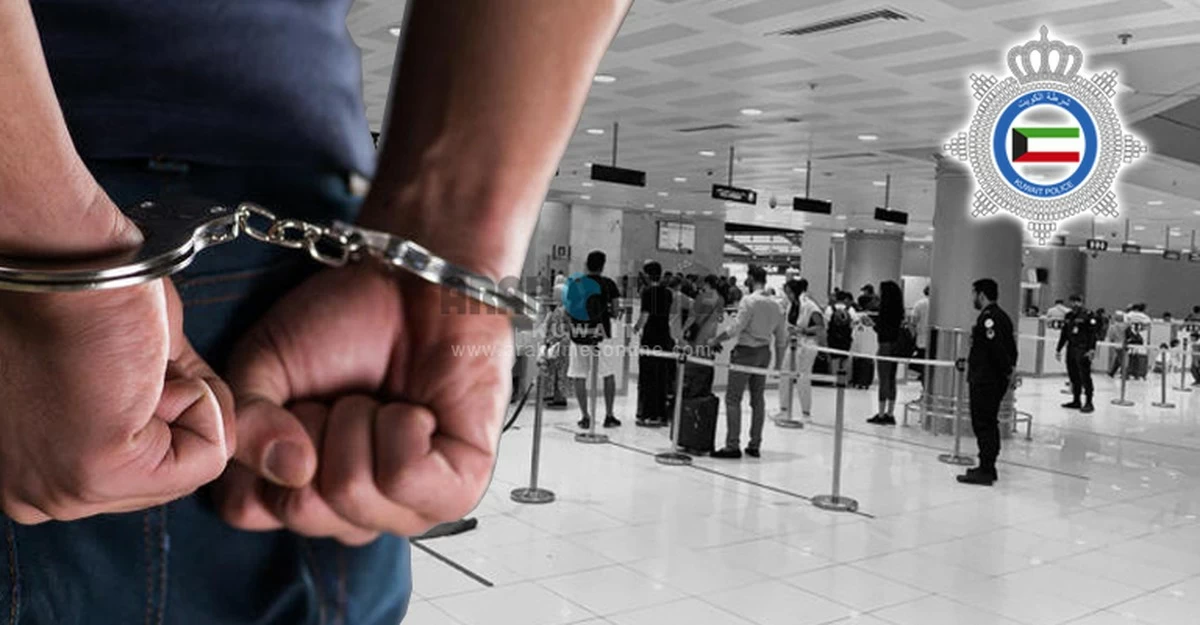
KUWAIT CITY, Dec 6: Kuwait is set to enter a new phase in its fight against drugs with the implementation of the new drug law, effective December 15. The law comes more than 30 years after the previous legislation, during which Kuwait has seen the emergence of new substances not previously listed under the old law. Smuggling methods by sea, land, and air have evolved significantly, along with the activity of organized international networks that rely on constantly changing chemical compounds. In recent years, the Drug Control General Department (DCGD) has achieved substantial seizure figures, which reflects the scale of the effort and confirms that security operations continue around the clock under the directives of First Deputy Prime Minister and Minister of Interior Sheikh Fahad Al- Yousef.
On the importance of the law and its penalties and provisions, Brigadier General Mohammed Qabazard, Director of DCGD, and his assistant, Brigadier General Sheikh Hamad Al-Yousef Al-Sabah, emphasized in an interview with the daily that the law marks a qualitative leap with tougher penalties, which reflect the state’s determination to dismantle major networks, uncover funding sources, and prevent any attempts to exploit influence.
Following is the interview held with the Director of the Drug Control General Department Brigadier General Mohammed Qabazard:
Question: What are the most prominent amendments introduced by the new drug law?
Answer: The new law provides a comprehensive legislative framework with 84 articles across 13 chapters, covering all aspects of narcotics, including regulation of medical use and monitoring distribution. It addresses the emergence of new types of narcotics, including compounds constantly modified to evade criminalization, by establishing clear and unified schedules.
Q: How have penalties changed under the new law?
A: Penalties are now standardized and significantly harsher for crimes such as importation, trafficking, and promotion. They can include the death penalty, life imprisonment, and fines of up to two million dinars. Under the previous law, penalties ranged from 10 to 15 years’ imprisonment.
Q: Does the law address treatment for addicts?
A: Yes, the law mandates treatment for addicts and allows families to report drug users up to the third degree of kinship. Individuals who enter a treatment program are exempt from punishment.
Q: How does the law address crimes involving the exploitation of a public sector official in drug-related offenses?
A: The law is decisive and clear. Anyone who exploits their position to engage in smuggling or facilitate the entry of narcotics faces penalties up to the death penalty or life imprisonment.
Q: Why are such crimes treated so severely?
A: The legislator aimed to prevent any abuse of influence, as these crimes are considered especially dangerous because they open doors that should remain closed and protected.
Q: Are there examples of such cases?
A: Yes, there have been cases of security personnel smuggling narcotics into prisons, and those involved are now serving sentences.
Q: Some clinics dispense prescriptions containing narcotics. How does the new law address this problem?
A: The law states that dispensing a prescription containing controlled substances to someone who does not medically need them is a crime punishable by up to three years’ imprisonment. In recent years, clinics have issued prescriptions for medications like Lyrica without justification, contributing to their misuse. The new law makes the legal responsibility of the prescribing doctor clear.
Q: What is the legal position regarding prescriptions from public sector hospitals or for overseas treatment?
A: Prescriptions issued by government hospitals are acceptable. However, prescriptions for overseas treatment must be authenticated by the Kuwaiti embassy in the issuing country. No controlled substances are allowed to enter Kuwait without proper authorization.
Q: According to official figures, how have drug case statistics evolved recently?
A: From January 2025 until December 1, we handled 2,858 cases involving 3,632 defendants. In 2024, there were 3,247 cases with 4,131 defendants, and in 2023, 2,649 cases with 3,373 defendants were recorded. These numbers do not necessarily indicate a rise in drugrelated crime but rather reflect increased monitoring and enforcement efforts.
Q: What about the quantities of drugs and psychotropic substances seized in recent years?
A: The quantities seized indicate the transnational nature of these crimes. From January 2025 until December 1, authorities confiscated 2.82 tons of narcotics and 10 million intoxicant pills. In 2024, 3.455 tons of narcotics and 9 million pills were seized, while in 2023, 3.315 tons of narcotics and 26 million pills were seized. These figures highlight the efforts of the Drug Control General Department, the Coast Guard, and the General Administration of Customs in combating drug smuggling operations.
Q: How many expatriates were deported this year?
A: From January 1 until December 1, a total of 1,063 individuals of various nationalities were deported after their involvement in drug-related offenses was confirmed.
Q: How is the new law expected to affect drug use and trafficking rates?
A: The new legislation is expected to have a significant impact. The consolidation of penalties and their increased severity will make smuggling and trafficking extremely risky. The expanded scope of mandatory treatment is likely to reduce the number of addicts within a few years.
Q: Have drug smuggling crimes by sea decreased?
A: Yes, the decrease is clear and substantial. The sea used to be the most vulnerable entry point. Today, a comprehensive maritime system within the Coast Guard, advanced technologies, and continuous patrols, combined with joint efforts with the Customs Administration, have significantly reduced smuggling operations across all border crossings.
Q: What is the importance of the “supervised delivery” mechanism in controlling international cases?
A: Previously absent, this mechanism has become one of the most important tools for international cooperation. “Supervised delivery” allows authorities to track shipments from their country of origin until they reach their destination in Kuwait.
Q: What are the most prominent types of drugs currently being dealt with?
A: “Shabu” and “Chemical” drugs are the most prevalent. Their prices have risen due to intensified and continuous security crackdowns on traffickers and dealers, which have reduced their availability in the local market. All referrals received by the department undergo thorough investigations, and our officers and personnel are highly trained and competent.
Q: How do you assess international cooperation against drug networks?
A: International cooperation is a cornerstone of our success. We have participated in joint operations with Gulf and Arab countries, and successfully intercepted many shipments before they reached Kuwait. Faster and more accurate information exchange has also helped dismantle networks operating across multiple countries.
Q: How are you preparing for the implementation of the new law starting December 15?
A: An intensive training plan is in place for officers, enlisted personnel, and commissioned officers to ensure they are fully prepared to enforce the new regulations, particularly in cases of smuggling, trafficking, and promotion, as this scourge threatens the entire society.
Q: How do you anticipate crime patterns will change following the implementation of the new law?
A: The law is expected to have a significant impact. Its effects will become clear after implementation, especially as traffickers and smugglers realize that penalties now include execution or life imprisonment and that the legal space for maneuvering has become extremely limited.
Q: What are the responsibilities of officers at DCGD?
A: The duties of the officers go beyond drug seizures to include comprehensive security and intelligence work. This involves gathering information, conducting thorough investigations, tracking smuggling networks inside and outside Kuwait, and executing high-quality security operations with utmost secrecy and precision. The department maintains continuous coordination with the Coast Guard, and security agencies in neighboring and allied countries to address cross-border issues effectively.
Q: How is DGCD structured?
A: The department comprises divisions that focus on both local and international drug control.
Q: Does the department include female personnel?
A: Yes, the department employs female personnel who actively participate in various security tasks and operations according to their specialization. They are involved in arrests, searches, and investigation procedures.
Q: How do you handle reports of addiction and ensure they are not malicious?
A: Reports are handled with meticulous methodology and complete confidentiality. Each case undergoes thorough verification to confirm its authenticity. If a report is found to be malicious or intended to cause harm, legal action may be taken against the whistleblower, including potential imprisonment. The aim is to protect society while preventing the misuse of reporting to harm others.
Q: What about the crime of planting drugs on innocent people to falsely implicate them?
A: DCGD has dealt with such cases in the past. Several incidents were uncovered where accusations were proven to be malicious, including the well-known “Doctor’s Case,” in which the accused received a fiveyear prison sentence. We do not tolerate injustice against anyone, and all our actions are based on thorough and comprehensive security investigations.
Meanwhile, Lieutenant Colonel Mohammed Munawer Al-Mutairi, Assistant Director of DCGD, explained that the campaign seeks to raise awareness about drug-related crimes and promote legal knowledge among various segments of society, including the general public, students in schools, universities and public and private institutes. The campaign delivers a clear message encouraging drug users or their families to seek help. He highlighted that Article 61 of the Narcotics Law explicitly exempts individuals who voluntarily enter treatment from criminal prosecution, allowing families to assist their loved ones without fear of legal consequences.
Lt. Colonel Al-Mutairi affirmed that the law allows relatives up to the third degree to request compulsory treatment for drug users, with treatment lasting up to three months within a specialized program. He noted that the treatment centers are affiliated with the Ministry of Health and are supervised by the Ministry of Interior to ensure a safe and controlled environment. Furthermore, Lt. Colonel Al-Mutairi explained that the ministry will launch a series of awareness initiatives on social media. A three-day exhibition was held at The Avenues Mall starting Thursday. Additional exhibitions will be held in other shopping malls to further raise public awareness about the new law. The exhibitions feature the participation of the Kuwait Society for Lawyers, the Anti-Narcotics Department, the General Department of Public Relations and Security Media, and several legal professionals. He stressed that the department is available 24/7 for inquiries or assistance via the hotline No. 1884141, its Instagram account, or by visiting the DCGD headquarters.
By Munif Naif Al-Seyassah/Arab Times Staff