


12/07/2026

Share:
12/07/2026
Share:

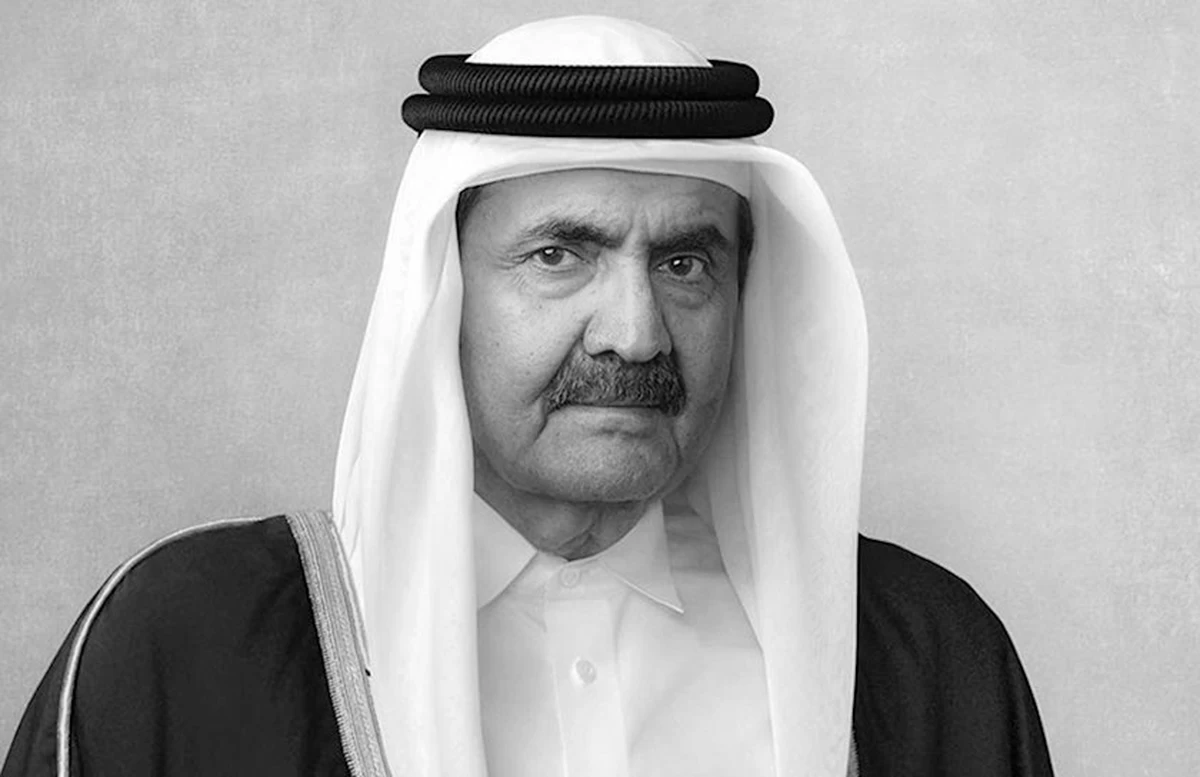
The Amir said Qatar, the Gulf family, the Arab and Islamic nations, and the world had lost a distinguished leader known for his wisdom, who devoted his life to serving his country and supporting Arab and Islamic causes. His Highness recalled his close brotherly relationship with the late Father Amir, affirming Kuwait would always remember with pride Qatar’s support, particularly during the Iraqi occupation. The Amir also praised Qatar’s remarkable development under the late Father Amir’s leadership, praying that Allah Almighty grants him eternal mercy and bestows patience and solace upon Qatar’s leadership, ruling family and people. Similarly, His Highness the Crown Prince Sheikh Sabah Khaled Al- Hamad Al-Sabah sent a cable of condolences on Sunday to the Amir of Qatar Sheikh Tamim bin Hamad Al-Thani, over the passing of Father Amir Sheikh Hamad bin Khalifa Al-Thani.
Meanwhile, by the directives of His Highness the Amir Sheikh Meshal Al-Ahmad Al-Jaber Al-Sabah, official mourning has been declared for four days following the death of Qatar’s Father Amir Sheikh Hamad bin Khalifa Al-Thani. Flags will be flown at half-mast across Kuwait and at the country’s diplomatic missions abroad, effective Sunday, July 12, 2026, corresponding to Muharram 27, 1448 AH. The Amiri Diwan prayed to Allah Almighty to bestow His mercy upon the deceased. Elsewhere, Secretary General of the Gulf Cooperation Council (GCC) Jassim Al-Budaiwi, expressed his deepest condolences on Sunday to the Amir of Qatar Sheikh Tamim bin Hamad Al- Thani, the Al-Thani family, and the government and people of Qatar following the death of the Father Amir Sheikh Hamad bin Khalifa Al-Thani. In a statement, Al-Budaiwi said that the late Amir was one of the leaders who contributed sincerely and wisely to the renaissance of Qatar and its comprehensive development across all sectors.
The late Amir also played a prominent role in supporting the joint Gulf action and strengthening the bonds of brotherhood, solidarity, and integration among the GCC states, stemming from his firm belief in the importance of Gulf unity and consolidating the foundations of security, stability, and prosperity in the GCC countries. Al-Budaiwi prayed to Allah to grant the deceased abundant mercy and forgiveness, and to grant the Amir of Qatar, the Al-Thani family, and the people of Qatar patience, tranquility, and solace. Qatar’s Father Amir, Sheikh Hamad bin Khalifa Al-Thani, one of the country’s historic leaders and the architect of its modern renaissance, passed away on Sunday at the age of 74 after a lifetime of service during which Qatar rose to a prominent regional and international position.
The Qatari Amiri Diwan announced public mourning in the State of Qatar for a period of four days, commencing Sunday, July 12, 2026. Work will be suspended in all ministries, government agencies and public institutions starting Monday, July 13, 2026, with employees resuming work on Sunday, July 19, 2026. Flags will be flown at half-mast throughout the State for the duration of the mourning period. Born in Doha in 1952, Sheikh Hamad received his primary, intermediate and secondary education in Qatar before enrolling at the Sandhurst Royal Military Academy in the United Kingdom, graduating in July 1971. He later joined the Qatari Armed Forces with the rank of lieutenant colonel and was appointed commander of the First Mobile Brigade, later known as Hamad Mobile Brigade. He rose to the rank of major general and became Commander-in-Chief of the Qatari Armed Forces, becoming the first Qatari to hold the post. Sheikh Hamad played a key role in developing Qatar’s armed forces by expanding their personnel, establishing new units, equipping them with modern weaponry and strengthening the training of officers and personnel. He also oversaw the establishment of the Amiri Navy, the Amiri Air Force, commando, engineering, military police, special forces, border guard and leadership defense units.
On May 31, 1977, Sheikh Hamad was appointed Crown Prince, Minister of Defense and Chairman of the Supreme Planning Council, assuming significant executive responsibilities in the country’s development and modernization. After assuming power in 1995, Sheikh Hamad led Qatar through a transformative period across political, economic, media and social sectors, positioning the country as an influential regional and international actor despite its small geographical size. Under his leadership, Qatar pursued an active foreign policy, expanding diplomatic ties with countries across the world while strengthening cooperation at both regional and international levels. He also championed the development of the country’s media sector, helping elevate Qatar’s international profile. Sheikh Hamad placed considerable emphasis on youth and sports, believing in their role in national development.
One of the landmark achievements during his reign was Qatar’s successful bid to host the 2022 FIFA World Cup, announced in December 2010, making it the first Arab and Muslim country to secure the tournament. His tenure also witnessed major domestic reforms, including granting women the right to vote and run in municipal elections, expanding employment opportunities, easing restrictions on the press and accelerating the development of the country’s natural gas sector to support economic growth. He promoted the transition toward a knowledge-based economy aimed at achieving sustainable development and ensuring prosperity for future generations. His reform agenda covered education, healthcare, sports, culture, media and infrastructure, while Qatar emerged as the world’s largest exporter of liquefied natural gas and became a leading destination for political, economic, cultural and scientific conferences. Qatari diplomacy also gained recognition for mediating conflicts and helping resolve disputes in various regions.
Throughout his career, Sheikh Hamad sponsored numerous conferences, attended Gulf and Arab summits and paid official visits to many Arab and foreign countries. He was awarded numerous decorations by Arab and foreign nations in recognition of his efforts to strengthen bilateral relations and expand cooperation. These included the Order of Oman from the Sultanate of Oman (1975), the Collar of the Nile from Egypt and the Order of King Abdulaziz of Saudi Arabia (1976), Indonesia’s Star of the Great Son and Venezuela’s Order of Francisco de Miranda (1977), Britain’s Knight Grand Cross of the Order of St Michael and St George (1979), France’s Grand Officer of the Legion of Honor (1980), Morocco’s Order of Mohammad (1981), Lebanon’s Order of Merit (1986), Jordan’s Collar of Al-Hussein Bin Ali and Oman’s First Class Order of Oman (1995). He also received Tunisia’s highest national decoration (1997), France’s Grand Cross of the Legion of Honor and Senegal’s Order of the Lion (1998), Pakistan’s Nishan-e-Pakistan, Germany’s Grand Cross of the Order of Merit and Romania’s National Order of the Star (1999), as well as Lebanon’s National Order of the Cedar, Italy’s Knight Grand Cross and Yemen’s Order of the Republic in 2000 (KUNA)