



18/05/2026

Share:
18/05/2026
Share:
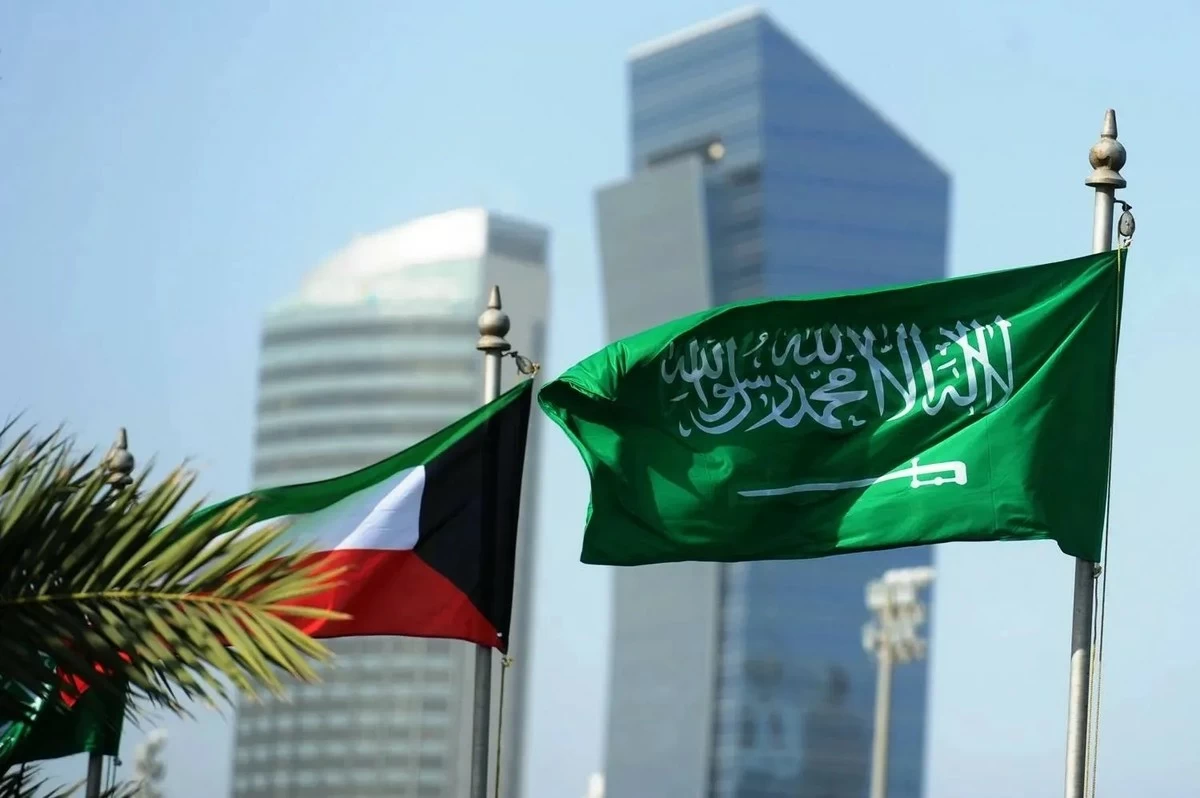

KUWAIT CITY, May 18, (Agencies): Kuwait on Monday strongly condemned a drone attack launched from Iraqi airspace targeting Saudi Arabia, describing it as a flagrant violation of international law and UN Security Council resolutions that threatens regional security and stability. In a statement, the Kuwaiti Ministry of Foreign Affairs expressed full solidarity with Saudi Arabia and support for all measures to safeguard its sovereignty and territorial integrity.
The condemnation followed Saudi Arabia’s announcement that its air defenses had intercepted and destroyed three hostile drones that entered its airspace from the direction of Iraq. Defense Ministry spokesman Maj. Gen. Turki Al-Malki said the Kingdom reserves the right to respond at a time and place of its choosing. Gulf and Arab states issued similar denunciations. Bahrain labeled the attack a “heinous” and dangerous escalation, reaffirming support for Saudi Arabia and urging Iraq to prevent its territory from being used for hostile acts. The United Arab Emirates and Qatar also condemned the incident, stressing that it violates Saudi sovereignty and undermines regional stability. GCC Secretary- General Jasem Al-Budaiwi said Saudi security is integral to Gulf security, reaffirming the bloc’s full backing for the Kingdom.
In a separate development, Kuwait and several regional and international partners condemned a drone strike targeting an electricity generator outside the perimeter of the Barakah Nuclear Energy Plant in the UAE’s Al-Dhafra region. Kuwait described the attack as a serious violation of international law and a threat to civilian infrastructure, reaffirming solidarity with the UAE.
Emirati authorities confirmed the incident caused no casualties or radiation impact. The Federal Authority for Nuclear Regulation said safety systems remained intact, with no release of radioactive materials and no risk to the public or environment. The UAE secured broad regional backing, with Arab foreign ministers condemning the strike as a dangerous escalation and reaffirming the country’s right to defend its sovereignty. Oman called for dialogue and restraint, while Belgium and India voiced concern over the risks posed by attacks near nuclear facilities, stressing the need to protect critical infrastructure and avoid further escalation. A drone strike sparked a fire on the edge of the United Arab Emirates’ sole nuclear power plant on Sunday in what authorities called an “unprovoked terrorist attack.”
No one was blamed, but it highlighted the risk of renewed war as the United States and Iran signaled they were ready to fight again. There were no reported injuries or radiological release. The UAE, which has hosted air defenses and personnel from Israel, recently accused Iran of launching drone and missile attacks. Tensions have risen over the Strait of Hormuz, a vital energy waterway gripped by Iran, which is under a U.S. naval blockade. “For Iran, the Clock is Ticking, and they better get moving, FAST, or there won’t be anything left of them,” U.S. President Donald Trump posted on social media shortly after a call with Prime Minister Benjamin Netanyahu of Israel, whose attack on Iran with the U.S. sparked the war on Feb. 28. Trump has repeatedly set deadlines for Tehran and then backed off. “Our armed forces’ fingers are on the trigger, while diplomacy is also continuing,” Mohsen Rezaei, a military adviser to Iran’s supreme leader, said on state television.
The ceasefire remains tenuous, with diplomatic efforts for a more durable peace having faltered. And fighting has heated up between Israel and the Iran-backed Hezbollah militant group in Lebanon despite a nominal ceasefire there. The UAE Defense Ministry said three drones came over its western border with Saudi Arabia, with the other two intercepted. It was investigating who launched them. Iran and allied Shiite militias in Iraq have launched drone attacks targeting Gulf Arab states in the war. The attack, “whether carried out by the principal actor or through one of its proxies, represents a dangerous escalation,” Anwar Gargash, a diplomatic adviser to the UAE president, said on social media. Saudi Arabia condemned the attack, and later said it had intercepted three drones that entered from Iraqi airspace.
The $20 billion Barakah nuclear power plant was built by the UAE with the help of South Korea and went online in 2020. It is the only nuclear power plant in the Arab world and can provide a quarter of the energy needs in the UAE, a federation of seven sheikhdoms that is home to Dubai. The UAE’s nuclear regulator said the fire didn’t affect plant safety and “all units are operating as normal.” The International Atomic Energy Agency, the United Nations’ nuclear watchdog, said the strike caused a fire in an electrical generator and one reactor was being powered by emergency diesel generators. It’s the first time the four-reactor Barakah plant has been targeted in the war. Yemen’s Iranbacked Houthi rebels, whom the UAE has battled as part of a Saudi-led coalition, claimed to have targeted the plant while it was under construction in 2017, which Abu Dhabi denied.
The UAE signed a strict deal with the U.S. over the nuclear power plant, known as a “123 agreement,” in which it agreed to forego domestic uranium enrichment and reprocessing of spent fuel to ease any proliferation concerns. Its uranium comes from abroad. That’s very different from the nuclear program in Iran that is at the heart of long-running tensions with the United States and Israel. Iran insists its program is for peaceful purposes, but it has enriched its uranium close to weapons-grade levels and is widely suspected of having had a military component to its program until at least 2003. It has often restricted the work of U.N. inspectors, including since the 12-day war with Israel last year. Israel is widely believed to be the only nuclear- armed country in the region, but has neither confirmed nor denied having atomic weapons. Iran struck near Israel’s Dimona nuclear facility during the war.
Nuclear plants have increasingly been targeted in wars in recent years, including during Russia’s full-scale invasion of Ukraine that began in 2022. During the Iran war, Tehran repeatedly claimed its Bushehr nuclear power plant came under attack, though there was no direct damage to its Russian-run reactor or any radiological release. Israel is coordinating with the U.S. about a possible resumption of attacks, said two people familiar with the situation, including an Israeli military officer. They spoke on condition of anonymity because they were discussing confidential military preparations.
Speaking to his Cabinet on Sunday, Netanyahu said “our eyes are also open” when it comes to Iran, and “we are prepared for any scenario.” On Iranian state TV, presenters on at least two channels appeared armed during live programs. One of them, Hossein Hosseini, received basic firearms training from a masked member of the paramilitary Revolutionary Guard. Hosseini mimed firing a shot at the fl ag of the UAE. On another channel, Mobina Nasiri said a weapon had been sent to her from a gathering in Tehran’s Vanak Square. “From this platform, I declare that I am ready to sacrifice my life for this country,” she said.