


03/12/2025

Share:
03/12/2025
Share:
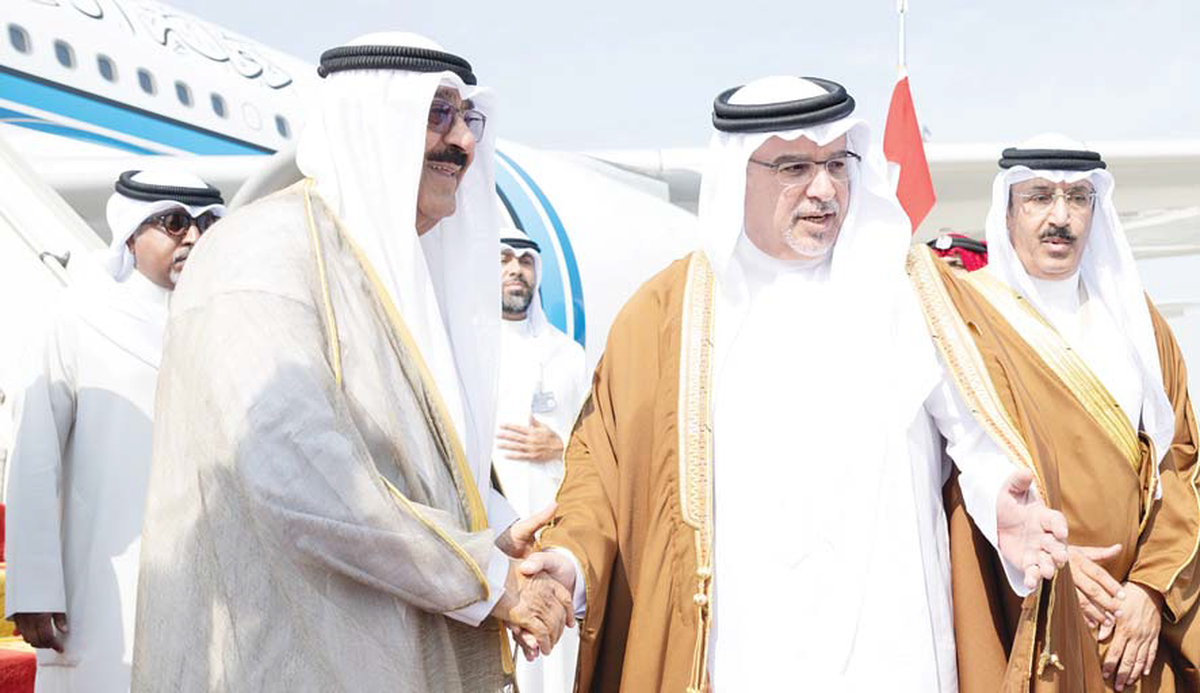

His Highness the Amir congratulated the King of Bahrain Hamad bin Isa Al-Khalifa and his country on hosting the current session of the GCC, asserting that the Kingdom would help further boost cooperation amongst the six member countries. His Highness Sheikh Meshal Al-Ahmad also congratulated Bahrain on becoming a non-permanent member at the UNSC for 2026-27, reflecting Bahrain’s strong international presence in global peace and security. Regarding issues of regional and international importance, His Highness the Amir condemned the Israeli occupation aggression against the State of Qatar, saying that the attack was considered an assault against the whole of the GCC.
His Highness the Amir expressed condemnation of the Israeli occupation aggression against the Palestinian people, asserting that occupation must end and the establishment of a Palestinian state within the June 4, 1967 borders and East Jerusalem as the capital must see light in accordance with intensified international efforts aimed at the two-state solution, as well as ending the aggression on Gaza Strip. His Highness the Amir also vowed Kuwait’s commitment to continue work with Iraq, based on understandings and mutual agreements, to complete marine boundary demarcation beyond mark 162 in accordance with international law and the 1982 United Nations Convention on the Law of the Sea (UNCLOS)
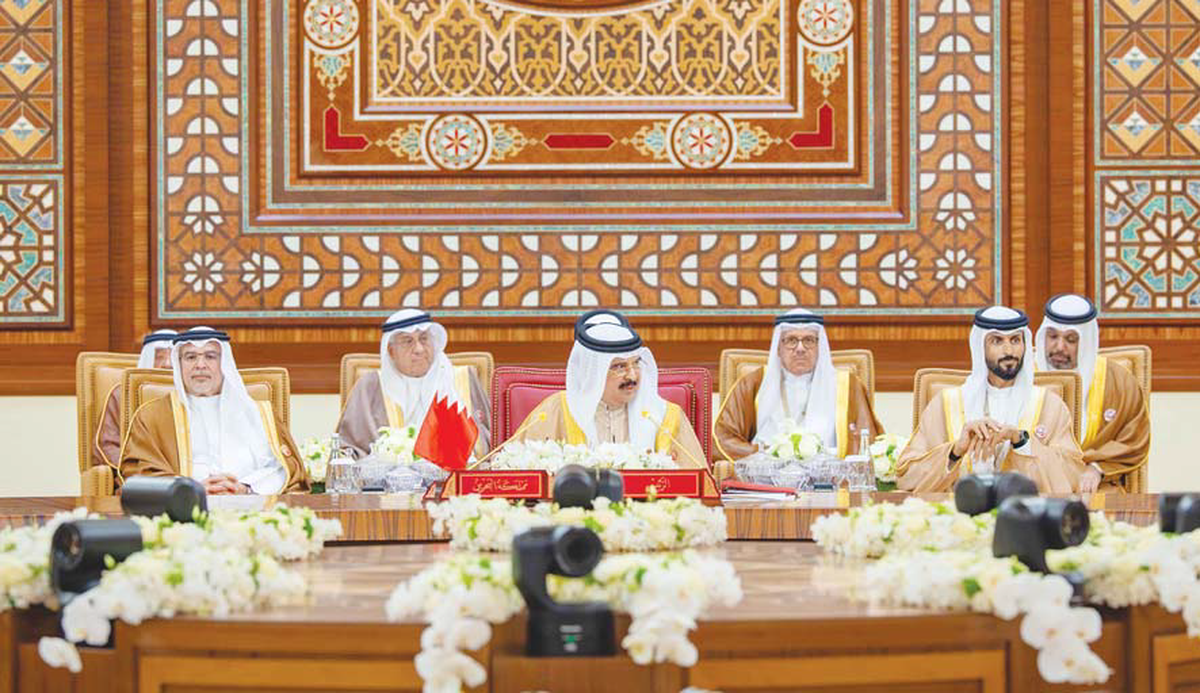
Over the past two days, Manama hosted a series of coordination meetings for foreign ministers and officials from ministerial and technical committees, during which they discussed the draft final communique and summit declaration, and agreed to refer their recommendations to the Supreme Council for approval at the 46th summit. Inaugurating the 46th Summit of the Gulf Cooperation Council, current Chair King Hamad bin Isa Al- Khalifah of Bahrain, spoke of the challenges facing member states and highlighted achievements. He said the GCC countries were keen on meeting aspirations of their people, as well as eager on collective action to addressing regional and international challenges. GCC Secretary General Jassem Al-Budaiwi, for his part, spoke of the accomplishments achieved throughout the last session, which was headed by State of Kuwait. The GCC Summit then turned into a closed-door session, where attending leaders will be delving into regional challenges and ways of addressing them. The Kingdom of Bahrain is committed to advancing the path of joint Gulf cooperation, which is rooted in strong fraternal ties and unified goals and destiny, said the Bahraini King Hamad bin Issa. In his opening remarks of the 46th Summit of the Gulf Cooperation Council, King Hamad conveyed his sincere appreciation to His Highness the Amir Sheikh Meshal Al-Ahmad Al-Jaber Al-Sabah for the wise leadership of the previous session and the fruitful outcomes achieved in support of the supreme interests of the GCC and the aspirations of its peoples. King Hamad’s statement noted that a reflection on the GCC’s distinguished journey, initiated by the founding fathers with dedication and goodwill, reaffirms the soundness of their vision regarding deeper integration and unity, in line with the region’s strategic weight and its influential role in regional and international politics, as stipulated in the Council’s basic charter. He emphasized that practical experience has demonstrated the success of the GCC model as a comprehensive developmental framework capable of balancing global competitiveness with sustained stability and prosperity.
These achievements would not have been possible without a shared vision, unified policies, and clear priorities centered on reinforcing Gulf security, safeguarding national sovereignty, respecting the principles of good neighborliness, and rejecting interference in internal affairs, King Hamad added. King Hamad further praised the progress achieved across various fields of cooperation, particularly in the areas of Gulf citizenship and economic unity, expressing hope for the completion of the customs union and the Gulf common market, as well as the expansion of partnerships in food and water security, the digital economy, renewable energy, and other vital sectors. In light of the rapid developments in the region, King Hamad underscored the importance of continuing joint efforts with determination, wisdom, and openness to address regional issues, foremost among them the Palestinian cause, through dialogue and political and diplomatic solutions that enhance stability and open sustainable prospects for the region’s security and development.
King Hamad shed light on his country’s reaffirmation of the importance of implementing the Gaza peace plan, viewing it as a positive step toward de-escalation and creating conditions conducive to achieving just and lasting peace, including the establishment of an independent Palestinian state with East Jerusalem as its capital, in accordance with international legitimacy and the Arab Peace Initiative. On Gulf security and regional stability, King Hamad stressed the need to protect maritime navigation and international trade from any threat, and to preserve the region’s freedom from weapons of mass destruction, in line with the GCC’s strategic orientations in security and collective defense. King Hamad concluded his speech by calling for continued efforts to make the GCC a renewed pledge for unity, a fair and open Gulf market, and a soft power capable of preserving identity, safeguarding social cohesion, and shaping a future where development is built on knowledge, innovation, and dignity. His Highness the Amir Sheikh Meshal Al-Ahmad Al-Jaber Al-Sabah later attended a luncheon hosted by King Hamad bin Isa Al-Khalifah of Bahrain, at Sakhir Palace on Wednesday, held in honor of Gulf leaders visiting Bahrain to attend the 46th Gulf Cooperation Council Summit.
Gulf leaders, in the final communique of the 46th GCC Summit, held in Bahrain Wednesday called for enhancing cooperation amongst member states on all avenues as well as addressing the various challenges facing the region. The final communique, issued by the Supreme council of the GCC, examined report on vision of King Salman bin Abdulaziz Al-Saud on boosting joint Gulf work regarding economic unity and security and defense systems, as well as coordinating positions on regional and international fronts. The council directed with multiplying efforts to continue implementing the vision according to a certain timetable and meticulous supervision, and tasked the GCC general secretariat with submitting a detailed report on this to the next session. As for joint Gulf work, the supreme council looked into negotiations on late King Abdullah bin Abdulaziz Al-Saud suggestion of taking the cooperation to a federation. The council affirmed its keenness on the strength and cohesion of the Cooperation Council, unity, achieving greater coordination, integration and cohesion in all fields, in order to achieve the aspirations of the citizens of the Council countries.
The Supreme Council reviewed the developments of the economic unit of the Gulf Cooperation Council and approved the gradual operation of the customs data exchange platform during the second half of the year 2026. The Council assigned the relevant ministerial committees to finish addressing the remaining requirements of the Customs Union and submit an executive action plan and timetable as soon as possible. Within the framework of the Gulf Common Market, the Supreme Council stressed following up with the implementation of regulating the supply of cross-border trade in services between the GCC countries, measure its economic and social impact on a periodic basis, and determine mechanisms for recognition of qualifications and service licenses between member states. The Supreme Council welcomed the proposal to hold a “Made in the Gulf” forum and exhibition, with the aim of highlighting the distinguished industrial capabilities in the Council countries and promoting industrial integration. The Council approved the establishment of the GCC Civil Aviation Authority, headquartered in the United Arab Emirates, and the general agreement to connect the GCC countries with the railway project. It also approved the unified rules for joint property owners in the Gulf Cooperation Council countries.
Furthermore, it praised the recommendations of the first Gulf Conference for the future of judicial, and legislative cooperation, which was held in Kuwait, as well as the findings of the nineteenth regular meeting, of the heads of the Shura, Representatives, National, and Nation Councils in the GCC countries, and appreciated the achievements and efforts made by member states in the field of Islamic affairs and endowments. The Supreme Council praised the efforts and achievements made by member states in strengthening governance, transparency, accountability, integrity and anti-corruption tools through joint Gulf action, and the practical steps towards building an integrated monitoring and accounting system. The Supreme Council also approved the Gulf security strategy to combat money-laundering crimes and praised the gains and achievements of the Council countries in regards to human rights, including their achievements in the field of combating human trafficking. The Council reviewed the views of the advisory body on the topics that it had previously been assigned to study, including confronting natural disasters, developing unified policies and legislation for the use of artificial intelligence, and obstacles to the integration of services between member states, as well as environmental protection, climate change, and renewable energies.
The Supreme Council emphasized the strengthening of joint action to enhance work related to energy transformations and climate change, and to activate cooperation, exchange of experiences, within the framework of Green Middle East Initiative. It stressed the importance of supporting the stability of global energy markets, adopting a balanced approach without excluding energy sources, and working to innovate technologies that enable managing emissions and making use of all energy sources with high efficiency, to enable sustainable economic growth for all. It appreciated the achievements and efforts made by member states in the circular carbon economy approach. The Supreme Council congratulated UAE’s Sheikha Nasser Al-Nowais on winning the position of Secretary- General of the United Nations Tourism Organization for the period 2029-2026. The Council expressed its support for the United Arab Emirates to host, in partnership with the Republic of Senegal, the 2026 United Nations Water Conference. It also congratulated the United Arab Emirates on the success of the activities of the 12th session of the World Government Summit.
The Supreme Council congratulated the inauguration of the Bahrain International Commercial Court, in an important step that embodies the Kingdom of Bahrain’s keenness to develop the justice system. It also congratulated Bahrain for its distinguished success in hosting the 2025 Asian Youth Games under the patronage of King Hamad bin Isa Al-Khalifah. The Supreme Council congratulated Saudi Arabia for the success of the Hajj season, and expressed its appreciation for the efforts and facilities provided by the government of the Custodian of the Two Holy Mosques King Salman bin Abdulaziz Al-Saud. It also congratulated Saudi Arabia on the occasion of its victory in hosting the World Cup, 2034. The Council congratulated Kuwait on the success of hosting the 26th Gulf Cup Football Championship, extending its congratulations to Bahrain for winning the tournament. The Supreme Council praised the success of Oman in hosting the Indian Ocean Conference eighth session in Muscat. It appreciated the efforts of Qatari diplomacy in reaching the Doha Framework Agreement for peace between the Government of the Democratic Republic of the Congo and the Congo River Alliance. The council also congratulated Qatar on the success of the U-17 World Cup, and expressed its wishes for success for the State of Qatar in the eleventh edition of the Arab Cup Championship. It praised the success of the State Qatar in hosting the Second World Summit for Social Development, and welcomed the Doha Political Declaration. The Supreme Council expressed its support for the State of Qatar’s bid to host the 2036 Olympic and Paralympic Games, wishing it success in hosting this global sporting event.
The Council congratulated Kuwait on the occasion of its selection as the Capital of Arab Culture and Media for the year 2025, which reflects the cultural and media heritage of the State of Kuwait and its role as a beacon of culture and a platform for creativity in the Arab world. The Supreme Council welcomed the State of Kuwait’s hosting of the third Arab-Chinese summit, scheduled to be held in 2030, hoping that the summit will contribute to strengthening cooperation relations and achieving common interests. Moreover, it congratulated Kuwait on its victory to host the 2026 Asian Handball World Cup, wishing it success in hosting this important sporting event. The leaders of Gulf Arab states agreed to further solidify unity within the six-member bloc as part of ambitions to keep development in the region on an upward trajectory, according to a declaration issued after a summit on Wednesday. Such a measure stems from the “joint values and intertwined fates” that have long been a hallmark of the “historic and brotherly” relations that bind Gulf Cooperation Council (GCC) member states, the declaration underlined after the 46th GCC summit in Sakhir area, south of the Bahraini capital Manama. Since the bloc’s inception in 1981, its pioneers and founding fathers had backed all efforts aiming to usher in greater development, security and prosperity in the Gulf Arab region, an ideology shared by GCC leaders to this very day, all of whom expressed their glee over the achievements seen in member states as of late, it said. Respecting the sovereignty of GCC member states and the non-interference in their internal affairs was another core matter the declaration underlined, saying any threat to the security and stability of a member state was tantamount to targeting the Riyadh-based bloc as a whole, it emphasized, while rejecting the use of force or threatening rhetoric.
As part of efforts to stifle all conflicts and unrest plaguing the Middle East region, the declaration vociferously called for an end to the war on the Gaza Strip and allow the unimpeded delivery of aid to the Palestinian enclave, inevitably leading to the formation of an independent Palestinian state based on 1967 border lines, with East Jerusalem as its capital. Accelerating initiatives to build a digital-based economy as part of efforts to keep growth steady was another matter highlighted in the declaration, encompassing trade and tourism, in addition to investment in strategic projects across the areas of infrastructure, transport, energy and telecommunications, it said, citing these measures as instrumental towards bolstering sustainable economic growth. The Gulf Arab leaders went on to agree on the necessity to bolster cooperation in key realms running the gamut from technology and Artificial Intelligence to cybersecurity, all of which comprise “knowledge integration” efforts and the exchange of know-how over the proper use of digital infrastructure, it added. On the fight against climate change, the declaration backed “sustainable initiatives” that include efforts to cut greenhouse gas emissions to achieve carbon neutrality, in addition to green initiatives as part of common GCC endeavors to promote environmental sustainability while cushioning the worsening impacts of climate change. The declaration reiterated the need to ratchet up “strategic cooperation” in a bid to bolster the Gulf Arab region’s security and stability, while bringing common goals and ambitions to fruition, it said, highlighting the bloc’s unwavering belief in these principles.(KUNA)