


21/10/2026

Share:
21/10/2026
Share:

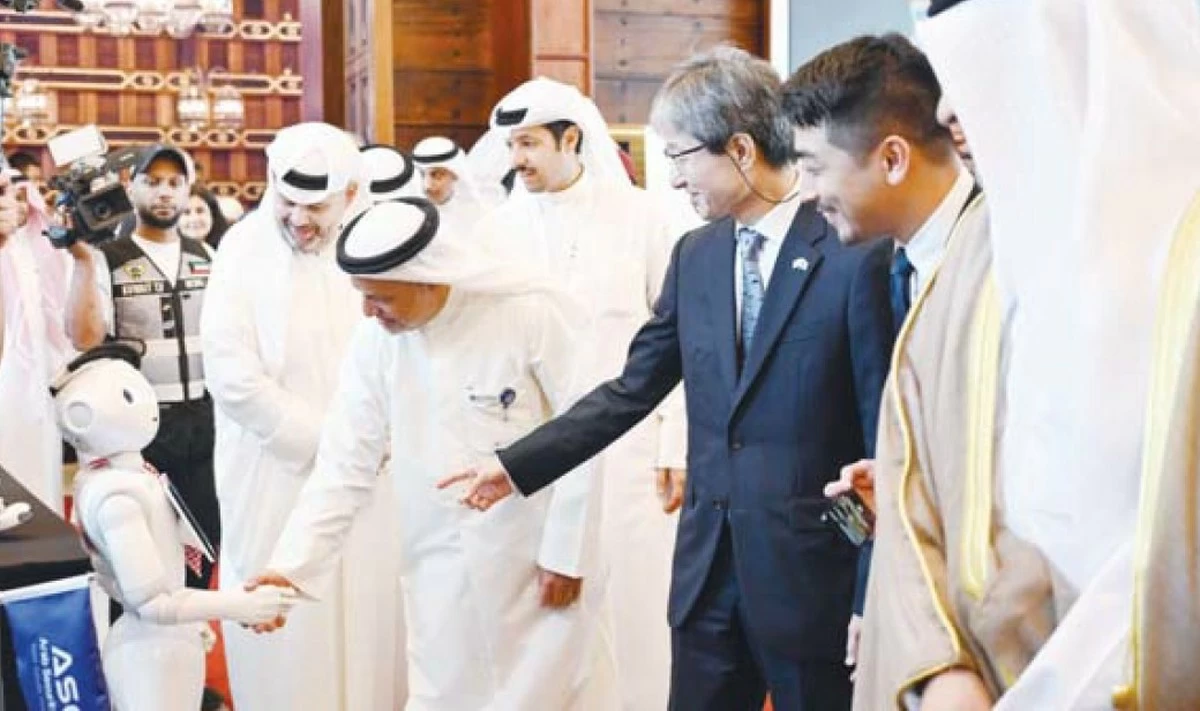
Robot welcomes officials.
KUWAIT CITY, Oct 21: Minister of Communications and acting Minister of Information and Culture Omar Al-Omar stated that Kuwait is moving toward strengthening integration among government entities and facilitating data exchange. In a press statement on the sidelines of the International Forum on Artificial Intelligence and Digitization with the theme, “Crisis Management, Innovation and the Future of Institutions,” held on Wednesday, Al- Omar explained that enhancing government integration aims to fortify inter-institutional cooperation and utilize technological advancements to maximize the benefits of modern technologies, focusing on artificial intelligence (AI). He affirmed the readiness of the state to advance the digitization of government archives towards a ‘paperless government’. He pointed out that digital transformation and the provision of electronic services give the state a distinct advantage under current circumstances.
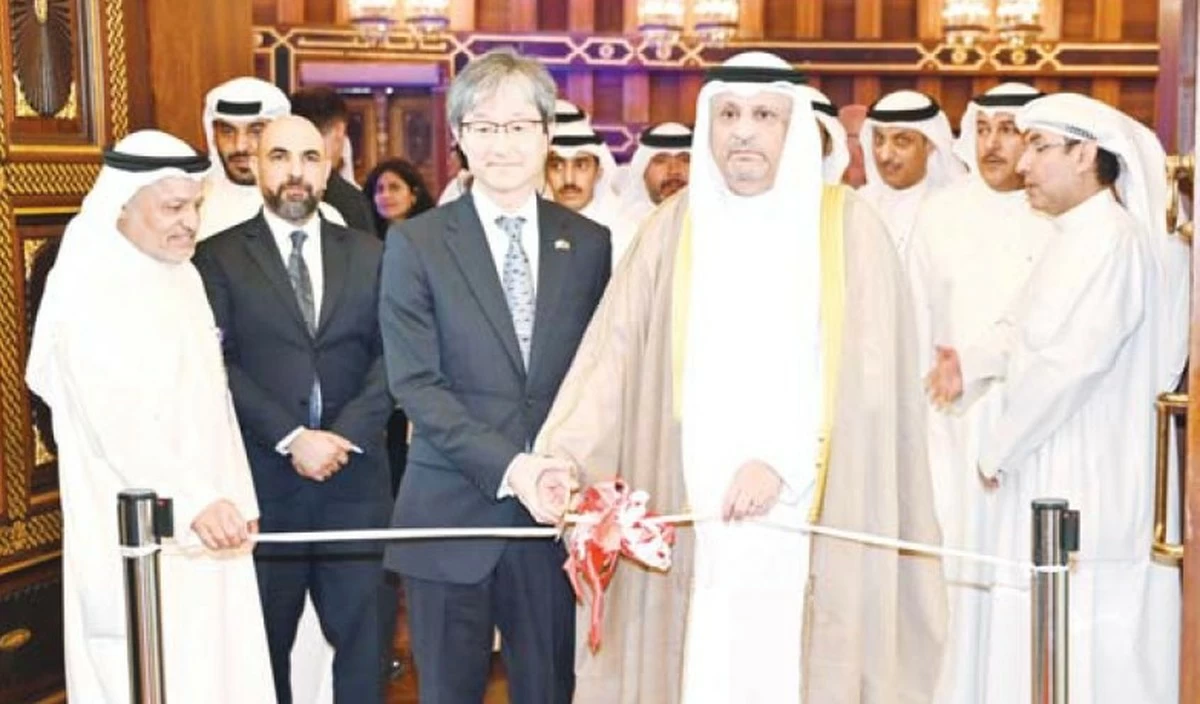
Minister of Communications and acting Minister of Information and Culture Omar Al-Omar and Japanese Ambassador to Kuwait Kenichiro Mukai inaugurate event.
He stated that the Ministry of Communications is in charge of providing the infrastructure for digital transformation in ministries to support the development of government services, strengthen connectivity between entities, and reduce the need for the public to visit government offices to complete their transactions. On concerns over possible internet service disruption due to cable problems, he admitted that such an incident will affect the entire region, hoping the appropriate alternatives will be available. “We do not want to assume the worst, but we must always be prepared,” he stressed. About the possibility of relying on satellites as an alternative to terrestrial and submarine cables, he explained that current technologies do not yet offer the same capacity as cables.
“While satellites could be utilized to a certain extent as a supplementary option, they cannot serve as an equivalent replacement for the existing infrastructure,” he elaborated. He confirmed that Kuwait is open to various partnerships, including cooperation with Japan, hence, welcoming projects that deliver added value to the country and strengthen its capabilities in digital transformation and technology. He pointed out that the current phase of AI adoption requires accelerating digital transformation and embedding the use of modern solutions and tools in Gulf states. He said this is essential to keep pace with the impact of these technologies on all aspects of life, while promoting innovation and remote connectivity in different sectors. He added that AI is no longer a distant promise, but a reality that is reshaping economies, government operations and labor markets.
He stressed that AI is not a technological luxury, but a necessity for enhancing competitiveness, improving services and increasing the accuracy of decision-making. He highlighted several national initiatives led by the Central Agency for Information Technology (CAIT), specifically the accelerated transition to digital computing and the development of a platform to interconnect government systems. He said these efforts aim to raise service efficiency, strengthen information security, and ease data exchange. On the other hand, Dr. Khalid Al- Zamil, Director of the Communications and Information Technology Regulatory Authority (CITRA), asserted that the integration of AI into the workplace expands an organization’s capacity to analyze information, support staff, refine planning and operational mechanisms, and ease knowledge sharing. He clarified that the real value of these technologies is realized by first understanding the problem and clearly defining the desired outcomes. He pointed out that the systematic analysis of available data enables more accurate results and supports decision-making based on clear and reliable information.
By Mohammad Ghanem Al-Seyassah/Arab Times Staff