


03/06/2026

Share:
03/06/2026
Share:

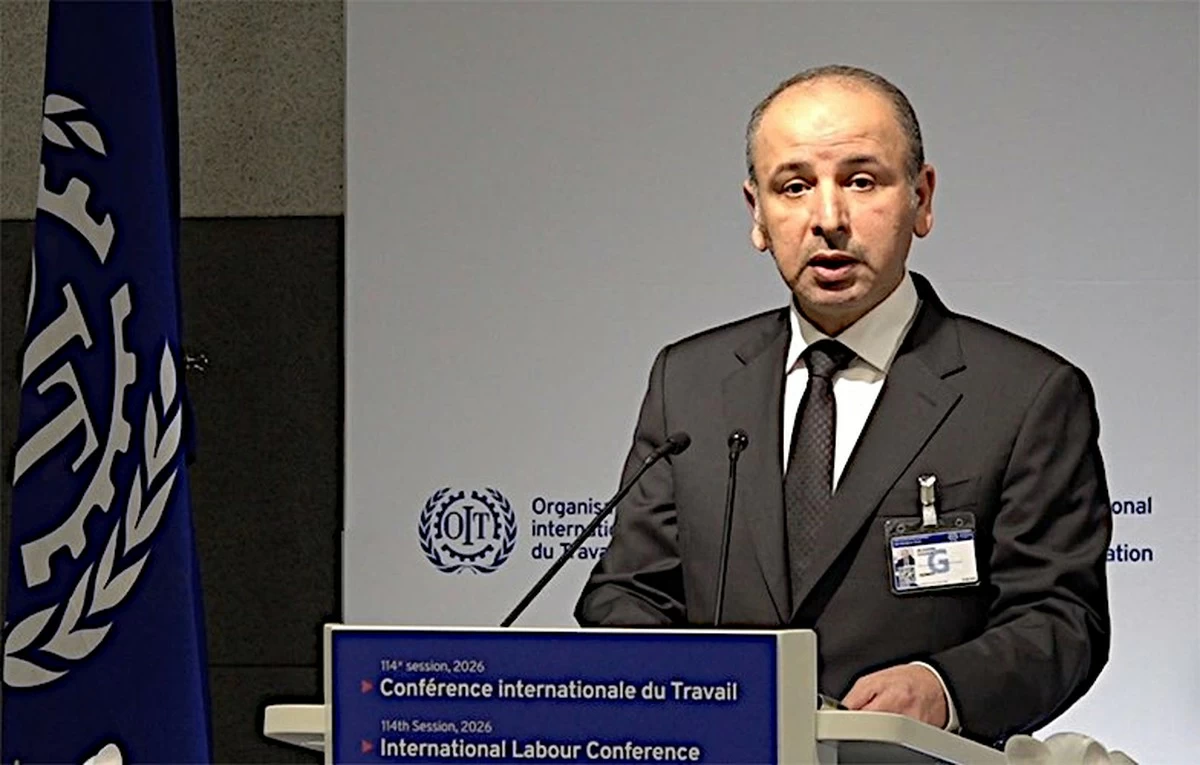
KUWAIT CITY, Jun 3: The State of Kuwait has affirmed its inherent and inalienable right to self-defense in accordance with Article 51 of the United Nations Charter, strongly condemning repeated Iranian attacks on its territory, which it described as a flagrant violation of sovereignty and international legitimacy resolutions.
This position was outlined in a speech delivered by Kuwait’s Permanent Representative to the United Nations and other international organizations in Geneva, Ambassador Nasser Al-Hain, during the 114th session of the International Labour Conference. He stated that the worsening crisis in the Strait of Hormuz poses a catastrophic threat to millions of workers and civilians in the region and beyond, warning of its far-reaching humanitarian, economic, and environmental consequences.
Ambassador Al-Hain said Kuwait has been subjected to systematic and repeated targeting since the beginning of the year, with the latest incident occurring recently, stressing that these actions constitute a breach of international law and multiple UN resolutions. He reiterated Kuwait’s strongest condemnation of the attacks and affirmed its right to defend itself under Article 51 of the UN Charter.
He also urged the international community and the UN Security Council to assume their legal, humanitarian, and moral responsibilities to halt such attacks and safeguard regional stability, warning that continued escalation threatens global economic activity, labor markets, and environmental safety due to industrial and infrastructural damage.
Addressing broader global challenges, he highlighted structural shifts affecting labor markets, including the digital divide, the expansion of the platform economy, emerging biological risks, and the impact of artificial intelligence on job security. He called for balanced international responses based on flexible legal frameworks that ensure social protection and labor justice.
On the Palestinian issue, Kuwait reiterated its support for just causes, expressing concern over restrictions imposed on Palestinian workers and those in the occupied Syrian Golan, warning that such measures undermine economic stability and development opportunities.
Domestically, the ambassador described Kuwait’s labor market as open and diverse, hosting workers from more than 160 nationalities under a legal framework that promotes pluralism and sustainable development. He also highlighted ongoing legislative reforms aimed at modernizing labor laws, strengthening penalties against forced labor, and improving protections for workers, including efforts to enhance shelter and support services for expatriate workers.
He further emphasized the importance of ethical governance in the age of artificial intelligence, calling for transparency, accountability, and compliance with international labor standards to prevent digital discrimination and protect workers’ rights in automated recruitment and evaluation systems.
In conclusion, Ambassador Al-Hain reaffirmed Kuwait’s commitment to the principles of the International Labour Organization, pledging continued cooperation to build a more just, sustainable, and equitable future of work that upholds human dignity and ensures inclusive development.