



17/06/2026

Share:
17/06/2026
Share:
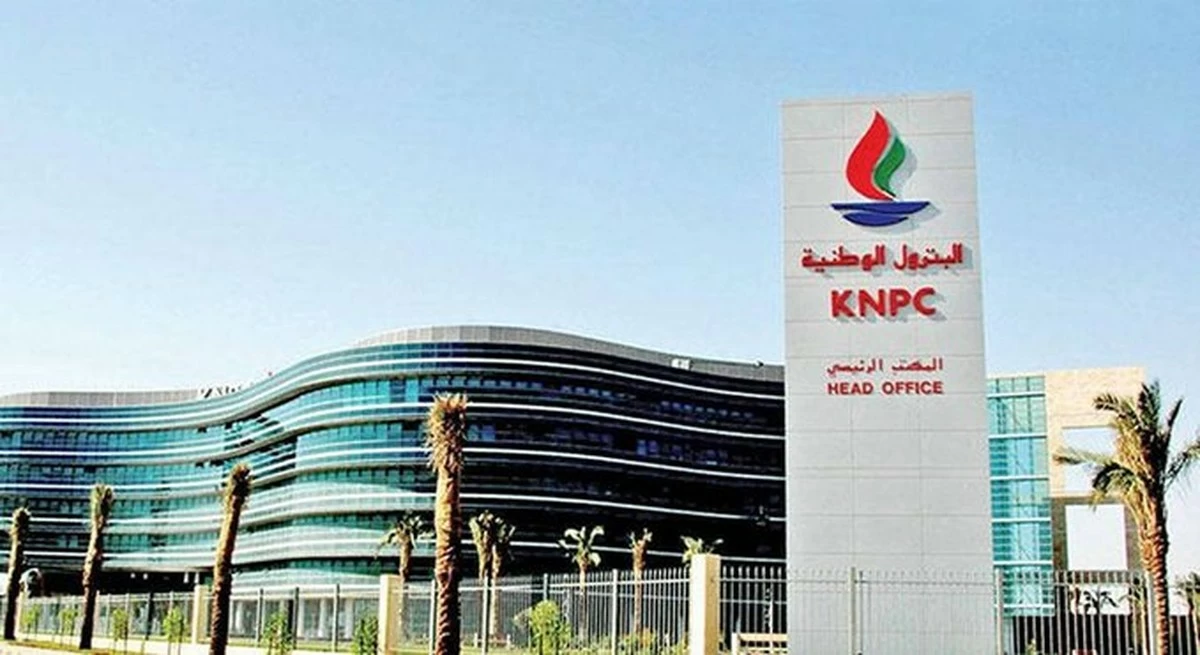

The newspaper obtained information that KNPC produced 17,500 tons of marine fuel oil last year in accordance with new international specifications requiring a sulfur content of 0.5 percent. This was achieved through the atmospheric residual desulfurization unit. At the same time, KNPC is continuing efforts to expand the refining capacity of Mina Al-Ahmadi and Mina Abdullah refineries by increasing the output of several operating units. As part of these efforts, the company completed performance tests to raise the operational capacity of the atmospheric residual distillation units at Mina Al-Ahmadi Refinery from 50,000 barrels per day to 55,000 barrels per day.
In Mina Abdullah Refinery, final insurance approval was obtained to increase the operating capacity of a number of units beyond their original design limits. Among the approved increases are the atmospheric residual desulfurization unit, whose capacity was raised from 50,000 to 55,000 barrels per day, and the naphtha treatment unit, whose capacity increased from 23,500 to 25,800 barrels per day. Capacity increases were also approved for other units at the Mina Al-Ahmadi and Mina Abdullah refineries, including the gasoline production unit (127-CCR) in Mina Abdullah, which was increased from 18,000 to 20,000 barrels per day, and the petroleum coke production unit (136-DCU) at Mina Al-Ahmadi, which rose from 37,000 to more than 44,400 barrels per day.
The same information indicated that KNPC completed the comprehensive maintenance of the clean fuels units at Mina Al-Ahmadi Refinery last year. It is the first major maintenance for the project and considered one of the largest maintenance operations ever undertaken at the refinery. The maintenance work covered about1,500 pieces of equipment, while insulation for equipment and production lines totaled around 20,000 insulation points. A total of 4,500 specialized and trained workers participated in the operation, which was completed without any accidents or work-related injuries, proving the strict compliance with health, safety and environmental standards. The company also carried out performance upgrades and efficiency enhancements through the adoption of advanced technology for the remote monitoring of rotating equipment and electric motors.
The technology is designed to provide precise assessments of equipment readiness, enabling the prediction of potential failures before they occur, thereby, reducing time, effort and operational costs. It utilizes a small clip attached to electrical cables at power supply stations, allowing the technical teams to obtain accurate readings from equipment located in difficult-to-access areas. The technology was successfully tested on submersible pumps and air compressors at several locations in the Mina Abdullah and Mina Al-Ahmadi refineries.
According to the company, the adoption of this technology enabled the generation of precise scientific analyses in record time, contributing to greater operational efficiency and reliability. It added that the technology offers a practical solution, which eliminates the need for external consultants, enabling employees to carry out inspections and maintenance activities efficiently and without incurring additional costs. The technology is expected to create valuable training opportunities for employees, promote internal collaboration, and support efforts to improve equipment performance and overall operational efficiency. It is worth mentioning that the combined daily production capacity of the Mina Abdullah and Mina Al-Ahmadi refineries reached 798,600 barrels in 2025, while that of Zour Refinery reached 615,000 barrels per day.