


26/11/2026

Share:
26/11/2026
Share:

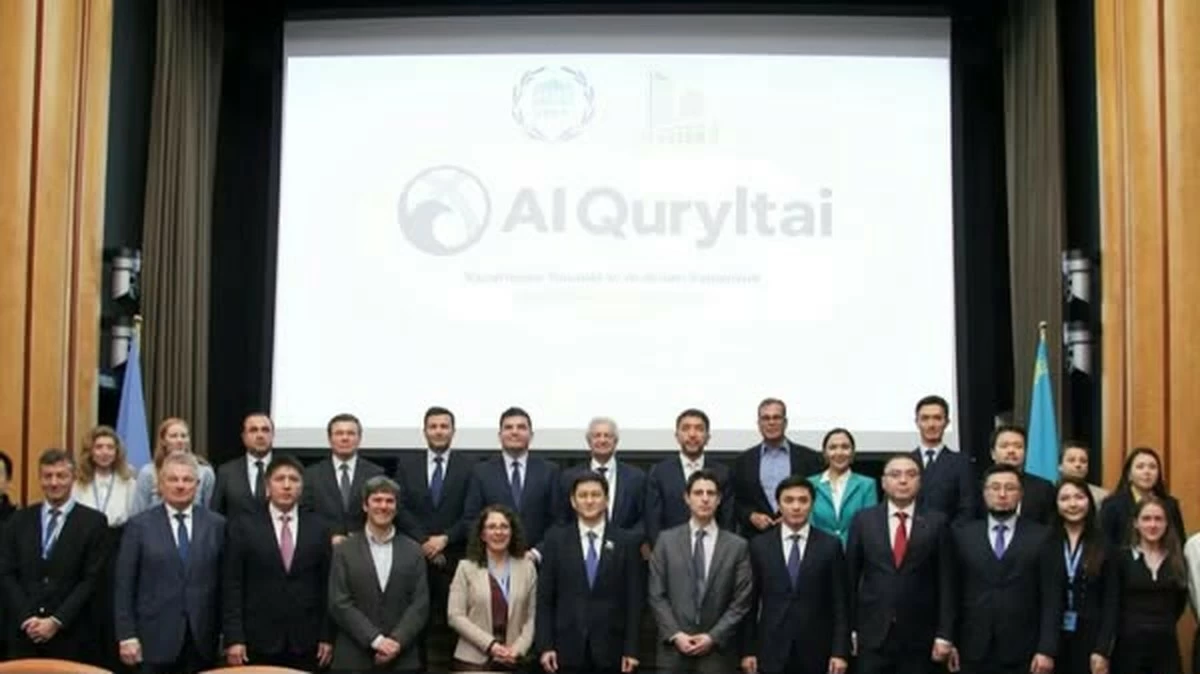
ASTANA, Nov 26 : Kazakhstan's Parliament has begun using artificial intelligence (AI) in the legislative process, with its newly developed AI-Quryltai platform being used to prepare the country's first draft law on the digital and information safety of children.
The AI-powered platform, developed by Kazakhstan's Parliament, known as the Kuryltai, is designed to assist lawmakers in analyzing legislation, identifying legal inconsistencies and assessing the potential impact of proposed laws.
The first legislative initiative prepared with the platform's assistance is the draft law titled On the Digital and Information Safety of Children. More than 120 amendments have been developed as part of the initiative.
The platform was used to conduct a comprehensive assessment of children's safety in the digital and information environment. The analysis incorporated large datasets, citizens' complaints, concerns raised by parents and experts, public feedback, existing risks and international practices.
For the first time, a specially trained legal AI model integrated into the platform was also used directly in drafting legislation. The model draws on a database containing more than 800,000 regulatory legal acts, helping lawmakers identify related legal provisions, potential conflicts and gaps in existing regulations.
Deputy Speaker of the Kuryltai Dinara Zakiyeva, who co-authored the bill, said the platform helped develop measures to protect children against emerging digital threats.
Among the proposed measures are mandatory parental-control mechanisms across digital platforms, age-appropriate filtering and restrictions preventing children from accessing unlabelled or unverified digital products, applications and games.
The draft also proposes requiring platforms to label and verify digital products, including applications and games, and block them when threats or violations are identified.
Five key components of AI-powered lawmakingKuryltai deputy and Head of the AI Lab Yekaterina Smyshlyayeva said AI-Quryltai is intended to create an intelligent environment that improves the quality and efficiency of legislative work.
The system comprises five interconnected components covering the entire legislative process, from identifying public concerns to monitoring the implementation of adopted laws.
These include:
1. Intelligent analytics: Analyses citizens' complaints, statistics, research and court decisions to identify public concerns and assess their scale and development.
2. Legal analysis: Uses a structured database of legislation to identify conflicting provisions, verify legal terminology and assist in preparing draft articles and comparative tables.
3. Intelligent review: Helps detect potential corruption risks, conflicts of interest, legal inconsistencies and shortcomings in legislative drafting.
4. Impact assessment: Models the potential consequences of proposed legislation, including its benefits, costs and risks for citizens, businesses and public institutions.
5. Implementation monitoring: Examines court rulings, public complaints and statistical data to assess how laws work in practice and identify areas requiring further amendments.
Smyshlyayeva stressed that artificial intelligence would not replace lawmakers or make legal and policy decisions.
Instead, the technology would help legislators examine a wider range of information, improve the quality of legal analysis and reduce time spent on routine administrative and technical tasks.
She added that lawmakers would remain fully responsible for their decisions and must critically assess the results generated by AI systems.
Platform undergoing pilot testingAI-Quryltai is currently in the development and pilot-testing stage. A dedicated Laboratory for AI Lawmaking Tools has been established to evaluate domestic technological solutions, bringing together lawmakers, experts and developers.
The laboratory's portfolio includes approximately 10 projects, three of which involve legislative initiatives.
Each solution is being assessed for accuracy, legal reliability, stability and suitability for professional legislative work.
The platform was also presented at the World e-Parliament Conference 2026 in Brussels, organised by the Inter-Parliamentary Union (IPU) in cooperation with the European Parliament. The conference brought together parliamentarians, parliamentary officials and technology experts from more than 100 countries.
IPU President Milton Dick, who subsequently visited Kazakhstan, described the country's transition from an electronic parliament to an AI-enabled parliament as impressive.
He said artificial intelligence was increasingly influencing economies, societies and democratic institutions, stressing that the technology must serve the interests of citizens.
The initiative reflects Kazakhstan's effort to integrate artificial intelligence into public institutions while keeping legislative authority and accountability in human hands.