


11/04/2026

Share:
11/04/2026
Share:

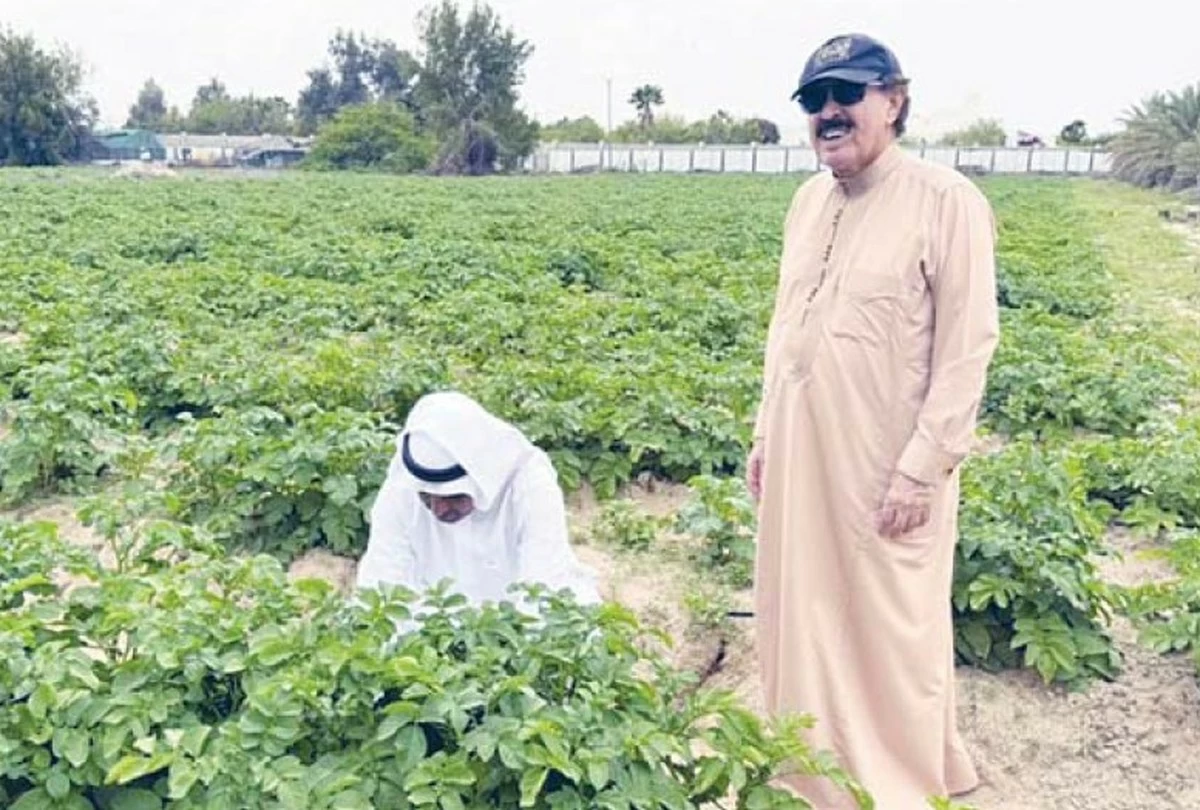
Editor-in-Chief of Arab Times and Al-Seyassah Ahmed Al-Jarallah having a tour of a vegetable garden
KUWAIT CITY, April 11: Farmer Mohammad Ali Al-Mutairi hosted a luncheon in honor of the Dean of Kuwaiti Journalism and Editor-in-Chief of Arab Times and Al-Seyassah newspapers Ahmed Al-Jarallah on Friday. Ahmed Al-Jarallah and his companions were received by the former board member of the Kuwaiti Farmers Union Mohammad Ali Al-Mutairi, who thanked him for his moral and media support of Kuwaiti farmers through his articles on agriculture and farmers, as well as through the weekly agricultural page in Al-Seyassah daily.
During a tour of Al-Mutairi’s farm and Al-Jarallah’s farm in Wafra, accompanied by Mohammad Al-Mutairi and his son Abdullah, Al-Jarallah highlighted the importance of government support for productive Kuwaiti farmers to adopt modern agricultural technologies. He affirmed that implementing modern agricultural technologies is the only way to increase and develop agricultural wealth across various sectors, including livestock, poultry, and fish farming. Al-Jarallah explained that Kuwaiti farmers, especially given the current difficult circumstances in Kuwait, need greater government support to increase and develop their vital agricultural production, ensuring its continuity throughout most of the year.
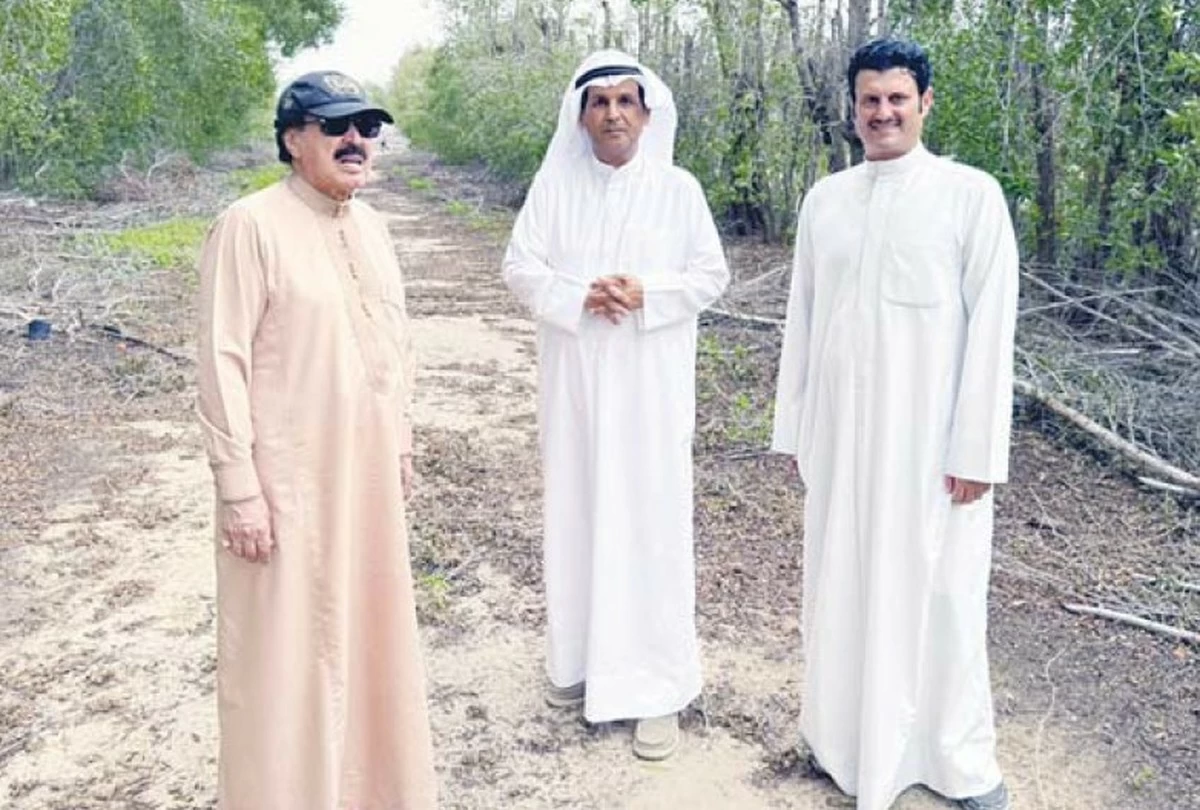
Editor-in-Chief of Arab Times and Al-Seyassah Ahmed Al-Jarallah, Mohammad Al-Mutairi and Ahmad Al-Aswad at the farm.
Kuwaiti farmers need a postponement of their agricultural loan repayments to the Industrial Bank of Kuwait, on behalf of the Ministry of Finance. They need the liberalization of their produce prices, in line with the Ministry of Commerce and Industry’s decision to protect consumers during crises. Al-Jarallah expressed his interest in agricultural affairs, noting that he is a farm owner in Wafra and has been a producer for many years. He said he has contacted several senior officials concerned with agriculture, farmers, and food security, who have given him positive assurances regarding the postponement of agricultural loan repayments and the liberalization of Kuwaiti produce prices, similar to imported products.
The dialogue between the farmers of Wafra and Al-Jarallah was focused on the importance of utilizing Kuwait’s winter rains, as well as the water discharged from desalination plants. Many Al-Wafra farmers are currently forced to rely on this water for irrigation due to increased groundwater salinity and insufficient pumping capacity of treated water.
The attendees expressed their need for sufficient treated water for their farms, suggesting that excess water from desalination plants be directed to a large artificial lake where fish could be raised, or alternatively that the water be disposed of by channeling it into the Arabian Gulf. The attendees also called for the development of Wafra’s infrastructure, including roads and sewage systems, and for addressing the drainage of heavy rainwater, which exacerbates the problem of groundwater seepage in many Wafra farms.
They stated that this is a chronic issue that recurs annually, and that no permanent solution has yet been found. Al-Jarallah emphasized the importance of allowing Kuwaiti farmers to allocate 20 percent to 30 percent of their farms for agritourism, and to build exhibition spaces equipped with facilities to market their produce at reasonable prices to visitors of agricultural areas, particularly Wafra and Abdali. He suggested that the government collect additional fees from any farmer who wishes to operate their farm as both a productive and touristic site. Al-Jarallah stressed the importance of the government encouraging farmers to export their surplus produce, even if subsidized by the state, outside Kuwait.
Farmer Al-Mutairi, commenting on Ahmed Al-Jarallah’s remarks, said Kuwaiti farmers could export tomatoes, for example, to Europe via national airlines, and that strawberries could be exported to countries near and far. Farmers Nayef Al-Mutairat and Santan Al-Zoubi, along with journalists Saud Al-Farhan, Ahmed Al- Aswad, and Bassam Al-Qassas, participated in the discussion, which took place at Al-Mutairi’s farm and later at Al-Jarallah’s farm. The attendees emphasized the importance of constructing refrigerated storage facilities in Wafra and Abdali agricultural areas to preserve surplus production of semi-strategic crops such as potatoes, onions, garlic, squash, and corn. They also highlighted the importance of increasing cultivated areas for these crops and boosting government support for them, given their long shelf life and ability to be stored for weeks or even months. The attendees unanimously agreed on the vital role these crops play in enhancing food security, in addition to other crops such as barley, blue sorghum, and alfalfa for animal feed, as well as the potential use of animal manure as soil fertilizer.
By Adnan Makkawi Al-Seyassah/Arab Times Staff