


31/01/2026

Share:
31/01/2026
Share:

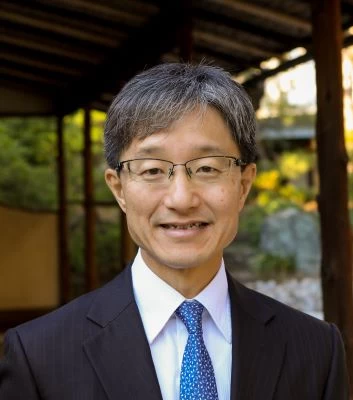
He also talked about the Japan-GCC Foreign Ministers Meeting, which was held in Kuwait, and the visit of Foreign Minister Iwaya to Kuwait in September 2025. During the visit, Iwaya made courtesy calls on His Highness the Crown Prince Sheikh Sabah Khalid Al-Sabah and His Highness the Prime Minister Sheikh Ahmad Abdullah Al- Ahmad Al-Sabah, and held a bilateral meeting with Minister of Foreign Affairs Abdullah Ali Al-Yahya. He stated that substantive discussions were held on advancing bilateral relations based on the “comprehensive strategic partnership.”
He said other official visits include that of Tokyo Governor Yuriko Koike, who was accompanied by startup companies, stressing that 2025 witnessed frequent exchanges of high-level officials throughout the year, strengthening ties between Japan and Kuwait at various levels. He cited the awarding of His Highness Sheikh Nasser Al-Mohammad Al-Ahmad Al-Sabah with the Japanese decoration, the Grand Cordon of the Order of the Rising Sun, in November 2025.
“In existing fields, such as power and water, we can further deepen collaboration by leveraging the technologies possessed by Japanese companies, contributing to the realization of Kuwait Vision 2035,” he stated. He unveiled his aim to develop relations between the two friendly countries in new areas, beginning with clean energy and decarbonization. He referred to the workshop titled, “The Road to Decarbonization,” held in Kuwait on Jan 21 in collaboration with Mitsubishi Research Institute, Mitsubishi Corporation, Kuwait Institute for Scientific Research (KISR), and Kuwait Foundation for the Advancement of Sciences (KFAS). He said that 2026 is expected to witness more progress in emerging fields like artificial intelligence, cybersecurity and advanced materials, emphasizing that the potential for cooperation in these areas will continue to grow. Regarding the food sector, Mukai disclosed that the export of Japanese Wagyu beef to Kuwait is finally possible. He explained that the appeal of Japanese Wagyu lies in its melt-in-your-mouth tenderness and juicy flavor, expressing his excitement that people in Kuwait will now be able to enjoy it. He added that the Embassy of Japan intends to hold Wagyu promotion events in the near future. He indicated that beyond Wagyu, the popularity of matcha is also growing overseas, including in Kuwait, hoping that these Japanese ingredients will become even more popular in the country. In the fields of culture and sports, Mukai unveiled his plan to expand exchanges.
“Starting around April this year, we plan to hold an exhibition of traditional Japanese ‘yakishime’ pottery. The Japanese tradition of using ‘yakishime’—unglazed, high-fired wares—for serving food and drinks, such as matcha may be unique. We hope many Kuwaiti people will have the opportunity to see these simple yet beautiful Japanese pottery pieces, which reflect the Japanese aesthetic sense,” he added. He stated that from September to October this year, the 20th Asian Games (Aichi-Nagoya 2026) will be held in Aichi, indicating that he looks forward to welcoming many athletes and supporters from Kuwait. “To promote mutual understanding between Japan and Arab countries, an Instagram account -- @japan.arabic_ culture -- was launched to introduce Japanese culture in Arabic,” he revealed.
He aims to further elevate the Japan- Kuwait relationship, which made a significant leap forward in 2025, at the governmental, private and grassroots levels throughout 2026. On the situation in Palestine and Japan’s assistance, he disclosed that Japan provided $2.6 billion in humanitarian and reconstruction assistance to Palestine in response to urgent humanitarian needs, as well as the early recovery and reconstruction efforts. In early January, Japanese Foreign Minister Toshimitsu Motegi visited Israel and Palestine, where he emphasized to both sides the importance of the implementation of the comprehensive plan and conveyed Japan’s intention to play an active role. Motegi also urged Israel to take appropriate measures to protect civilians and ensure the delivery of humanitarian assistance in Gaza. He called on Israel to ensure that humanitarian assistance activities by international organizations, including UNRWA, as well as NGOs, can proceed without impediment. He expressed Japan’s serious concerns that the expansion of settlements and the increase in settler violence will further destabilize the region, and urged Israel to immediately cease any unilateral action that runs counter to a two-state solution.
He called on the Palestinian leadership to steadily implement reforms of the Palestinian Authority, and unveiled Japan’s intention to support Palestinian state-building efforts toward the realization of a two-state solution. Japan will continue to play an active role in the reconstruction of Gaza through the participation of Ambassador Okubo and one Japanese expert in the Civil-Military Coordination Center (CMCC), as well as by providing comprehensive support for Palestine’s nation- building efforts. Japan will also expand its assistance network through its own initiatives, such as the Conference on Cooperation among East Asian Countries for Palestinian Development (CEAPAD), a regional conference framework launched by Japan in 2013 to support Palestinian state-building efforts by drawing on the resources, knowledge and economic development experiences of East Asian countries.